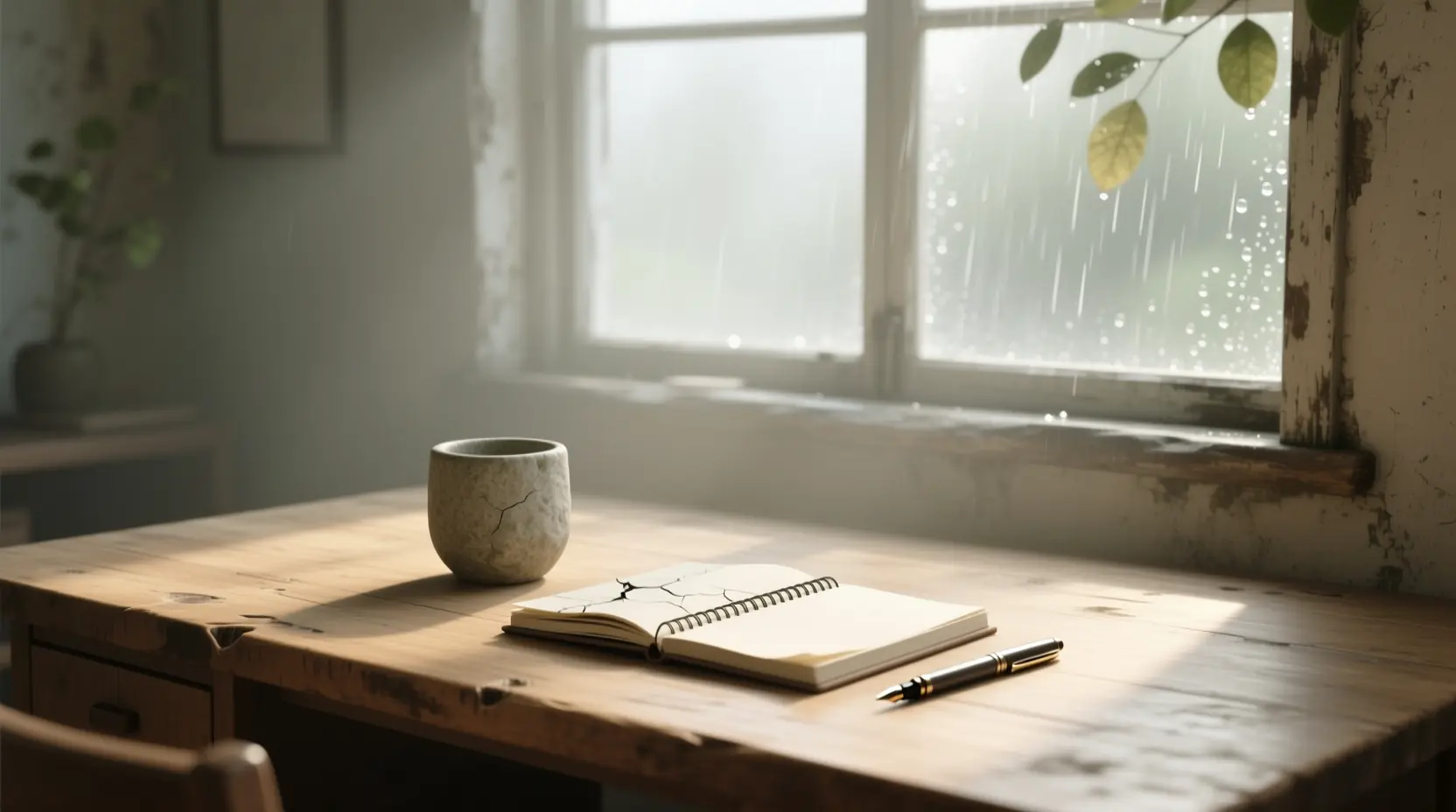
The light does not arrive. It gathers. A slow accrual at the world’s edges. It finds the fray—the gap in the leaves, the breath between curtain fibres. It pools. First, a suggestion of warmth on the worn desk. A patient stain on the grain.
This is how a day begins. Not with a summons, but with a presence acknowledged.
I sit. The wood, tempered by decades of such visitations, holds a deep, subcutaneous coolness. The light will spend hours trying to soften it. This is the first lesson: the patience of materials. We have forgotten how to listen to the things that hold our lives.
The Empty Bowl, the Open Hand
A room must first be hollowed.
This is not violence. It is a permission. Do not declutter. Listen. Hold the object. The redundant gadget, cold in the palm. The stack of paper, whispering old anxieties. The chattering trinket.
Feel its weight. Does it serve? Does it bring a quiet joy? Or does it merely fill a silence we feared?
Let it go. Thank it. Pass it on.
What remains is not barren. It is a vessel. An empty bowl is ready for tea. An empty room is ready for work. An empty mind is ready for thought. The first breath of making is not a gasp of effort. It is a sigh of relief. Space is the primal canvas. The few chosen things, the first, hesitant brushstrokes.
On the Soul of Worn Things
Upon the cleared space, place only what has earned its soul.
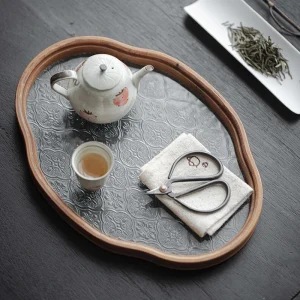
Soul is not new. Soul is a record. It is the smooth hollow in a pen’s handle, mapped by the thumb’s pilgrimage. The soft tarnish on brass scissors, a patina of opened letters, of cut twine, of resolved things. The frayed corner of a linen blotter, worn soft by the slow dance of forearms.
Choose not for shine, but for the promise of wear. A stone mug that chills the tea too fast, yet whose rough grip anchors you to earth. A notebook of unsmoothed paper that accepts ink with a slight resistance, like soil taking seed.
These are companions. They do not clamour. They wait, in a silence that is itself a form of attention. In their restraint, they whisper: you need very little to do very much. The cacophony of a thousand options paralyzes. The silent sufficiency of one perfect tool… liberates.
The Rhythm of Making, The Pause of Meaning
Watch the potter’s hands. They are not frantic. They are guided by a knowledge deeper than thought. The clay rises. It finds its form from the inside out.
This is the rhythm we seek.
The short sentence. The clean cut. The single, focused task. Click. Plane. Sand. Join.
The rhythm is a breath. Inhale with the gathering. Exhale with the shaping. The short, percussive actions are the chisel’s chip—deliberate, clearing away all that is not the form.
Then.
The pause.
The craftsman steps back. The writer’s gaze drifts to the window. The hands fall still, resting on the cool wood. This is when the work settles into itself. This is when meaning seeps in, like water into dry clay. Without the pause, rhythm is mere noise. Without rhythm, the pause is vacancy. Together, they are a covenant.
A Crack in the Sky, a Branch Against the Glass
No true space is an island. It breathes with the world.
You must have your window to the weather. Not a screen of pixels. The raw, untamed element. Watch the rain’s uncertain journey down the pane. See the oak branch, winter-bare, scribing its calligraphy on a grey slate sky. Observe the autumn light, grown thick and golden, laying a blanket of stillness over the room.
These are not distractions.
They are metronomes. They pull you from the digital scream—the frantic, endless now—and place you back in the cyclical, patient now of stone and season. A gust scattering papers is the room breathing. The slow creep of shadow is the day’s own, silent progress report.
Your work is not more important than this. It is a part of it. Grounded here, it finds its scale. A problem that swells under electric glare often shrinks to its true, manageable size under the gaze of a cloud-dappled sky.
The Gold in the Break
Nothing endures unchanged. The cup cracks. The chair leg loosens. The cloth fray.
The sterile mind discards. The soulful hand cherishes.
There is an art—*kintsugi*—where broken pottery is mended with lacquer mixed with gold dust. The flaw is not hidden. It is illuminated. Made luminous. The break becomes the most vivid part of the story.
So it is with a space that has lived.
The desk’s scar from a moved lamp. The indelible ink stain. The book’s spine, cracked from love. These are not imperfections to scour. They are the archaeology of a life attended to. When something wears, you do not replace it in haste. You mend it. You attend to it.
In that act of care, you affirm its value. And in turn, your own. You reject the tyranny of the pristine, the forever-new. You choose the patina of presence. This is *wabi-sabi*. The beauty of the weathered, the imperfect, the quietly ephemeral. It is the quiet acknowledgment of an ending that makes the present so acutely, painfully sweet.
The Still Point in the Stream
In the flowing stream, a deep pool. A place where the water rests, gathers itself, before moving on.
Your space must hold this still point.
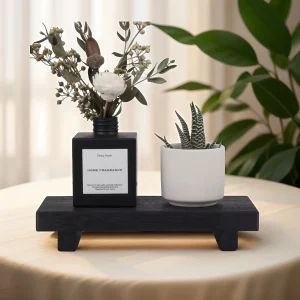
A bare corner. A single shelf with one smooth stone, pocketed on a walk. A low vase cradling a single, budded branch.
This is not decoration.
It is an altar to emptiness. Your eyes, frayed by screens, will rest here. Your mind, knotted with thought, will loosen here. It is a visual silence. In its stillness, it holds the entire truth: that from emptiness, everything comes. That in stillness, true motion is conceived.
You do nothing here. You simply let it be. It is the silence between the notes that makes the music.
Raking the Gravel at Dusk
The day ends as it began. In attention.
The pen returned to its groove. The mug washed, set to dry in the last light. The single page, filled, placed facedown for the morning’s fresh eyes.
The space is gently restored to its state of readiness.
This is the final, essential rite. It is not a chore. It is a gesture of gratitude and release. It is the careful raking of the gravel garden after meditation, leaving perfect, flowing lines for the next practitioner.
You are that practitioner.
By leaving no trace of today’s urgency, you prepare a welcome for tomorrow’s clarity.
You turn off the lamp. The last glow hesitates on the wood grain, then surrenders. The room returns to shadow. To moonlight. To itself.
You close the door softly.
You have worked. You have made.
But more, you have attended. And in that attention—to the coolness of wood, to the soul of a tool, to the rhythm of breath, to the gathering and fading of light—lies a kind of peace. The deep, wordless peace of a stone in a stream. Forever still. Forever shaped by the clear, purposeful water flowing around it.