The Room, the Light, the Vase
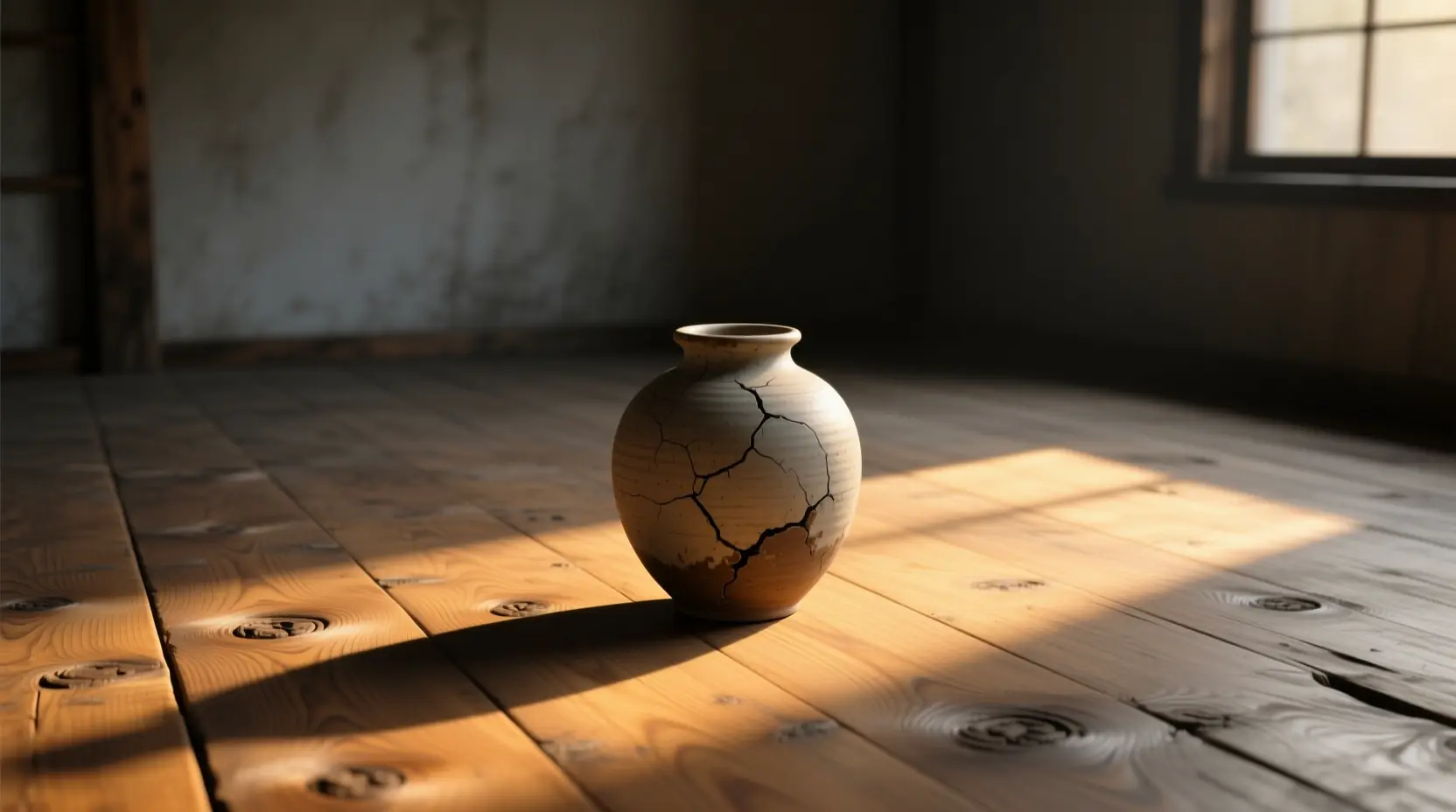
The room is empty, but not barren. The light, at this hour, is a slow honey. It pours. It pools. It seeps into the wide-plank floor, finding the grain in the pine. Each ripple, each knot—a record. Drought. Rain. Years. A silent testament.
There is a single vase. Clay, unglazed. It does not shout of its presence. It has no sheen to catch the eye. It simply is. It holds its form. And in its stillness, it holds the entire room.
The Ancient Cave Within
We speak of craving calm as if it is a modern indulgence. A spa day for the soul. But this craving is ancient. It is older than language. It is the animal in us, weary of the chase, finding a cave swept clean of debris. It is the farmer, after a day of wind and chatter, sitting on a stoop facing the quiet fields. The body knows this need long before the mind can name it.
And so we create, within our own walls, a kind of cave. A stoop. A clearing in the thick woods of our lives.
The Weight of Too Much
Look around your own space. See not objects, but demands.
Each patterned pillow asks for your attention. The trinket from a forgotten holiday whispers a faint obligation. The screen glows—a perpetual window to a world of emergencies. This is not living. It is being lived upon. The mind, that delicate instrument, was not made for such cacophony. It begins to mirror the clutter. Thoughts become scattered things. Leaping from shelf to shelf. Finding no rest.
We think we accumulate to remember. But often, we accumulate to forget. To fill a silence we have grown afraid of.
Yet, the silence remains. It waits. Beneath the noise of things.
A minimalist space does not create silence. It simply stops arguing with it. It pulls away the thicket. And then you hear. Your own breath. The creak of the house settling into the cool earth. The distant sigh of the evening train. These are the true sounds. The anchor sounds.
The Bowl Turner’s Hands
I once knew a bowl turner. His hands were maps of grain and blade. He would sit for hours with a block of cherry, feeling for its heart. He did not make bowls quickly. He found them. And when he was done, the bowl held a kind of gravity. You would not put fruit in such a bowl. It was not a container. It was a place. Your eye would rest in its curve. Your mind would settle into its depth.
This is the secret they never tell you. It is not about having less. It is about making room for more. More meaning. More presence. When you clear the stage, the remaining player—a chair of worn oak, a textile the color of moss after rain—can speak its story. You notice the way the light loves the uneven warp of a linen curtain. You feel the cool, steadfast patience of a stone floor beneath your feet.
These materials are honest. They age. They change. The wood darkens. The linen softens. The stone is polished by passage. They show their history. And in doing so, they give us permission to show our own.
The Still Waters of the Mind
They have studied this, you know. The men and women in white coats. They point to our nervous systems with their machines. They say that visual clutter causes cognitive overload. That the brain’s prefrontal cortex tires itself out choosing between forty mugs in the morning. They speak of cortisol, the stress hormone, humming higher in chaotic spaces. They measure heart rates slowing in rooms of clean lines and natural light.
But this is only the body catching up to what the spirit already knows.
The science is simply the footprint of a deeper truth.
When you reduce the stimuli, the mind’s waters—stirred by a thousand winds—can become still. And in that stillness, they become clear. You see yourself reflected. Not the frantic, performing self. The one that exists beneath. The one that simply breathes.
A Practice, Not a Perfection
Do not think of this as a style to be purchased. It is a practice to be lived. Like tending a garden. It is not the stark, cold white of a showroom. That is another kind of noise.
True minimalism has warmth. It has the warmth of wheat. Of sandstone. Of bare feet on sun-warmed stone. It is not empty. It is essential.
Begin not with throwing away, but with seeing. Sit in your room. See what your eye truly rests upon. Not what it bumps into.
You will find it is rarely the newest thing.
It is the wooden spoon worn smooth by your own hand. The stone you brought from a beach, still holding the gray of that day’s sky. The book whose spine has softened from being opened again and again. These are your anchors. They do not shout of status. They whisper of life lived.
Letting the Outside In
The greatest minimalist is the world itself.
A branch against a wall becomes a moving painting of shadow and light. A single stem in a vase holds the entire philosophy of growth, reach, and graceful decline. Your space becomes not a sealed box, but a vessel. For the day’s weather. The season’s mood. The long, slow arc of the sun.
It becomes a dialogue. Between inside and out. Between you and the elements. A reminder that you are not separate. You are part of the grain. The light. The settling.
The Beauty of Enough
There is a profound peace in the word ‘enough.’ It is a sigh of completion. The bowl is enough. The light is enough. This single, straight-backed chair is enough.
In a world that screams ‘more,’ to cultivate ‘enough’ is a quiet rebellion. It is pulling your energy back from the future of want. Planting it firmly in the present of what is.
This is why we crave calm. It is not an aesthetic choice. It is a biological imperative. A spiritual homecoming. We are creatures of rhythm—the rhythm of the heart, of breath, of day passing into night. The cluttered world is arrhythmic. It jars.
A minimalist space re-tunes us to our own natural tempo.
It is the space between the notes that makes the music.
Sanctuary for Attention
So, let your home be a sanctuary for your attention. Let each object be chosen, not just acquired. Honor the beauty of the unadorned. The strength of the simple. The story in the scar.
Create not a monument to taste, but a resting place. For your weary eyes. Your scattered mind. Your wild and seeking soul.
Let the walls fall back. Let the floor be wide and open. And in that spaciousness, you may just find the most profound thing of all.
Yourself.
Not as a thing to be improved. But as a being, already complete.
Simply sitting in the honeyed light.
Breathing with the house.
Being, like the unglazed vase.
At rest. At home. At last.