The Stillness Before the World Begins
A room holds its breath. Not a dead silence. A forest-floor hush, just before first light penetrates the canopy. This quiet is not emptiness. It is potential, humming at a frequency felt in the bones, not the ears. To mistake this for a blank canvas is to misunderstand the language of space. A canvas awaits imposition. A basin receives. It is hollowed, not flat. Ready to hold the slow pour of day, the spill of shadow, the sediment of lived moments. To build with sand, with clay, with cloud-soft plaster and river-smooth stone… this is a grammar older than tongue. A dialogue between palm and earth. A conversation in textures. First, you must learn to listen.
Laying the Foundation of Silence
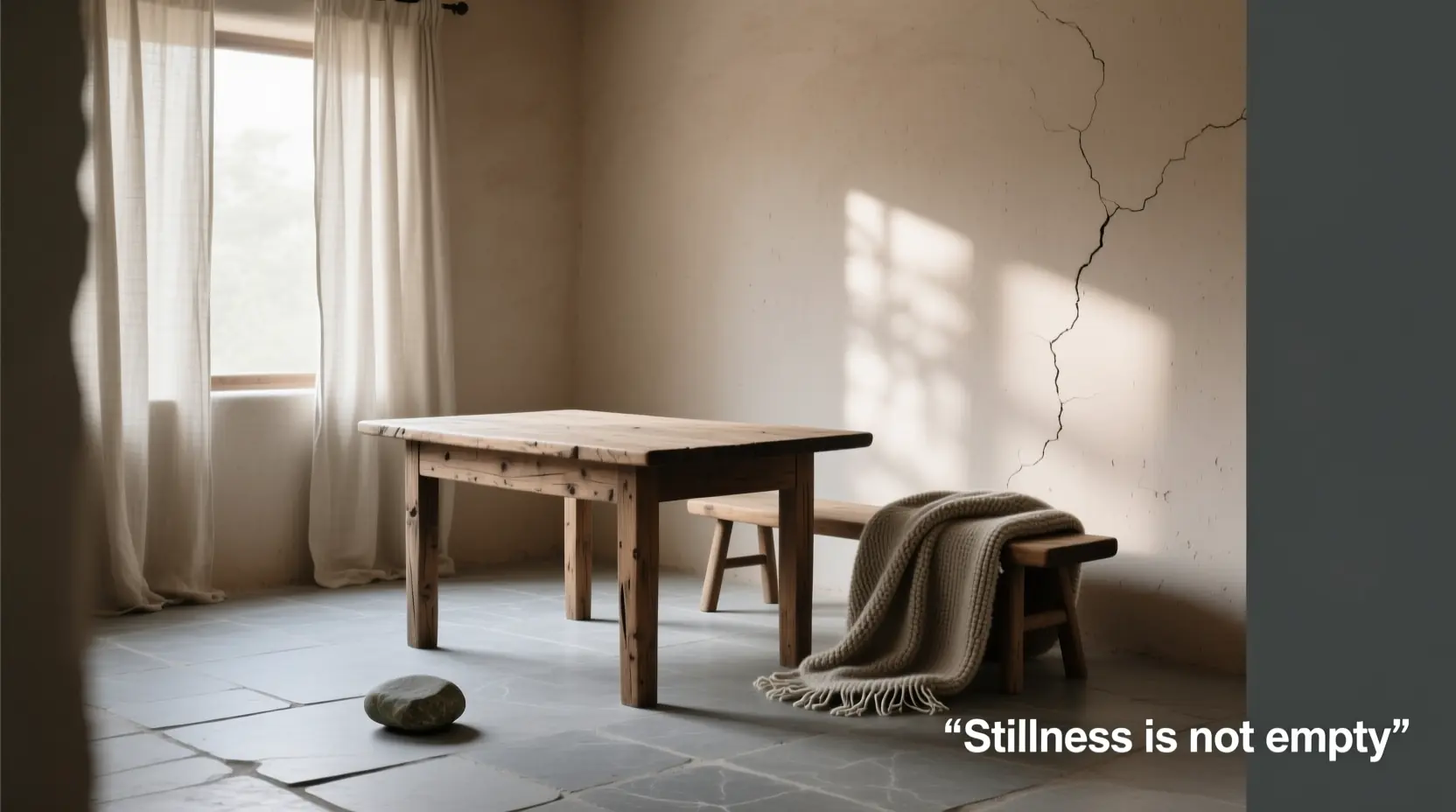
Begin with the bones. The walls. The floor. The great, sighing plane of the ceiling. See them not as surfaces, but as the first layer of stillness. A wash of pale clay plaster, catching the light on its subtle peaks and valleys like a weathered cheekbone. Wide boards of oak, silvered by a century of sun and gentle footfall, each groove a memory of rain and growth. A floor of honed limestone, the color of a dove’s wing at twilight, cool and steadfast underfoot.
Do not rush this. This silence is your foundation. It is the space between the notes that makes the music. Let it be vast. Let it be deep. Then, sit within it. On the floor. Feel the coolness of the stone seep into your skin. Sense the gentle, resilient give of the old wood. Watch the light move. See how it begins as a sharp, hopeful slant at dawn, matures into a broad, golden pool at noon, and finally stretches itself into long, melancholic fingers at day’s end. Your room is already breathing. You are merely listening to its breath. Only then, when you can hear your own heart beat in time with its quiet rhythm, may you begin to add your own whisper.
The Loom’s Gentle Offering
Introduce cloth as you would introduce a dear friend to a tranquil companion. Let it be natural. Let it speak, softly, of its origin.
A Sail for the Sun
First, the windows. A length of raw, undyed linen. Hang it simply, with folds that speak of generosity, not precision. It does not seek to bar the world, only to temper its gaze, to filter its shout into a murmur. Watch the breeze find it. See the fabric become a slow-moving sail, a soft sigh, a veil. Its texture is a faint, honest roughness—a tactile memory of the flax field, of the spinner’s wheel, of the weaver’s shuttle.
The Soft Heart of the Room
Then, the place of rest. A sofa, low and grounded, close to the earth. Dress it in a heavier weave—a wool the color of a rain-heavy cloud, or a nubby, honey-toned bouclé that holds light within its loops. This is the room’s soft heart, its hearth without fire. Upon it, lay a blanket. Cashmere, perhaps, worn to the softness of a moth’s wing. Or a chunky knit, each stitch a fistful of warmth, promising shelter. These are not ornaments. They are instruments of gathering, of folding in, of quiet consolation when the world outside grows cold.
A pillow, here and there. Not a chorus, but a single, resonant note, repeated. Velvet, but old velvet—the kind that drinks light and gives it back as a deep, muted glow. Corduroy, with its gentle, parallel ridges like a field plowed in narrow rows for winter. Lay them against the nubby bouclé. Observe the silent dialogue. Smooth conversing with rough. Plush resting against corded. Your hand will yearn to travel this miniature landscape, to feel the stories in the weave. This is the beginning of touch. This is good.
The Timbre of Tree and Rock
Now, the furniture. Do not think of it as such. Think of it as found poetry. As fragments of landscape invited indoors.
A Table is a Sliced Horizon
A table is not a table. It is a slice of a tree’s life, a plane of ancient weather. Seek out wood that has known the world. An oak slab with a grain like a river’s delta, mapping slow, relentless journeys. Ash, marked by the delicate, wandering trail of a beetle—a calligraphy of survival written just beneath the skin. Walnut, dark and solemn as peat, bearing the gentle, unforgotten scars of the cabinetmaker’s chisel. Do not sand these marks away. They are the text of the object’s soul, its lived narrative. Place this table upon the stone floor. Hear the quiet, definitive click of their meeting. Stone sustains. Wood remembers. Together, they ground the room in time and patience.
A Chair of Honest Bones
A chair. Let it be one of honest making. A Shaker chair, perhaps, with a seat of woven reed that gives slightly under weight. It speaks of purpose, of a graceful and frugal acceptance of form. Its texture is basket-like, a yielding whisper against your back. Or a worn Windsor, its spindles smoothed to a satin sheen by generations of palms, its seat shaped by countless hours of contemplation. Place it where the afternoon light will find its curves, tracing a line of gold along its spine.
The Anchor in the Stream
And then, a single stone. A river rock, large enough to be a quiet presence. Place it in a corner where the shadow pools deepest. Its texture is ultimate. Unmoving. Eternal. Cool and dense to the touch. It asks for nothing. It offers nothing but its sheer, unadorned being. In its profound silence, it makes the linen feel lighter, the wool warmer, the wood more alive. It is the anchor in the stream of your daily life, the immutable note around which the softer textures compose their melody.
The Gift of Patina: Time’s Gentle Hand
A room that truly breathes has accepted, even welcomed, the kiss of time. It collects not objects, but companions that have lived.
The Mirror That Remembers
A mirror with a frame of gesso, crazed like the cracked bed of a summer-dry river. It does not shout of its reflective prowess, but holds your image softly, as if through a gentle, morning mist. Its surface is a map of tiny fissures, each a record of subtle shifts in humidity, of years passing without fanfare.
The Bowl and Its Stone
A bowl of blackened brass, its central shine worn away to a deep, smoky glow at the edges—precisely where countless fingers have lifted it, touched it, used it. Place a simple, round, grey river stone inside it. The hard, eternal within the soft, aged vessel. One object of millennia, cradled by an object of decades. A silent conversation between durations.
Books. Their spines are a topography of thought and experience. Leather worn supple by handling, cloth faded by sun, paper softened at the edges like well-loved linen. Stack them not by color, but by the quiet weight of their stories. Let them lean into one another for support. Their pages, when turned, add the texture of sound to the room—a soft, dry rustle, the flutter of a thought taking flight.
A Memory on the Wall
A wall. Do not leave it barren of narrative. Hang a piece of cloth—a fragment of vintage indigo katazome, the starch-resist pattern still crisp, the blue depth like a midnight pool. Or a worn tapestry border, its threads slightly lifted in places, telling of a different loom, a different hand, a different century. It is not a picture to be looked at. It is a memory made tangible, a texture to be felt with the eyes.
The Sacred Empty: Where the Room Breathes
This is the final, most essential layer. The layer not of thing, but of no-thing. The layer of air. Of stillness. Of margin.
After you have placed the venerable wood, the heavy wool, the immutable stone, step back. Look not at what you have added, but for what remains. The sweep of empty floor between the table leg and the wall. The blank space of wall above the sofa’s line. The untouched corner where light and shadow perform their daily, silent play. Guard these spaces fiercely. They are not voids. They are the room’s lungs. They are where the eye finds rest, where the composition breathes. A clutter of texture is a cacophony. A few, chosen textures, given generous space to speak, create a profound and quiet harmony.
Now, live in it. Let the morning light trace the perfect, parallel ridges of the corduroy pillow. Let your bare feet feel the transition from the cool, steadfast stone to the worn-silk surface of an old, threadbare rug. Run your palm along the plaster wall at dusk, when it has absorbed the day’s warmth and feels like living skin. Watch how the linen curtains become translucent, glowing like lanterns when the sun sets behind them.
A neutral room, layered slowly with texture, is never finished. It is a slow composition, an ongoing meditation. The fine layer of dust that settles on the river stone is a new texture, a daily blessing. The gentle sun-fading on the oak table is a slow, patient painting by the greatest artist of all. The deep wrinkle in the linen throw, from where you curled your legs during an afternoon of reading, is a sacred record of life lived within.
It does not shout. It hums. A low, steady, grounding hum. It is the sound of a smooth stone dropped into a deep, still forest pond. The circles widen, softly, almost imperceptibly, touching the shore of wood, the shore of cloth, the shore of your own quiet heart. And then, they settle. And the room is still again. A different stillness now. A full one. A lived-in silence. A sanctuary built not from things, but from touch. From time. From the humble, profound poetry of the earthly world.