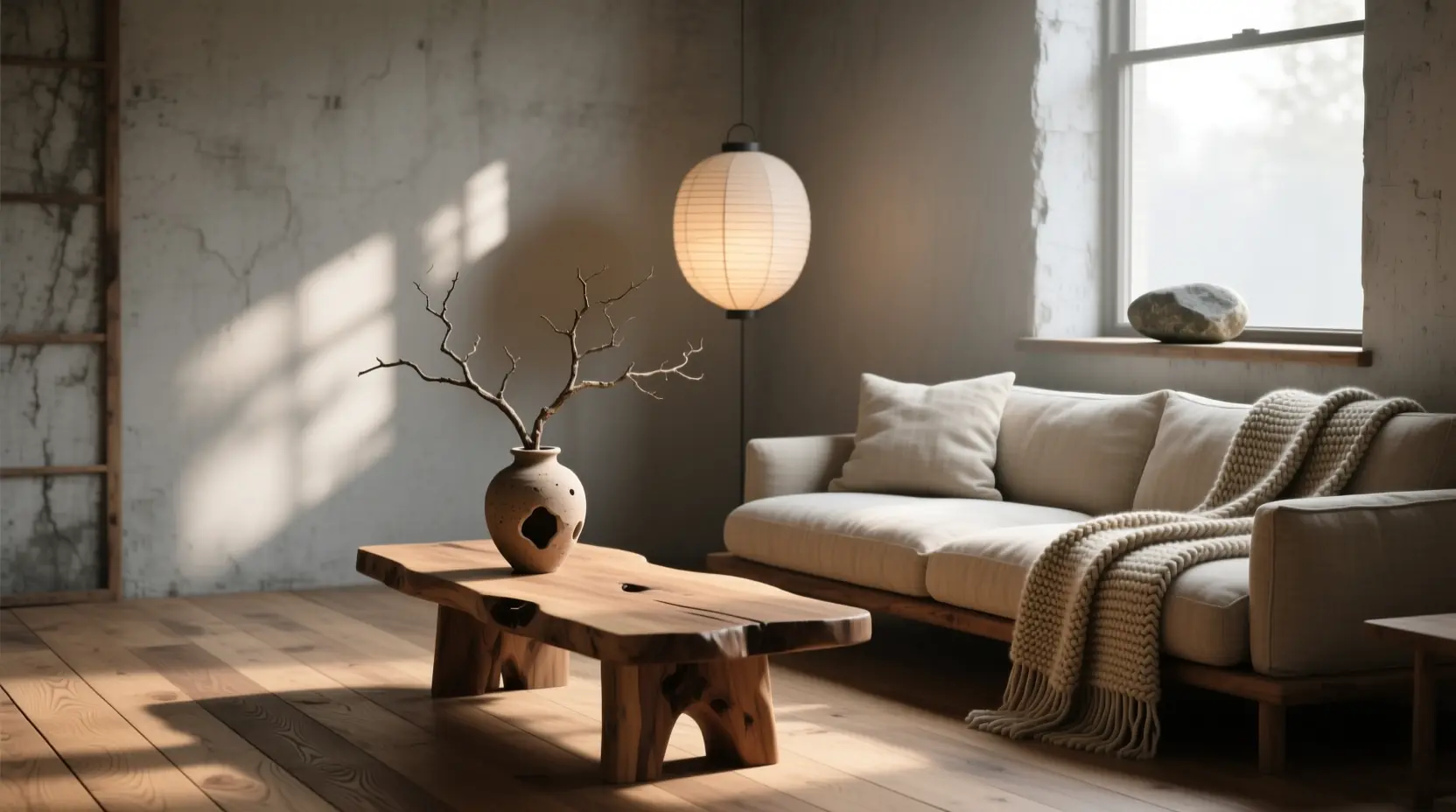
The room, before it is a room, is a vessel of silence. Waiting. It does not hold things. It holds the slant of afternoon light, heavy and golden as honey. It holds the memory of a sigh in a cushion. The silent, patient history locked in the grain of a board. This is the way. Not a style to be bought, but a listening to be cultivated. The beauty of the irregular. The poetry of the worn. The quiet dignity of the ephemeral. To shape such a space is to make a treaty with time. To sit, finally, with the truth. All things are in a gentle, ceaseless state of becoming and un-becoming. And there, in that soft decay, lies a profound and startling loveliness.
Imagine a space not of perfection, but of peace. A living room that feels like a breath held, then softly, completely released. Let us gather. Not with the haste of a shopper, but with the patience of a gardener observing the first, slow crack in a seed. Here are seven whispers. Not a checklist. A path. Worn smooth by contemplation.
The Floor That Remembers Bare Feet
Begin low. Begin with what holds everything up, and grounds it. Reject the cold, shout of polished stone. Seek instead the floor that speaks. In the language of earth and journey.
Wide-plank oak, its surface brushed soft not by sandpaper, but by generations. The passage of socked feet, of shuffling steps, of a child’s crawl. Its knots are like meditations. Dark eyes in the grain. Variations in color—the work of sun and shadow over decades, not stain. Or slate. Cool, grey, solemn. Each tile a unique, rough-cut fragment of a mountain’s heart. Feel it underfoot. It is solid. It is imperfect. It has a memory deeper than your own.
This is your foundation. It teaches gravity and grace. Every object placed upon it will feel anchored, not merely placed. The floor does not shine. It glows with a soft, matte patience. It asks you to walk slowly. To sit upon it, spine against the wall, and feel the steadying chill or the subtle, stored warmth of the wood. It is the first and most important lesson: be grounded. Be true. Be worn beautifully by the life that passes over you.
The Seat That Accepts Your Shape
Next, the place of surrender. Not a throne, but a nest. Not a rigid statement of line, but a yielding invitation.
A Hollow in the World
Look for a chair, a sofa, cloaked in raw, undyed linen. The color of unbleached wool, of oatmeal, of a cloud at dusk. It should be deep. Inviting you to curl into it, to disappear for a while. Its cushions will be filled with down or kapok. They will sigh when you rise, holding the ghost of your shape for a moment before slowly, slowly breathing back. A gentle, transient record of your presence.
Over years, the fabric will soften. It will crease in the places where you always sit. A gentle map of habit. It may fade where the light kisses it most persistently, bleaching a shoulder-rest to pale wheat. This is not a flaw. This is its soul emerging. This seat does not ask you to be pristine. It asks you to be. To rest fully. To leave the faint, honest mark of your living. It is an embrace that remembers.
The Table: An Island of Weathered Wood
In the center, the heart. A table. It should be solid, substantial. A quiet anchor around which life orbits, slow as a planet.
Find a slab. Its edges left live, tracing the tree’s original contour—the story of its boundary with the wind. Or a simple, low table of elm or cedar, its surface bearing the gentle scars of a hand plane. The whisper of the craftsman’s labor, not the scream of a machine sanded to sterile oblivion. It should not be glossy. Its finish should be oil or wax, so the grain drinks the light and feels alive, thirsty, under your palm. You should see the story. The burl where the tree healed a wound. The subtle change in tone from heartwood to sapwood—the tree’s own seasons.
Upon this table, a cup of tea leaves a faint, ghostly ring. A book is left open, spine cracked. A single branch in a clay vase casts a slender, dancing shadow at noon. The table accepts these things. It is a stage for small, daily rituals. It is never truly empty, even when it is bare, for it carries the memory of all that has graced its surface. It teaches that utility and beauty are the same thread. That to be useful is to be beautiful. That to bear witness is a sacred function.
The Vessel That Cradles the Void
Now, consider the emptiness. Wabi-sabi finds its most profound poetry not in the thing, but in the space around it. In asymmetry. In the ma—the interval, the pause.
An Honest Handful of Clay
This is the role of the vessel. A single, irregular vase. Not crystal, not perfect porcelain. But rough-fired clay. Seek one that feels as if it was pulled from the riverbank yesterday, still smelling of mineral and fire. The hand of the potter should be evident. In its confident imbalance. Its slight, loving wobble. The thickness of its walls, uneven. Its glaze may pool in a blue-black tear in the foot, or be absent altogether, leaving the bare, thirsty terra-cotta. It is humble. It is potent.
Into this vessel, place one thing. Only one. A single, bending branch of pine, needles like dark brushes. A clutch of dried honesty pods, their translucent membranes like ancient parchment. A solitary, imperfect bloom from the garden, its petals already edged in brown. The arrangement is not grand. It is a haiku. The vessel does not compete with what it holds; it cradles it, defines its silence. It reminds you that the container is as sacred as the contents. That emptiness is not a lack, but a form of readiness. A welcome for what may, or may not, come.
The Textile, Woven with Time
The light needs softening. The air needs texture, a history you can feel with your fingers. For this, a textile.
A hand-woven throw, draped carelessly over the arm of the yielding chair. Its wool is the grey of a dove’s breast, the brown of turned earth after rain. The weave is loose, imperfect, allowing the late light to filter through, creating a tapestry of shadow on the floor below. Or a floor cushion covered in hand-stitched boro. Patches of indigo cloth, faded to a thousand skies, lovingly repaired over generations. Each stitch a testament to care, to continuity, to the idea that nothing is beyond mending if approached with respect.
Touch it. It is nubby, uneven. It holds warmth like a secret. It casts delicate, shifting shadows. This piece is not for show; it is for comfort, for tactile connection to other hands, other times. On a still evening, you pull it over you. Its weight is gentle, its story silent. It is a layer of lived history, a soft shield against the chill of the new, the slick, the disposable. It speaks of patience.
The Stone That Knows Stillness
Bring in an element of pure, ancient silence. A stone.
Not a gem, not a crystal. A river stone, worn smooth by centuries of water’s gentle persuasion. A piece of rough basalt, dark and porous, broken from a cliff face a millennium ago. Place it on the windowsill where the dawn finds it first. On the low table, near the book. Beside the leg of your chair. It is an anchor. It needs no function other than to be. It is the oldest thing in the room. It holds the memory of mountain and stream, of volcanic birth and glacial drift, of pressure and time on a scale that humbles.
Your hand finds it, cool and dense. In its absolute, wordless simplicity, it calms the hum of the mind. It is a touchstone, literally. When thoughts are frantic birds, the stone is the unmoving branch. It teaches the art of being. Of existing without purpose, without need for improvement, without story. It is complete. In its presence, you remember your own solidity. Your own small, temporary place in the slow, geological drift of existence. It is a mentor in stillness.
The Light: A Simulated Moon
Finally, how the room is seen. How it reveals itself. Reject the harsh, singular sun of an overhead lamp. Seek the dappled, forgiving light of a forest clearing. The soft, enveloping glow of a full moon on a bare floor.
Shadows Are Part of the Composition
A paper washi lantern, its surface like crushed eggshell or moth wing, diffusing the bulb within into a gentle, radiant orb. A small, forged iron candle holder, blackened and bloomed with rust from flame, where a single beeswax taper will pool and gutter, painting the walls with dancing, animate shadows. Light in such a space is never aggressive. It is a revealer of texture, not detail. It loves the roughness of the linen, the deep grain of the wood, the shy curve of the clay. It flatters imperfection.
In this light, edges soften into suggestions. The room becomes a series of interconnected pools of warmth and deep, velvety shadow. It invites contemplation, not scrutiny. It allows things to be partially seen, to hold a little mystery, to keep their secrets. It is the final, essential brushstroke. It unifies the disparate elements—wood, stone, cloth, clay—in a soft, forgiving embrace. It teaches the last lesson: to see clearly is not to see everything in harsh relief, but to see the truth of what is, kindly. To honor the shadow as much as the light.
***
These seven are not a formula. They are a philosophy, whispered in the materials of the earth itself: wood and wool, stone and light, air and clay. They ask you to listen. To choose not with the eye alone, but with the hand, the heart, the sense of memory in your bones. Let each object enter slowly. Live with it in the quiet hours. See how the first, pale light of winter finds it on the sill. See how it feels in the blue gloom of a late afternoon. Notice the dust that gathers in its crevice, a soft grey blanket, and know that too is part of the patina.
The ultimate room is never finished. It is a collaboration with time, a slow conversation. A hairline crack may appear in the clay vase, a silver map of its firing. The linen will fade further to the color of mist. The wood will darken with the oil of your touch, recording every reach for a cup, every resting elbow. This is not decay. This is the deepening of a relationship. It is the room, and you, growing old together. Gracefully. Wearing the beautiful, inevitable patina of a life, quietly, attentively lived.
In the end, the vessel holds you. It tells you, without a single word, that you are enough. That your imperfections are your character. Your wear is your wisdom. That in this fleeting, imperfect, breathtaking world, you have built a shelter of perfect, fleeting peace. And that is all. And that is everything.