The Quiet Between Two Worlds
The room is a held breath.
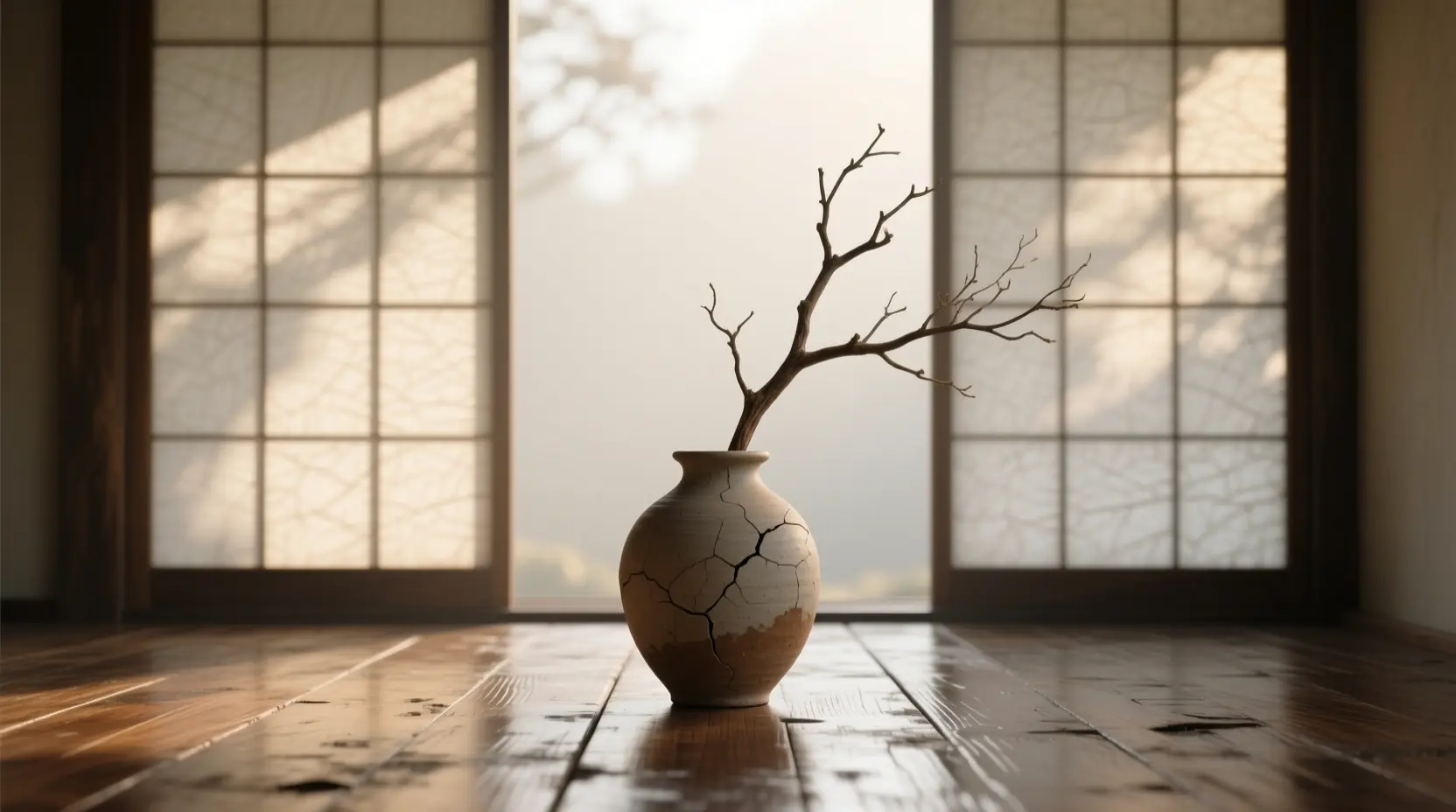
Light, softened by a paper screen, pools on the floor. It finds a vessel. Not a perfect vessel. Its clay remembers the potter’s thumb. A slight asymmetry. A life shaped, not stamped. Inside, a single branch. It fell. It was not cut.
This silence. This particular beauty. Is it a name? Or is it a sigh?
To ask is to hear two streams flowing from the same mountain spring. They share a source. A reverence for the grain of wood, the truth of stone, the patience of growth. But their paths down the mountain diverge. Ever so gently.
One flows with a quiet, human order. The other follows the older, more ancient grooves of the earth itself.
Come. Sit. Let us breathe with them awhile.
The Ancient Whisper of Wabi-Sabi
First, we must unlearn.
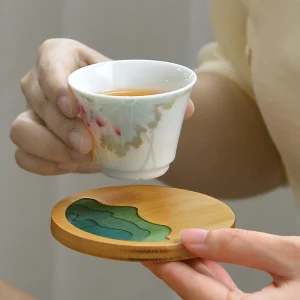
Wabi-sabi is not a style. It is a feeling in the throat. A recognition. It is the Japanese heart finding splendor in the faded linen. The moss on the stone. The crack in the tea bowl, repaired with gold—kintsugi—the break made more precious than the whole.
It is the beauty of the weathered. The quietly incomplete.
Think of the raked gravel garden. Not a symbol of water, but water itself, slowed to a whisper. Think of the handmade paper, its fibres holding shadow and light. The timber beam, darkened by centuries of smoke and touch.
Wabi-sabi does not fear time. It bows to it.
It finds a lonely glory in austerity. A single flower in a cleft of rock. A bare room where one compelling object gathers the entire world around it. There is no striving here. Only being. The ceramic cup glazed by the fire’s whim, not by an idea of perfection. Its flaw is its soul.
This philosophy is humble. Profoundly so.
It asks us to see the world as a cycle. Growth. Decay. Return. The leaf that browns at the edges is not ugly. It is honest. The plaster wall that reveals the trowel’s trace is not unfinished. It is alive.
Wabi-sabi is the acceptance of transience. The peace found in things as they are, not as we might force them to be.
The Harmonious Flow of Japandi
Now, follow the second stream.
Japandi. A word born of two shores. Japan and Scandinavia. A conversation across continents discovering a shared language. Light. Wood. Calm.
It, too, loves the raw material. Pale oak. Clean linen. Muted stone. But where wabi-sabi might leave the wood rough-hewn, Japandi planes it smooth. It finds serenity in a cleaner line. A more curated space. The human hand bringing a gentle, mindful order to nature’s bounty.
Think of a Danish chair. Its form follows the body. Its wood is warm, its curve a quiet song. Now place it in a room of tatami. A low ash table. The light is ample, airy. The palette is breath: oat, fog, moss, clay.
Every object has a purpose. A place.
No clutter. Only essential harmony.
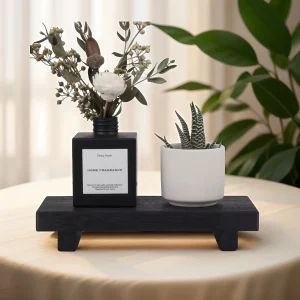
Japandi is about balance. The Scandinavian hygge—the warm, textured cocoon—meeting the Japanese ma—the sacred, energizing emptiness between things. It is the soft wool throw over the sleek frame. The perfect imperfection of a hand-thrown pot on a flawlessly joined shelf.
It is optimistic, in its way. It believes in a calm, functional beauty that soothes the modern spirit. It declutters the eye to quiet the mind. A sanctuary built, thoughtfully, piece by piece.
Where the Streams Cross and Part
They walk together for a stretch.
Both turn their backs on the loud and the garish. Both speak in whispers. Both find a soul in wood grain, a story in texture.
But feel the difference underfoot.
Wabi-sabi is the stone in the garden, settled by centuries of rain.
Japandi is that same stone, brought inside, washed, and placed just so on a low table.
Wabi-sabi celebrates the life of an object—its scars, its wear, its unique history.
Japandi appreciates the essence of an object—its form, its function, its contribution to a tranquil whole.
One is a philosophy of the heart. A touch monastic. Melancholic, even. Tied to the cycles of nature and the humility of existence.
The other is an aesthetic for the home. Softly optimistic. Focused on crafting a harmonious life within the modern world.
Listening for Your Own Silence
So. Which stream should water your own garden?
Ask your walls. Ask your hands.
Do you find a deep, quiet joy in objects that bear the marks of time? A chipped bowl. A book with a softened spine. Driftwood carved by the sea, not by a lathe. Does “perfect” feel loud and false?
Your spirit leans toward wabi-sabi.
You do not decorate a room. You allow a room to gather its own patina. Its own peaceful history. You are a caretaker of stories. A collector of quiet moments, frozen in clay and wood. Your space may feel more still. More anchored. Perhaps a little solitary. A space for contemplation. For tea. For listening to the rain.
Or.
Do you crave an ordered calm? A refuge from the day’s chaos? Do you love the feel of clean, smooth wood under your palm? The way a single, beautiful object can breathe in a space cleared for it? Does harmony come from a gentle balance of warm and cool, texture and line, the handmade and the impeccably crafted?
Japandi speaks to you.
You are a composer of light and shadow. A curator of serenity. Your home is a haven. A functional poem. Both nurturing and minimal. Both warm and clear.
But remember.
The streams are not at war. They are tributaries of the same river.
A Japandi room can hold a deeply wabi-sabi object. The cracked, gold-repaired bowl on a minimalist shelf. It becomes the heart of the room. The whisper of imperfection that makes the perfection around it breathe.
A wabi-sabi space can embrace a Japandi clarity. Editing out the meaningless noise, so the truly soulful objects can sing their old songs more clearly.
The Lesson Is in the Grain
In the end, the choice is not about trends.
It is about temperament. It is about how you wish to feel in your own skin, within your own walls.
Walk into a forest.
The wabi-sabi mind sees the fallen log, moss-clad and soft, returning to the earth. It finds a profound beauty in its surrender.
The Japandi mind sees the same forest and brings home a straight, smooth branch. It places it in a simple vessel, where its elegant form brings a piece of that forest calm into the daily ritual of living.
Both honor the tree. Both are acts of love.
So, sit again in that quiet room. Look at your hands.
Are they the hands of the aging Zen monk, who sees the universe in a dust mote, who finds completeness in the cycle?
Or are they the hands of the humble craftsman, who takes the gifts of nature and shapes them with care into a shelter of harmony for the human spirit?
Perhaps they are both.
Your home is not a showroom.
It is your bowl of tea.
Let it be bitter or let it be smooth.
But let it be true.
Let it be yours.
Listen to the silence between the things you love. That is where you will hear your answer.
Clear as water over stone.