The Whisper in the Grain
The grain remembers.
The rain. The sun. The slow, patient turn of seasons against the bark. To sand a piece of light wood—ash, oak, beech—is not an act of erasure. It is an invitation. A coaxing forth of a story written in rings and knots. This is the first lesson. The one that settles in the palms, not the pages. It lives in the hands.
A Clearing in the Silence
In the quiet workshop, dust motes drift in slanted light. The air smells of resin and waiting. Here, a harmony is observed. Not made. Found. A blending of winds.
A clarity from the North. A clean, cool breath that seeks and hoards the light. A warmth from the East. A deep, rooted bow to earth and impermanence. They meet in the space between. In a philosophy without a loud name. At its heart, beating a slow, steady pulse: light wood.
It is not a colour. It is a bridge. A held breath. The ma between two thoughts.
Northern Light, Eastern Shadow
The Scandinavian soul is shaped by winter’s long night. Light is a currency, collected in pale pools on pine floors. The wood here speaks of air. Of openness. It says, “See how the space breathes? See how the light lingers?” It is a practical poetry of survival.
The Japanese spirit walks a path of disciplined reverence. Wood is a teacher. Dark, solemn hinoki holds the steam of the bath. Sturdy keyaki bears the weight of history. But in the home, a softer voice is chosen. A muted grain that does not shout, but hums. It speaks of the tree’s life. Of wabi-sabi—the beauty of the worn, the weathered, the quietly incomplete.
How do these two voices sing? The Nordic clarity and the Japanese depth? They find their common note not in a shout, but in a middle tone. The light wood carries the brightness of the North yet holds the contemplative, earthy warmth of the East. It is the compromise that is no compromise at all. It is the truth both already knew.
Listening to the Map of a Life
To choose a plank, you must listen. Lay your hand upon it. Close your eyes. The grain is a topography of years. A map drawn by wind and weather. In light woods, this map is clear. Gentle. Like the lines on a face that has smiled at many sunsets. It does not overwhelm. It guides.
In this harmonised space, every object must have room to breathe. The light wood, often left raw or kissed with pale oils, allows this. A floor of pale oak is not a stage. It is a forest floor, dappled. A table of ash, with its long, flowing grain, becomes a calm river through the room. Your eye follows. Your spirit settles. It is the negative space made tangible. The quiet between the notes.
The Patina of Memory
Some seek a forever gloss. A surface that defies time. This is not our way. We honour the kintsugi crack filled with gold. We see the beauty in the wear.
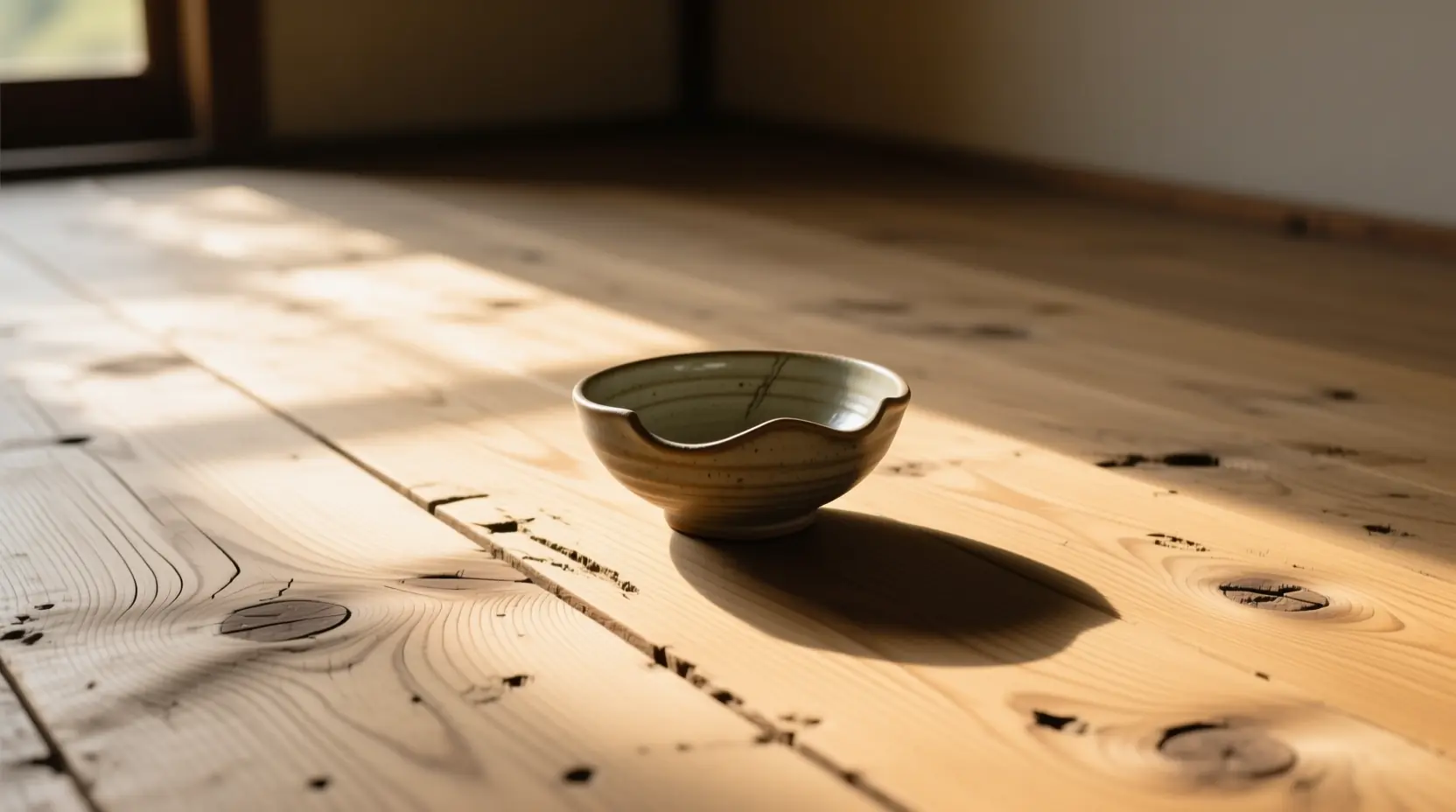
Light wood accepts this life with a soft grace. A scratch on dark lacquer is a flaw. A scar. On the surface of oiled oak or soap-treated ash, it becomes a new line in the narrative. A watermark from a cup. A gentle scuff from a chair. These are not imperfections. They are memories. The wood darkens in the sun, honeyed tones deepening like tea in a cup. It absorbs the life of the home and gives it back as character.
The Scandinavian might call this hygge—the comfort of the cherished, the lived-in. The Japanese might feel mono no aware—the poignant beauty of transience. The light wood sits at the nexus of this understanding. It is humble enough to age. And beautiful precisely because of it.
A Tapestry for the Hand
A room is not an image. It is an experience of touch. A quiet symphony of textures. Here, light wood is the loom.
Place a rough, cold stone against a wall of pale birch. Feel the dialogue. Drape heavy, undyed linen over a bench of bleached oak. Watch how the fabric falls, its weave whispering to the grain.
The light wood is never slick. Never cold. It is tactile. It invites the bare foot, the resting palm. It asks for a connection, physical and quiet, to the earth from which it came. In its gentle simplicity, it makes other textures sing: the nub of hand-thrown clay, the fleece of sheepskin, the dry whisper of pampas grass.
Crafting the Resonance, Not the Room
To invite this spirit in, one begins not with a list, but with a breath. A clearing.
Start with the Foundation of Calm
Let the largest surfaces be of light wood. The floor. Perhaps a single wall. This is your canvas of calm. Do not stain it to be what it is not. Let it be ash. Let it be oak. Treat it with natural oils that sink in, not films that sit on top. Respect its nature.
Few Pieces, Chosen with Care
A table of solid beech. A chair of woven ash. Let each piece have space around it, like a stone in a karesansui garden. This furniture is not a statement of wealth, but of care. It says, “This was made. This will witness.”
Embrace the Empty Space
The light wood expands the sense of openness. Do not fill it. Honour it. A single, low shelf against a pale wood wall holds more presence than a crowded case. It is about the object, and the generous space that allows it to be truly seen.
Bring In the Earth, the Hand, the Shadow
Now, adorn this quiet stage. A dark, iron vessel. A bulbous, glazed pot. A woven bamboo basket. The contrast is gentle. Natural. It feels inevitable, not arranged. The light wood provides the warm, neutral ground from which these earthy elements can rise.
Follow the Light
Watch the sun. Mark its passage. The light wood will dance with it. It will glow at dawn, stand in calm repose at noon, and gather soft, long shadows at dusk. Your room is not static. It is a day-long meditation on light and form, with wood as your silent, changing companion.
The Final, Quiet Lesson
In the end, this is not a style. It is a resonance. A feeling. The deep, mossy peace of a Scandinavian forest clearing meeting the serene focus of a raked gravel garden.
The light wood is the embodiment of that peace. It is the humility of the craftsman who does not impose, but reveals. It is the wisdom that finds a universe in a grain of sand, in the curve of a maple leaf, in the soft glow of a worn floorboard.
It teaches us to build not for grandeur, but for contentment. To choose not for trend, but for soul. To create spaces that are not mere backgrounds for life, but sanctuaries for it.
For when you live with light wood, you live with a piece of the sky and the earth. You live with patience. You are reminded, daily, without a word being spoken, that the most beautiful things are often the simplest. The most enduring things are those not afraid to age. To wear. To tell their story, over decades, in whispers to those who have learned how to listen.
The grain remembers.
And so, in a sunlit corner of your home, will you.