The Kettle Sighs, and the World Begins Again
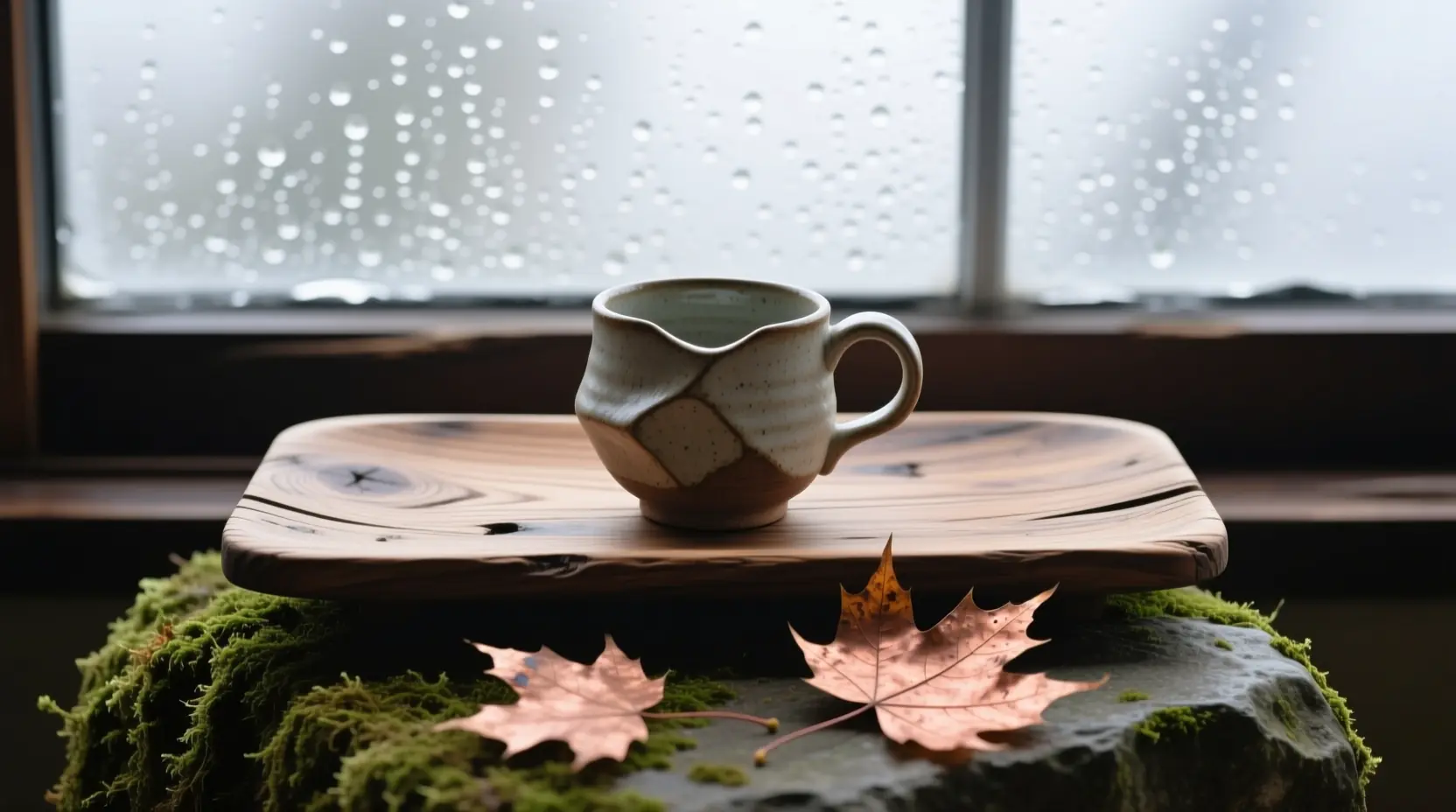
The cast iron exhales. A slow, whispered release of cloud against cold glass. Outside, the rain has gentled to a memory, and a single maple leaf—a vessel of burnt copper—spirals down. It does not fall. It journeys. A slow, meandering descent to meet the moss-speckled stone. There is a silence here. In the space between the kettle’s sigh and the leaf’s final rest. This is where it lives. Not in the object. But in the seeing.
A Crack is a River
Wabi-sabi is not a style one collects. It is a way of seeing one remembers. It is the understanding that a crack in a bowl is not a flaw, but a map. A river of time etched in porcelain. A faded fabric is not worn thin, but softened by a thousand sunsets. It is the quiet, reverent bow to impermanence. To the humble. To the incomplete that is, somehow, utterly whole.
To invite this spirit in is not an act of decoration, but of reconciliation. A making of peace with the flow of things. With dust, with tarnish, with the gentle unraveling at the seam. It asks only for your attention. Your touch. Your willingness to hear the story in the grain, the song in the patina, the history in the weight of a stone.
You need not seek rare treasures. The spirit dwells in the ordinary, coaxed forth by use and time. Here, then, are ten humble vessels. Each a door. Each under two hundred coins. None are solutions. All are companions.
Vessels for a Slower Light
1. The Hand-Thrown Mug: Topography of the Palm
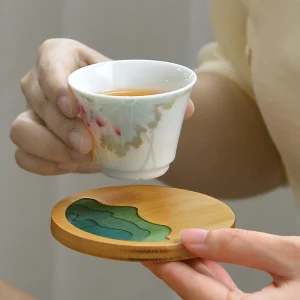
Seek the mug not spun by machine, but coaxed from earth by hands that knew the clay’s resistance. Feel its weight—a promise of warmth held. See the slight wobble in its rim, the ghost of the potter’s thumb in the glaze. It is asymmetrical. It honors the hill, the valley, the uneven curve where the light pools like honey.
Pour your tea. Cradle it. Your hands learn its landscape. This mug will never be perfect. It will be yours. Over years, hairline cracks will appear—a kintsugi of memory, tracing where hot met cold, where a morning thought landed heavy. A chip tells of a hurried dawn. A tannin stain, of deep, lingering conversation. It becomes not a cup, but a diary in clay. A testament to the beauty of being useful.
2. The Linen: A Backdrop of Dust and Gold
Raw. Undyed. A length of cloth the color of sky before storm, or of dried flax in a late summer field. Drape it. Let it fall. As a curtain, it does not block the light, but kneads it, filtering the sun to a soft, dusty gold that moves across the floor like a slow tide.
It is crisp at first, then yields. It breathes. It creases with the history of a day’s sitting. It carries the scent of sun, of wind, of the loom. It does not shout of pattern or dye. It whispers of texture. Of substance. It is the quiet canvas against which the wrinkled, imperfect, beautiful drama of an ordinary life unfolds. The shadow of a branch. The curl of a sleeping cat. The fold of a discarded book.
3. The Weathered Branch: A Guest from the Woods
Not a decoration. A guest. Found on the forest floor after a gale, or on the winter beach where the tide has retreated. Its bark peels like ancient parchment, revealing wood silvered by seasons. Its twists speak—of reaching for light, of resisting the prevailing wind, of simple endurance.
Place it in a corner. Lean it against a wall. It needs no vase. It is a sculpture completed by rain and time. It reminds you that beauty is not always in the bloom. There is profound grace in dormancy. In the elegant, aching architecture of survival. At night, by candlelight, its shadows will dance on your wall—stories older than your house, told without a sound.
4. The Stone Bowl: A Well for Reflection
Soapstone, perhaps. Or a river-smoothed granite, cool and dense in the palm. Hollowed by patient hands. Its surface tells two tales: one of the polisher’s care, one of the stone’s own rough truth. Fill it with clear water. Place a single fallen camellia upon its surface. Or three smooth pebbles, dark as closed eyes.
This is not for function. It is for reflection. The water evaporates, day by silent day. You replenish it. A small, continuous ritual of tending. It speaks of fluidity within permanence. Of stone’s eternal patience holding water’s fleeting dance. In its presence, the room’s chatter stills. You remember you, too, are mostly water, seeking your own level, held by an ancient, quiet bone.
5. The Cast Iron Kettle: A Heart Forged in Fire
Not shiny. Not new. Seasoned. Its black body remembers every flame, each boil. It darkens. Deepens. Its patina is a lacquer of use, a record of mornings met and evenings settled.
It heats slowly. It teaches the virtue of the wait. Then, it sings. A low, rolling rumble from its depths—an ancient song before the storm of the boil. The ritual is in the listening. In the choosing of leaves. In watching the steam rise, a visible breath. This kettle does not make tea quickly. It makes a moment. It forges a presence. And with each use, its soul grows richer, a quiet, black sun at the center of the kitchen’s flux.
6. The Boro Cushion: Sutures of Time
Fabric saved. A fragment of faded indigo from worn trousers. A scrap of barley-colored wool from a discarded coat. Held together by rough, visible stitches—sutures mending not just cloth, but time itself. This is the beauty of care. Of making do, and in the making, creating something with more soul than the new ever possessed.
Place it in your chair. Its texture invites the weight of you. Each patch is a memory preserved; each stitch, a promise not to discard. It speaks of thrift not as lack, but as deep devotion. It teaches that repair is not defeat, but an act of love. To rest upon it is to be held by generations of hands that believed in saving what still holds warmth.
7. The Hand-Forged Hook: The Ceremony of Coming Home
On your wall, it is not mere hardware. It is a river stone, worn smooth by the stream of coats, hats, bags. Forged under hammer and heat, it bears the dimples and waves of its violent, beautiful birth—a moment of liquid force made permanent.
Hang your everyday weight upon it. See how the mundane, when suspended from such honest form, becomes part of a silent composition. It reminds you that the tools of life deserve beauty. That the act of coming home—of shedding the world’s weight—can be a small, graceful ceremony. Your coat on its curve is an offering.
8. The Bamboo Blind: A Whisper from the Grass
Not identical slats. Natural bamboo, tied with cotton cord. Each segment a cousin, not a clone—a slight variation in hue, in node, in character. When the sun passes behind, the light fractures. It becomes a hundred golden lines painting the floor with stripes of shadow and glow.
It rustles. A soft, dry whisper in the breeze from an open window. A sound like a distant forest. It filters the world’s harshness, not blocking it, but softening its edges. A veil woven from one of earth’s most humble, resilient grasses. It bends. It yields. It does not break.
9. The Incense Holder: An Altar of Ash and Air
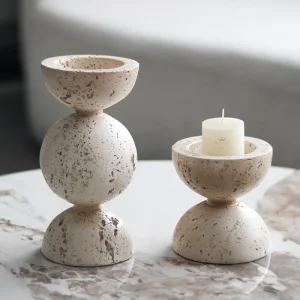
A small, heavy dish. Un-glazed ceramic, the shape of a mountain or a rough-hewn wedge. In its hollow, you place a cone of sandalwood. You light it. The smoke curls—a silent, fragrant river flowing up towards nothingness.
The ash gathers. A soft, grey powder. You do not clean it away hastily. It is evidence. The proof of transformation. Of solid turning to scent, to memory, to invisible air. The holder itself darkens, stained by these countless tiny offerings. It becomes an altar to transience. A focal point for a breath. For a thought released. For watching something beautiful disappear.
10. The Worn Wooden Tray: The Gatherer of Intention
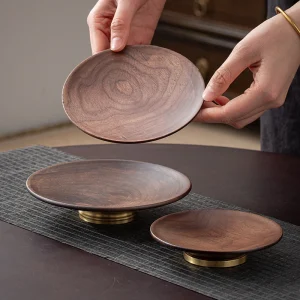
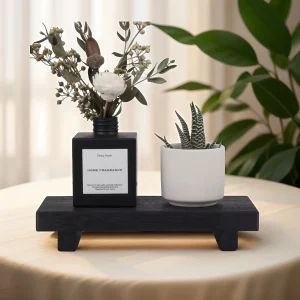
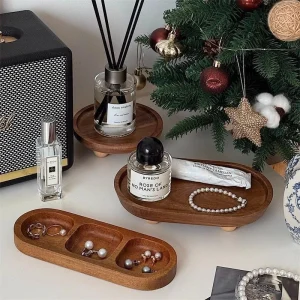
Found at a market, perhaps. Its edges softened, rounded by decades of hands lifting, carrying, offering. The varnish, once a boastful gloss, is now a warm, cloudy satin. The grain, once hidden, rises like forgotten topography from a deep, amber sea.
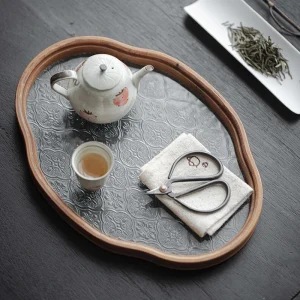
Use it. Serve tea upon its weathered plane. Gather your solitary breakfast. Let it bear the ring of a glass, the gentle scratch of a pen’s passage. Do not fear these marks. They are the next chapter in its story. This tray is not for display. It is for gathering. It holds not just objects, but intention. It turns a simple meal into an occasion, by virtue of its own seasoned, silent grace.
The Leaf Has Landed
The rain has long ceased. The copper leaf, now wet and gleaming, clings to its stone. Inside, the steam has cleared from the window. You see things as they are. Not as you wish them to be.
These objects are not answers. They are questions posed in clay, in cloth, in iron, in wood. They do not fill a space. They open it. They ask you to touch the rough bark. To savor the slow heat. To honor the stain. To mend the tear. In a world shouting of the new, the perfect, the forever, they offer a quieter, deeper truth: there is a profound and sacred beauty in the crack, the fade, the gentle, inevitable unraveling.
Begin with one. Just one. Place it where the dawn light will find it. Let it be a reminder. That you, like this object, are ever-changing. That your scars are maps of resilience. That your softness is a strength earned. That in this very moment, imperfect and fleeting as a sigh of steam on glass, you are, and your home is, profoundly complete.
Just as it is.