The Morning Sun, a Slow Honey
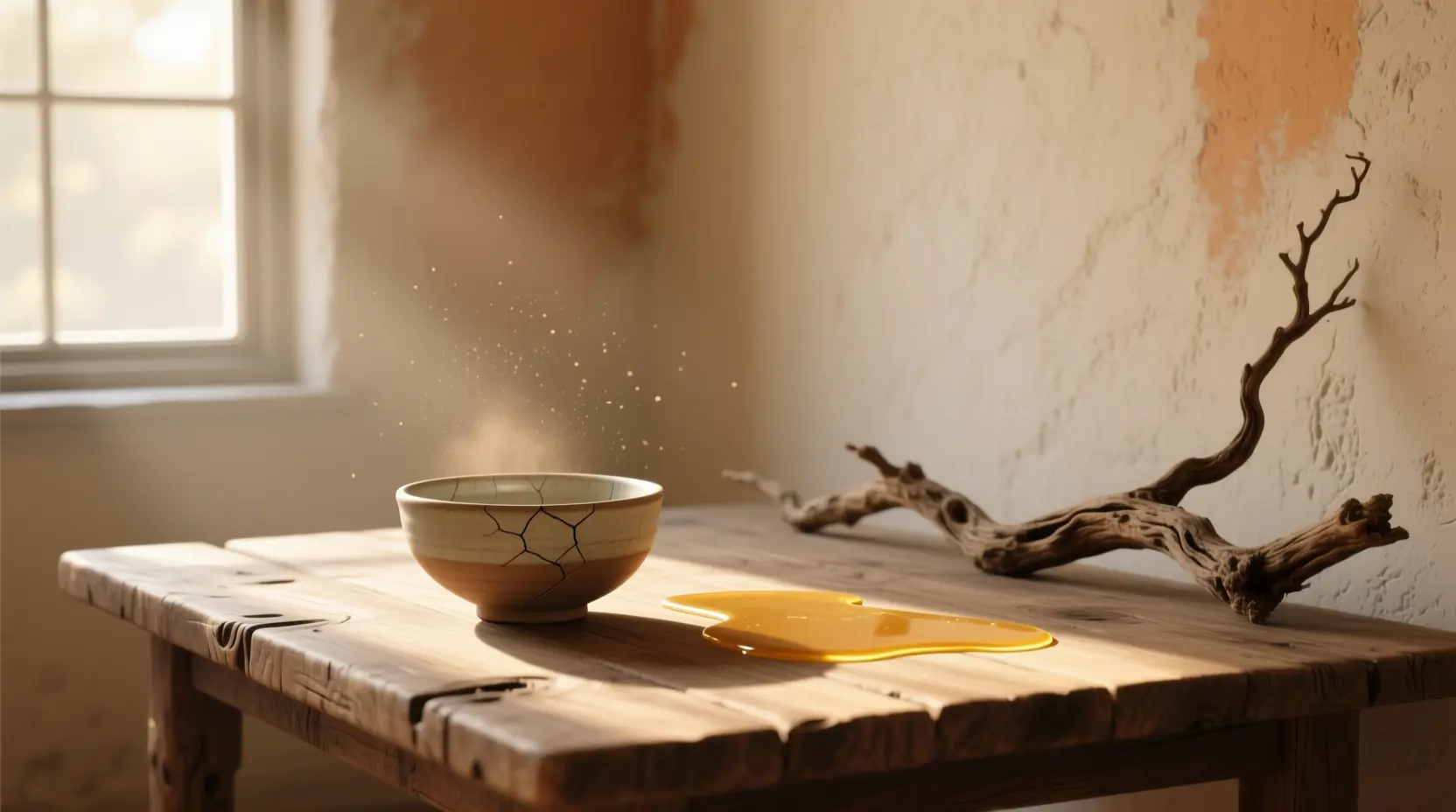
The light does not arrive. It gathers. It pools. Like honey from a forgotten hive, it spills across the floor. It finds the low table. Not new. Never new. Its wood is a story of grain and years, of quiet service. A single ceramic bowl, cool and imperfect, holds this light. This silence is not empty. It is full. This is the heart that beats, steady and patient, within what you call “Japandi.” It is not a trend. Trends are leaves on the stream—here, then gone. This is the stream itself. The deep, moving water.
You ask what comes in 2026. A year is a breath. Let us speak not of what is next, but what is returning. What is remembering itself.
The Wood Remembers Its Roots
We have sat too long with perfect planks. Laminates that smile a hollow smile. The wood in the coming time will speak. It will have a voice. Knots will not be hidden. They will be eyes, watching the room with calm regard. Cracks from old growth, filled with resin the colour of dusk, will be rivers on a map. Kintsugi for the living tree.
A Map Written in Grain and Shadow
You will see less of the pale, silent ash. More of the dark, whispering walnut. The humble, rich chestnut. Woods that feel like the forest floor underfoot. The craft will be in the joinery, celebrated. Pegs, not hidden screws. The shou sugi ban technique will soften. Not for stark black contrast, but to gently grey the surface, to draw out the texture like a memory surfacing. The wood will be allowed to move. To sigh with the seasons. Your floor may gap a little in winter. This is not a flaw. It is the house breathing with you.
The Hand Is Not Separate From the Clay
The machine makes a perfect line. The soul withers. The object arrives silent. In the space of 2026, you will listen for the tremor. The slight unevenness of a rim shaped by palms, not pistons. The brushstroke that hesitated, then found its path.
The Signature of a Life
Potters will be known not by brand, but by their hand’s signature. A slight thickening here. A glaze that pools like a sigh in a crevice. You will choose a cup not for its colour, but for how it meets your own palm—does it feel like a stone warmed by the sun? The craftsman’s fingerprint, baked into the clay, is a seal. It says: a life touched this. A life cares for your tea, your rice, your morning silence.
Textiles, too, will shed their sameness. Linen, raw and slubby, will be favoured over smooth cotton. It will be left undyed, the colour of flax, of cloud. Weaving irregularities will be cherished. They are the rhythm of the loom, the breath of the weaver. A blanket will not just cover you. It will hold the patience of its making.
The Colour of Silence
We have loved the palette of stone and sand. This will not leave. It will deepen. Imagine the grey of a river rock after rain. The soft green of moss on the north side of an ancient tree. The faded indigo of a much-mended work coat, washed by years. These are the colours coming.
Revealed, Not Applied
They are not applied. They are revealed. A plaster wall, mixed with local clay and straw, will dry to a unique, mottled warmth. It will smell faintly of earth after a shower. Pigments will be drawn from the land itself—walnut shells, iron oxide. The colour will live within the material, not upon it. Your wall will not be “painted beige.” It will be the colour of this earth, this light.
There will be a return to sumi, the ink black. Not for contrast, but for depth. A black iron vessel. A charred accent. It is the colour of the void from which all form emerges. It is the pause between thoughts.
The Space Between Breaths
The rooms of the future will hold more air. Not empty space, but ma. The generous pause. The interval that gives meaning to the note. Furniture will pull away from walls. It will gather in low, intimate archipelagos on a sea of tatami.
Soft Boundaries, Whispering Transitions
Storage will not shout. It will whisper. It will recede. Sliding panels of woven grass or paper will replace solid doors, allowing light to soften and diffuse. The obsession with “open concept” will mature into a poetry of “soft boundaries.” A screen of rice paper. A curtain of undyed hemp. You will feel the transition from one realm to another in your feet, in the quality of light, not by a wall.
The ceiling, often forgotten, will be remembered. It will be clad in narrow, smoked planks, drawing the eye up like a forest canopy. Or left as raw, textured plaster. The room becomes a vessel. You are not filling it. You are living within its embrace.
The Beauty That Time Brings
This is the core of it all. The soul of the movement. We will stop fearing age. We will court it. A new object will be considered not for its shine, but for its potential to patina. Brass that will dim and warm with touch. Copper that will blush green in the damp corner. The wood of the dining table that will be mapped with the ghosts of a hundred meals.
Mending as Celebration
We will mend more readily. A broken plate will not be discarded. Its mending with gold will be a celebration of its history. A tear in the shoji screen will be patched with careful stitching, the repair itself becoming a mark of care. The house will become a living record. It will not be a museum of newness. It will be a diary written in wood, cloth, and light.
The Garden Indoors
The line between here and there will dissolve further. It will not be about a potted plant on a stand. It will be about allowing the outside to inhabit. A deep windowsill lined with shallow basins of water and stone. A section of floor where tile gives way to smooth pebbles you can walk on barefoot.
Fellow Breaths
The plants chosen will be quiet. Ferns that speak of cool, shadowed places. A single, sculptural branch—found, not bought—leaning in a corner. Moss, encouraged in a stone bowl. It is not decoration. It is a fellow breath. It reminds you of the slow, green pace of the world.
The Ritual of the Single Thing
In 2026, you will own less. Not from austerity, but from reverence. You will not have twenty bowls. You will have one. You will know its curve. Its balance. The way it feels full, even when empty. Your hand will know its path to the one cup you use for morning tea. This is not minimalism as a style. It is minimalism as a practice. A path to seeing.
Holding a Moment
Each object will be chosen not to fill a corner, but to hold a moment. A hand-carved wooden spoon for the evening meal. A cast iron kettle that sings a particular song. The ritual is in the attention. In the pouring of the water. In the wiping clean of the surface. The space becomes a place of care. The act of cleaning is not a chore. It is a meditation. A way of thanking the objects that hold your life.
So, What Is Next?
The stream does not ask this. It simply flows. It wears away the hard, glossy edges. It reveals the essential stone beneath.
What is next for Japandi is a return. A return to the hand. To the irregular. To the quiet authority of materials that have lived. It is a movement inward, as the world spins ever faster outward. Your home in 2026 will not be a showroom. It will be a sanctuary. Not perfect. Not finished. Alive. Breathing with you. Aging with you.
It will smell of wood, of wax, of wet stone. The light will be soft, filtered through paper. The sounds will be few: the click of a wooden latch, the pour of water, the rustle of linen, your own breath.
This is not a prediction. It is an invitation. To slow down. To touch the grain. To listen to the silence between the ticking of the clock. To find the world not in the next new thing, but in the deep, enduring beauty of what already is, and what it is becoming.
The bowl on the table holds the sun. It is enough. It is everything.