Between Bare Walls, a Breath Held
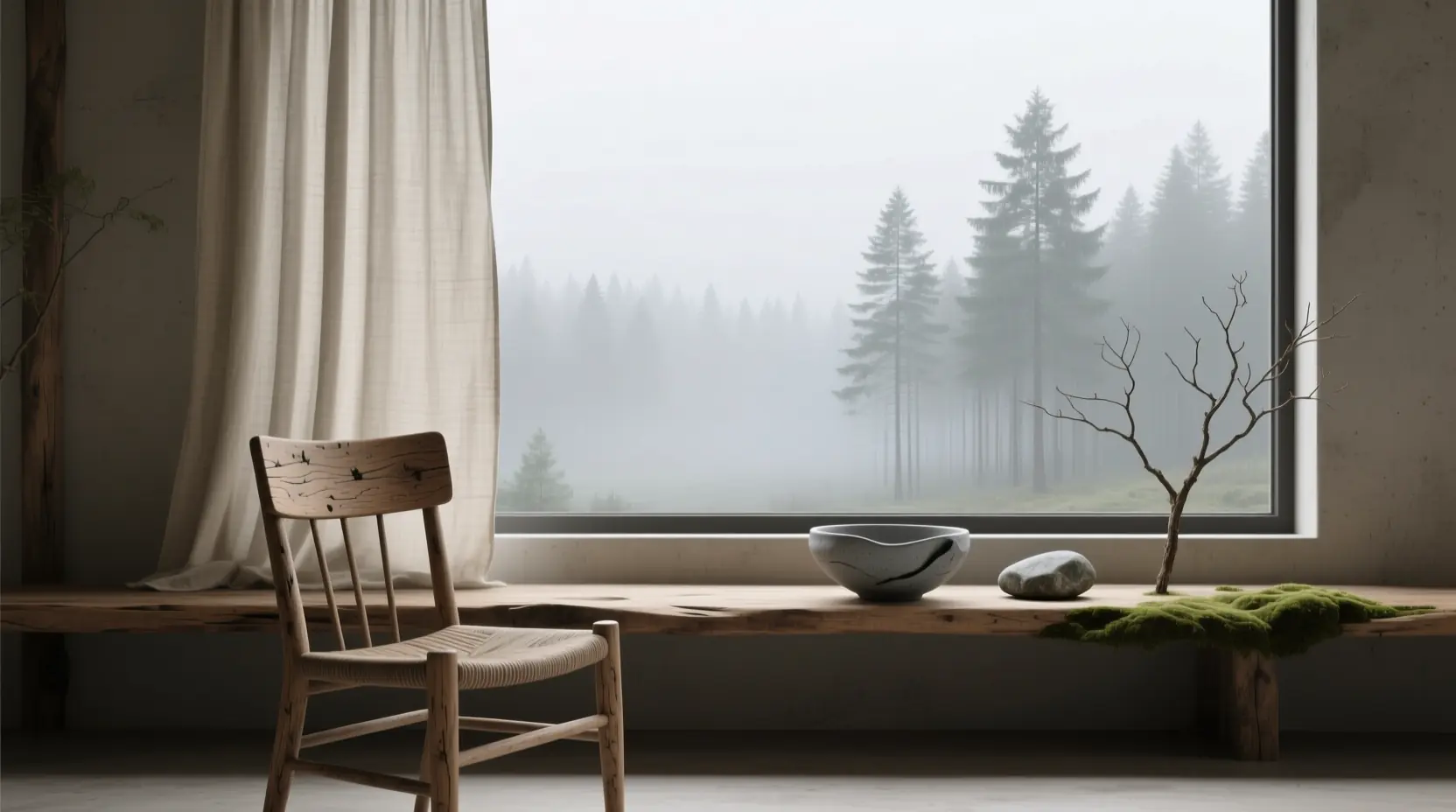
The room waits. A cup of steam. A single branch in still water. This is not emptiness. It is readiness. A space cleared not for more, but for enough.
Here, in the quiet communion of Japanese wabi-sabi and Scandinavian hygge, a philosophy is born. Not of trend, but of temperament. They call it Japandi. A name for what has always been: the mindful art of living with less, but feeling more. It is the quiet crackle of flax meeting the cool, silent embrace of oak. It is the acceptance of a knot in the wood, a shadow on the plaster, as essential as the light that falls beside them.
Let us sit, then. Let us observe ten whispers of this way. Not as rules, but as breaths taken in a still room.
Whispers from a Still Room
1. The Hearth of Unfinished Things
A low sofa, the colour of mist over a morning field. Its fabric is undyed. To its side, a table of pale oak, its edges soft, its grain a map of slow growth. There is no sheen here. Only the gentle touch of time and hand.
On its surface, a stone from a cold stream. A book, its pages worn at the corners.
See how the light, from a paper-shaded lantern, falls. It does not blast. It grazes. It finds the pebble, the fold in the linen, the gentle warp of the wood. This light honours imperfection. It says: here is a thing that is true. It has lived. It will continue to live, quietly, beside you.
The room is not decorated. It is gathered. Each object a sentence in a story about stillness.
2. The Frame of a Single Branch
A window, wide and unadorned. Beyond it, a pine, a stretch of grey sky. Inside, nothing competes. A floor of wide, pale planks, brushed with the soft tread of feet. A single, low armchair faces the view.
This room understands the primary art: to frame nature, and then to step aside.
The colours are those of the outside world brought in: bark, moss, cloud, stone. There is no barrier between the breath of the forest and the breath of the room. They become one rhythm. You sit not as a spectator, but as a part of the landscape. The chair holds you. The view holds you. You are seated in the centre of a silent exchange.
3. The Soul of the Hand-Turned Bowl
On a shelf of rough-sawn timber, a collection. Not of trinkets, but of companions. A ceramic vase, glazed in the grey of a winter sea, its surface dimpled by the potter’s thumb. A basket, woven from foraged willow.
These are not ornaments. They are records.
In their curves and textures lives the memory of the hand that made them. The slight wobble in the line, the exposed joinery—these are not flaws to hide. They are the signature of the authentic. They whisper: I was made by a person, for a purpose. To hold them is to feel that connection. The room becomes an album of gentle, human gestures.
4. The Poetry of Negative Space
A vast expanse of wall, washed in the soft, chalky white of sea-bleached bone. Before it, a single, blackened pine stool. Above, a solitary bamboo flute rests on two pegs. Nothing more.
This is the courage of emptiness.
In the West, we rush to fill the void. Here, the void is sacred. It is the silence between musical notes. The pause in a conversation. This negative space, ma, is not absence. It is a presence. It allows the one object to sing its pure, clear note. It gives the eye a place to rest, the mind a place to wander. The stool is not lonely. It is profound. It holds the potential for a guest, for a thought, for a beam of afternoon sun.
5. The Warmth of the Woven Nest
A deep, enveloping sofa in the colour of roasted barley. Around it, a nest of textures: a shag rug the pile of fallen pine needles, a knitted throw the grey of dove’s wing.
This is the Scandinavian heart within the Zen bones. It is the tactical, gentle embrace of comfort. It says the spiritual need not be austere. It can be soft. It can hold you.
The textures are nubby, organic, inviting touch. You sink in. You are grounded. The world outside may be sharp, but here, in this woven nest, you are swaddled in a quiet, terrestrial warmth. It is a sanctuary built not of walls, but of wool, and cotton, and peace.
6. The Line That Follows the Grain
The architecture speaks. A ceiling beam, dark and hefty, its surface telling a century of seasons. A slender column of light ash, rising like a young tree. The lines are clean, horizontal, calm. They do not shout. They guide.
Furniture follows this language. A low cabinet, its doors framed simply, revealing the wood’s story. A platform bed.
There is no frivolous carving. Each line has intention. It creates rhythm, like the repeating bars of a quiet melody. The eye moves calmly from the line of the floorboard to the line of the bench to the line of the horizon. It is a lesson in clarity. In knowing what is essential.
7. The Patina of a Thousand Days
A leather chair, its surface worn to a soft, supple map of use. The armrests glow from the oil of a thousand days of hands. Beside it, a copper vessel, its sheen softened to a muted, blushing green.
This room does not fear age. It reveres it.
Patina is the beautiful evidence of life lived. It is the soul of an object rising to the surface. A scratch is a memory. A stain is a story. Here, things are not replaced when they show wear; they are finally understood. They have earned their place. They teach us about grace, about softening, about the beauty of yielding to time.
8. The Stillness of the Stone Garden
A corner of the room is given over to contemplation. A shallow tray of dark slate holds a miniature landscape. A few chosen stones. A rake of fine, pale sand, combed into ripples.
This is the mind of the room made visible.
It is a focal point not for distraction, but for concentration. To sit before it is to still the inner chatter. The act of raking the sand is a meditation. The stones are anchors. They remind us of weight, of permanence amidst transience. This small, contained world reflects the larger principles of the space: order within nature, simplicity, profound calm.
9. The Breath of the Flax and the Fern
Textiles are the soft voice of the space. Rough, undyed linen for the curtains, filtering the light like a morning mist. And then, life itself: a terracotta pot holding a spreading fern, its green a sudden, joyful exhalation.
The fabrics breathe. They are natural, tactile. They change with the light.
And they make room for other living things. The fern is not a decoration; it is a roommate. It asks for water, turns towards the sun. It is a quiet lesson in care, in cyclical life, in the simple pleasure of a thriving green thing. It brings the wild, growing essence of the forest to the hearth.
10. The Altar of the Everyday
A simple wooden wall shelf. Upon it, three objects: a smooth, egg-shaped stone. A tiny clay cup holding a single, dried hydrangea bloom. A candle of pure beeswax.
This is the final whisper. The tokonoma of the everyday.
It is a small, intentional display that elevates the ordinary to the reverential. It says: this stone is worthy of your gaze. This faded flower holds the memory of a whole season. This light is a small sun you can kindle yourself. It is a reminder that beauty and meaning are not in grand gestures, but in mindful attention to the small, the simple, the passing.
Returning to Readiness
The room has finished speaking. It returns to silence.
These are not ideas to be copied, but feelings to be understood. Japandi is not an aesthetic you buy. It is a pace you adopt. It is the courage to have one perfect bowl instead of ten full cabinets. It is the wisdom to choose the chair that fits your spine, the wood that tells a story.
It begins with a breath. With the removal of one thing that no longer serves. With the careful introduction of another that feels true. It is the practice of listening to a room, to the light that falls through it.
It is the slow craft of building a sanctuary not from things, but from atmosphere. From intention. From quiet soul.
So sit. Listen. Let the room gather itself around you.
And begin.