To Begin, You Must Listen to the Silence of the Wall
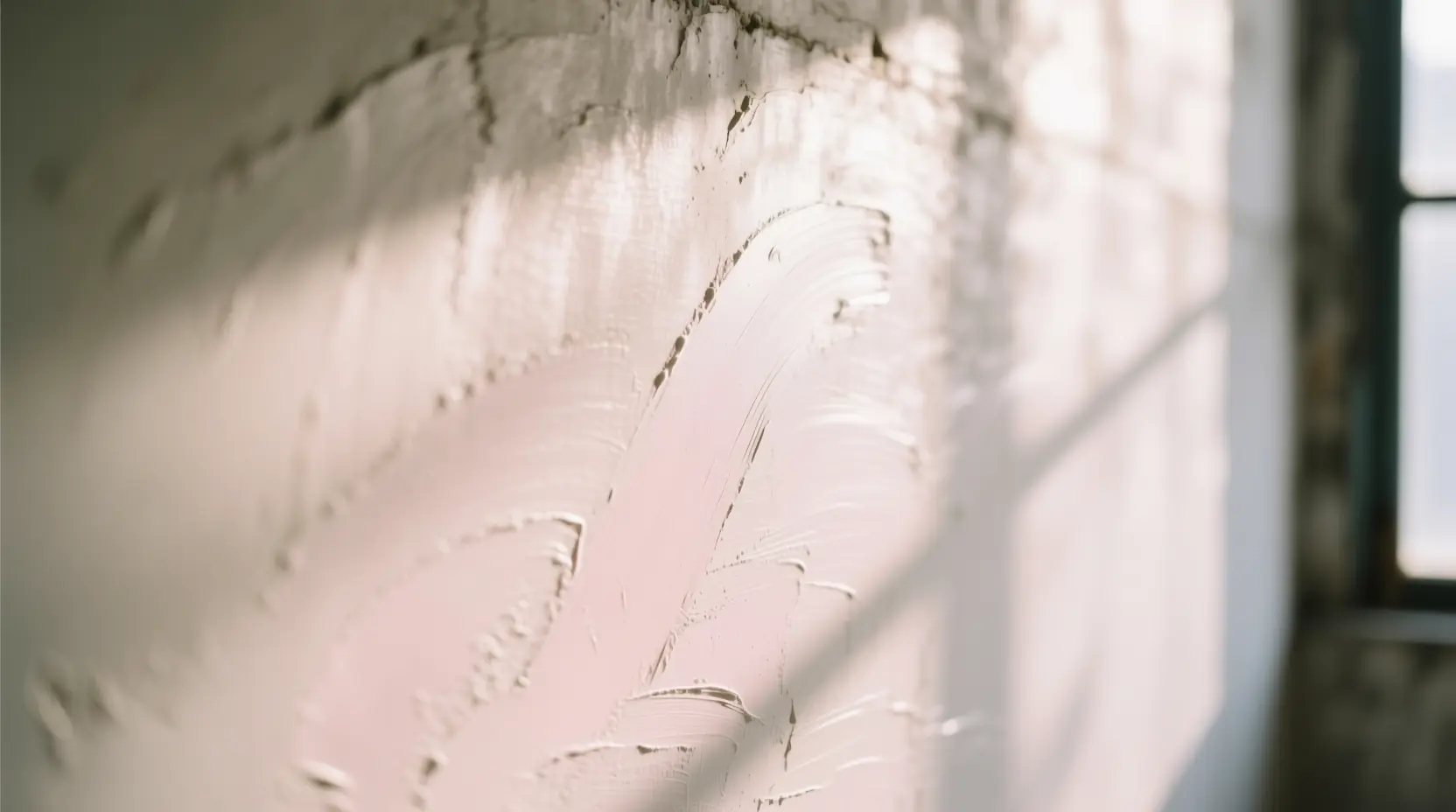
The wall before you holds a silence. Not the hollow quiet of new plasterboard, smooth and forgetful. This is a deeper silence. The silence of an old garden wall that has known a hundred winters. It holds the light not on its surface, but within its body. It breathes. You have felt this in forgotten chapels, in the shaded corner of a villa courtyard. The colour there is not a film. It is the wall itself, glowing. Soft, cloud-like. It has movement, like mist over a morning meadow. This is the work of lime wash. Not paint. It is a wash. A whisper.
The Soul of the Material Begins with Stone
All true things begin with stone. Limestone sleeps in the earth, a library of fire and pressure. It is born from shells and bones, from the slow, patient weight of millennia. We take this stone. We introduce it to a respectful, transforming heat. It becomes quicklime—a brittle, hungry spirit. Then, water. A cautious, ancient slaking. A hiss and a settling into paste. It becomes putty, and it sleeps again. In a dark corner of the shed, for months. For years, if there is patience. The longer it sleeps, the finer its character, the more forgiving its nature.
This slaked lime is the heart. Mixed with water, and perhaps a little earth for pigment—a powdered clay, an ochre, a soft umber—it becomes lime wash. It is alive. Alkaline, humble. It seeks not to conquer the surface, but to join with it. To become one. Paint seals. It sits atop, a raincoat. Lime wash breathes. It sinks in. A linen shirt. It is porous. It allows the wall to take in moisture and release it, like the bark of an old tree. This is why it has clothed buildings for centuries. It protects not by fighting the elements, but by moving with them. By acceptance.
The Ground That Receives: A Thirsty Communion
You cannot whisper to a wall that will not listen. The surface must be ready. It must be thirsty, and of a kindred spirit. New, highly finished plaster is too smooth, too vain. It rejects the humble wash. The ideal ground is itself ancient—a lime plaster, a rough stone, a porous brick. If the wall is new, it must be made to understand. A primer of diluted milk, a thin, gritty coat. You are not preparing a canvas. You are introducing two strangers who must become family.
Feel the wall with your palms. It should have tooth. A gentle abrasion. Like unglazed pottery. Like sun-warmed stone. It should be free of the gloss of modern seals, the memory of plastic. It must be bare, open, and willing to absorb. This is the first lesson. True beauty requires vulnerability. A capacity to receive.
The Tools Are an Extension of the Hand, Not Its Master
Put away the synthetic roller. Its frantic, buzzing spin is a violence here. The rhythm is all wrong. You will need a wide, soft brush. A whitewash brush, with natural bristles that hold their shape. Feel its weight in your hand. It holds the wash like a deep breath. You will need a bucket, wide and steady. And rags of soft, absorbent cloth. Old linen is best, carrying its own quiet history.
The mixture itself is thin. Like skimmed milk, or weak tea. It will feel alarmingly translucent, offering no promise of coverage. This is not a mistake. It is the way. You are not covering. You are staining. Tinting the soul of the surface. Layer by patient, breath-like layer.
The Act of Washing: A Meditation in Layers and Light
Begin by dampening the wall. A fine mist of clean water from a spray bottle. This prevents the thirsty surface from drinking the wash too quickly, unevenly, in a frantic gasp. It invites a slow, even sip.
Dip your brush. Let the bristles drink deeply. Do not drown it. Lift it, and tap it gently—once, twice—against the inside of the bucket. Not to shed the wash, but to settle it into the heart of the brush. Now, bring it to the wall.
Do not paint. Wash.
Let your arm move from the shoulder, not the wrist. A calm, sweeping gesture, like scything grass. Follow the natural light of the room. Work from a dry area into a damp one. There will be no sharp lines. Only soft, feathered edges, whispers blending into whispers. The first coat will seem to disappear. It will be a ghost. A mere suggestion on the stone. This is as it should be.
Now, you wait. You step back. You let the wall breathe. You let the wash cure. This is not mere drying. Drying is for paint. This is a chemical conversation—the lime beginning its slow, inevitable return to stone, bonding with the carbon in the air, marrying the surface. It may take hours. It may take until tomorrow. Listen to the silence of the room. Watch the afternoon light crawl across the floor. Feel the air change.
When the wall is ready—not when you are impatient—you come again. Perhaps with a slightly different stroke. A cross-hatch. A more diluted wash. A different angle of the brush. Each layer is a veil. Each veil deepens the colour, but never quite obscures. The subtle variations are not flaws. They are the memory of your hand, of the wall’s own texture, of the day’s humidity. They are the clouds in a vast, quiet sky.
Three coats. Four. Sometimes five. With each, the depth grows. The colour becomes richer, more soulful, yet never flat, never loud. From within its chalky depths, a soft luminescence emerges. It is the magic of the lime, catching and scattering the light, holding it gently. This is the ‘cloud.’ The inner light.
The Embrace of Imperfection: The Wisdom of Wabi-Sabi
Here, you must surrender control. This is the hardest lesson for modern hands, trained for precision and uniformity.
Lime wash will do as it wills. It may gather lovingly in a small hollow of the plaster, leaving a deeper pool of colour, a shadowed pond. It may skip over a tiny peak, allowing the ghost of a previous layer to show through, a memory of yesterday’s light. These are not errors to be corrected. They are the signature of the process. The breath of the material. They are the *wabi-sabi*—the profound beauty of the impermanent, the imperfect, the incomplete. The evidence of a conversation, not a command.
This is where the wall tells its story. The rough patch of hand-troweled plaster becomes a soft mountain range at dusk. The joint between ancient stones becomes a gentle shadow, a seam in time. The texture of the brush, the graceful drip you chose not to chase, become part of the landscape. You are not creating a finish. You are curating a patina. An age. A soul.
The Soul of the Palette: Colours That Remember the Earth
The true colours for this work come from the earth itself. They are the colours of the horizon at dawn, of dry riverbeds, of autumn leaves returning to soil. They are quiet colours.
Chalk white. Not the stark, blinding white of titanium, but the warm, breathing white of a sun-bleached shell, of morning frost. Off-whites tinged with grey—the white of sea fog resting on a hill. Ochres, from the palest whisper of sunlight to deep, burnt gold pulled from the heart of the clay. Umbers, the brown of turned earth and deep forest shadow. Soft, earthen greens from crushed minerals, the colour of lichen on north-facing stone.
These pigments do not fight the lime. They become one with it. The lime mutes them, gives them a dusty, chalky softness, a hazy distance. A colour that feels settled, resolved. As if it has always been there, slowly fading in and out with the light. You cannot make a lime wash scream in electric blue or shout in crimson. It would be against its nature. It speaks only in the tones of the quiet earth. In whispers.
The Living Finish: A Collaboration with Time
When the final coat has cured, the wall is not ‘done.’ It has merely begun.
A lime-washed wall is a living thing. It will change with the humidity in the air, appearing deeper, more saturated on a damp day, lighter and chalkier when the air is dry. Over years, it may gently wear at a corner where a hand sometimes passes, revealing a soft hint of the layer beneath, like a memory wearing through. It does not chip or flake like brittle paint. It wears, like sea glass. Like the steps of an old stair. It becomes more beautiful, more itself.
To care for it, you must understand its life. Dust it with a soft, dry cloth. For a mark, you do not scrub with chemical anger. You may gently re-wash a small area with a whisper of the same mixture, and it will blend, for it is the same substance, eager to heal itself, to re-join the whole. It asks for respect, not fear. For observation, not domination.
The Gift of Slowness: Finding Peace in the Process
This is not a weekend project. It is a practice. A ritual of attention. In a rushing world, it teaches the divinity of slowness. In an age of the flat, the flawless, and the ephemeral, it teaches the beauty of depth, character, and enduring change. In our frantic quest for permanent perfection, it teaches the graceful art of decay and renewal.
You stand finally before your finished wall. You see the soft, cloudy variations. The way the long, low light of a late afternoon streams from the west window and catches the texture, making the whole surface glow from within, as if holding the sunset. It is not a wall you simply look at. It is a wall you feel. It has calm. It has breath. It has a silence that is full, not empty.
You have not decorated. You have collaborated—with the lime, with the stone, with the light, with time itself. You have given your wall a skin that breathes. A quiet, luminous silence.
And in that cultivated silence, you may finally hear your own breath again. Slowed. Matched to the rhythm of the old, patient stones. You have not just washed a wall. You have learned how to listen. You have learned how to whisper. And in that whisper, you have found a kind of peace. A peace as soft and enduring as a cloud resting on stone, as patient as lime returning to the earth from which it came.