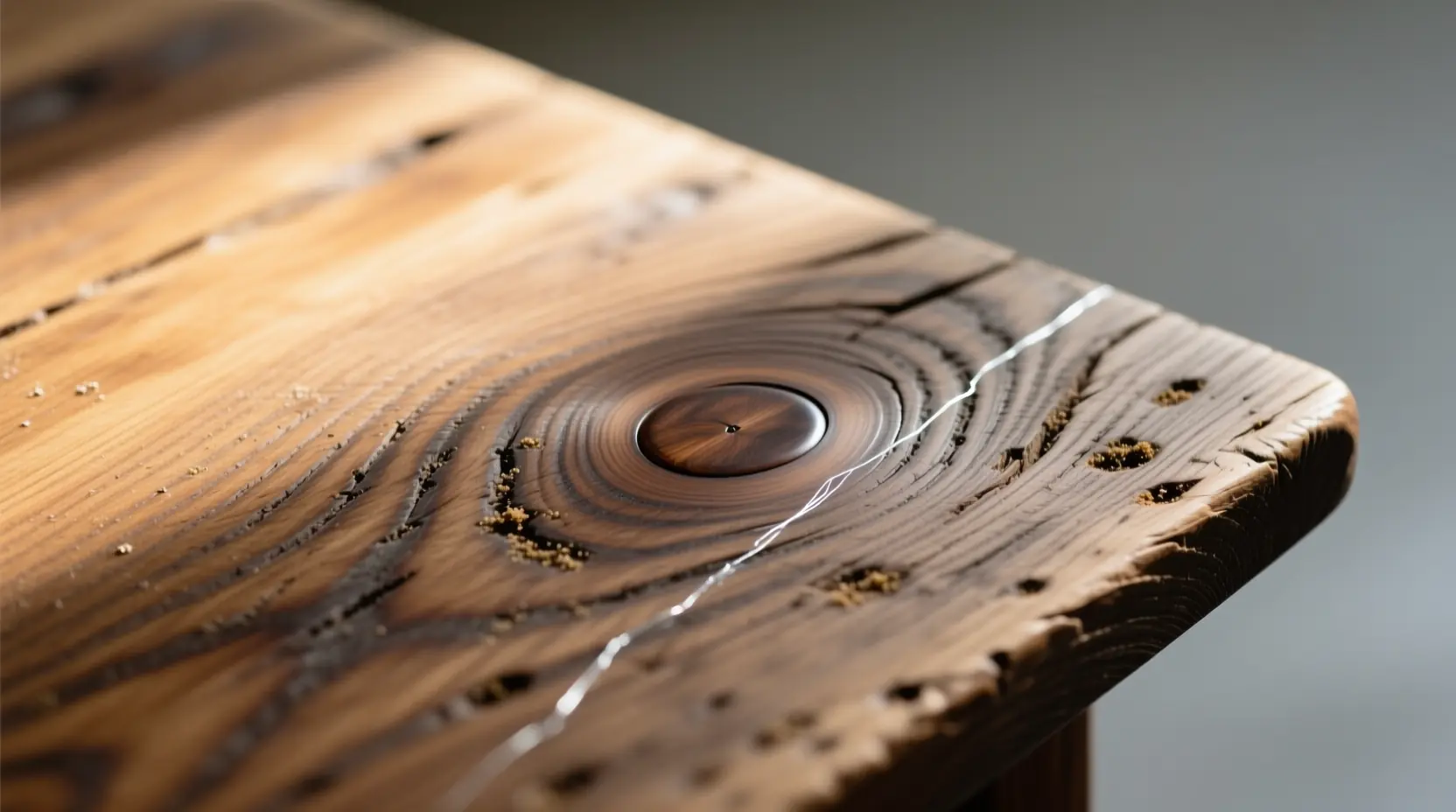
The tree kept its time in circles. In the silent press of one ring against another. In the stubborn reach for a crack of light through a crowded canopy. Then, it fell. Or was felled. And human hands—with their saws, their planes, their wanting—gave it a new shape. A table. A chair. A shelf for holding things. But the becoming was not the end. It was a translation. From a life of wind and root to a life of room and touch. To care for this wood is not to preserve a thing. It is to tend a slow, continuing verb.
To Hear the Song in the Grain
First, be still. Lay your palm flat on the surface. Close your eyes. Feel.
Beneath your skin, the land rises and falls. This is the grain. The topography of a life. Here, a ridge—a year of fierce growth. There, a valley—a season of hunger. A dark knot, a closed eye where a branch once dreamed. This is the wood’s true voice. Your care begins not with a cloth, but with this listening. To know it as a skin that breathes, however faintly, still.
Dust, then, is not dirt. It is the soft silt of lived days. Use a cloth of cotton, or linen. Move with the grain, never across it. This is not polishing. It is a form of clearing the throat. Allowing the old song to be heard again.
The Gift and the Ghost of Light
Sun will find it. It always does. A blade of gold will lie across the arm of a chair, a pool of warmth will settle on a table’s heart.
Light is an alchemist. It coaxes the hidden gold from the pine, the deep red memory from the cherry. It is a kind of blooming. But light is also a recorder. Over years, it writes with absence. It leaves a pale tracing of a bowl, a ghost of a book. A silhouette of what was.
Do not curse this fading. Do not shroud the piece in perpetual shadow. This is the wood remembering the light, just as it once remembered the rain. Turn a vase. Shift a lamp. Let the sun walk its slow arc across all the surfaces. A life without light is a story half-told.
The Sacred Grammar of Damage
Here is the heart of the matter. The first blemish.
A new surface is a sea of perfect, unbroken calm. The first scratch rings like a cry in that silence. We flinch. We see ruin.
But go to the stream. See the stone worn not by avoidance, but by the faithful passage of water. See the forest path, made not by the absence of feet, but by their constant, gentle return.
The scratch from a moved plate is the signature of a shared meal. The dull patch on the armrest is the memory of a thousand evenings of reading. The small dent from a fallen toy is the fossil of a moment’s joy. These are not injuries. They are the human grain. The new rings, grown around the old.
Your work is integration, not erasure.
For a Wound, a Balm
A deep gouge is a wound. It calls for a healer’s touch. A bit of beeswax, warmed by the thumb, pressed into the rift. Not to make it disappear. To make it whole. To change the narrative from violence to resilience.
A white ring from a glass, a bloom of moisture. A cloth, barely damp with oil—the oil of a walnut, the oil of a tung nut. Massage it in, a whispered plea. Often, the mark will soften, rejoin the chorus of the surface, a quiet note in the harmony. You are not hiding. You are reconciling.
The Ritual of Thirst
Wood remembers it was alive. In the dry, indoor desert of winter heat, it dreams of sap. It whispers its thirst in subtle languages. A faint creak. A hairline crack, fine as a sigh.
This is when you offer drink.
Forget the bright, shouting polishes that coat and conquer. They are a plastic smile. We must think of nourishment that is absorbed. That becomes part of the flesh.
Think of simple things. Beeswax, comb-harvested, smelling of honey and sun. Olive oil, pressed from fruit. Melt them together over a low flame. Let them cool. This is not a product. It is a sacrament.
Apply it with your hands. The warmth of your palm is part of the ritual. A thin film. A whispered layer. Let the wood sip. Wait. Then, with a soft cloth, buff along the grain. Not to a high, garish shine. To a soft, inward glow. The glow of a stone warmed by the afternoon.
This is not a task for a calendar. It is a ritual for the turning of seasons. When the air tightens with cold. When the humid breath of summer arrives. Once a year. Perhaps less. More is not better. It is greed. It clouds the pores. It silences the breath.
The Grace of Use
This object is not an idol. It is a companion. Let the table bear the weight of feasts and failures. Let the chair cradle thought and rest. Wood is strong. It asks for trust.
But offer kindness. A coaster is not a shield of fear. It is a linen token of respect. Lift, do not drag. A lifted chair is a gesture of care. A dragged chair is a small, repeated violence.
Wipe a spill. Not frantically. But promptly, with a damp cloth, and dried with another. This is not just maintenance. It is a moment of attention. A fleeting conversation.
The Soul Worn Smooth
And then, one day, you will see it. On the arm of the chair where a hand always rests. Along the table’s edge where elbows lean. The finish will retreat. It will wear away to reveal the pale, true wood beneath.
Do not mourn this.
This is revelation. The wood is showing you its face again. Worn smooth not by accident, but by ten thousand moments of human presence. This is the highest patina. The patina of love.
You may leave it. Let that honest wear be a medal of honor. Or, you may anoint it. A single, sparing touch of oil. Not to disguise. To honor. To protect this newly revealed soul without obscuring its truth.
The Lesson in the Patina
In the end, this care is a practice in seeing. It forces your eye to slow. To appreciate the shadow where the light has faded. To treasure the slick smoothness of the worn spot.
It teaches you that perfection is a lonely, static country. True beauty is a record. A chronicle of light and shadow, of touch and absence, of small, honorable wounds that have healed into character.
Your furniture becomes a quiet clock. It measures your life in its changes. The scratch from the moving day. The stain from the spilled wine of a celebration. The arm worn smooth by twilight vigils.
Let it age.
Give it a stable room. Shield it from the true violences—the swamp-heat, the desert-dry. Nourish it rarely, with simple things. Dust it with presence. And then, let it be.
In this surrender, you will find the deepest teaching. The wood, in its graceful acquiescence to time, becomes a mirror. It shows you that a thing is most itself not in its first, flawless bloom, but in its accumulated truth. In its gentle holding of all its years. It is a silent philosopher in your home, speaking only in whispers of grain and gloss, teaching the most necessary art: the art of letting go, and loving—deeply loving—what time, and use, and care, have made of it.