The Path to Your Door Is a Worn River Stone
Smoothed by passing seasons. By comings and goings. It is the first sentence of a silent story your home tells. To style an entryway is not to decorate. It is to compose a breath. A pause between the world’s noise and the heart’s quiet. An act of welcome, not of show. Consider this space not as a project, but as a practice. Like raking sand in a courtyard, aware that the wind will rewrite it tomorrow.
A Threshold of Air and Light
First, open the door.
Feel the air that meets you.
Is it stale, forgotten? Or does it move, carrying the scent of rain from outside, the memory of wood from within? An entry must breathe. It is a lung. Clear the clutter, not with harshness, but with intention. A single bench of weathered cedar is better than a frantic row of shoes. Let there be emptiness. This is the first gift you offer: space to arrive. To shed the dust of the road. Notice how light falls here in the late afternoon. Does it pool on the floor? Does it glance off a wall? Do not fight it. Follow it. A small, clear vase of water on a stone sill can catch this light and break it into a hundred dancing fragments on the ceiling. This is enough. Movement, air, light. The foundation is laid not with things, but with their absence.
The Soul of the Vessel
Now, consider the vessel. The objects that will hold this breath.
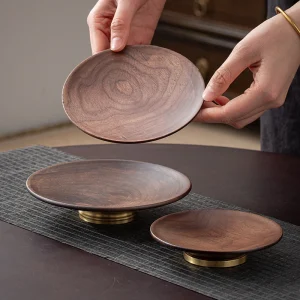
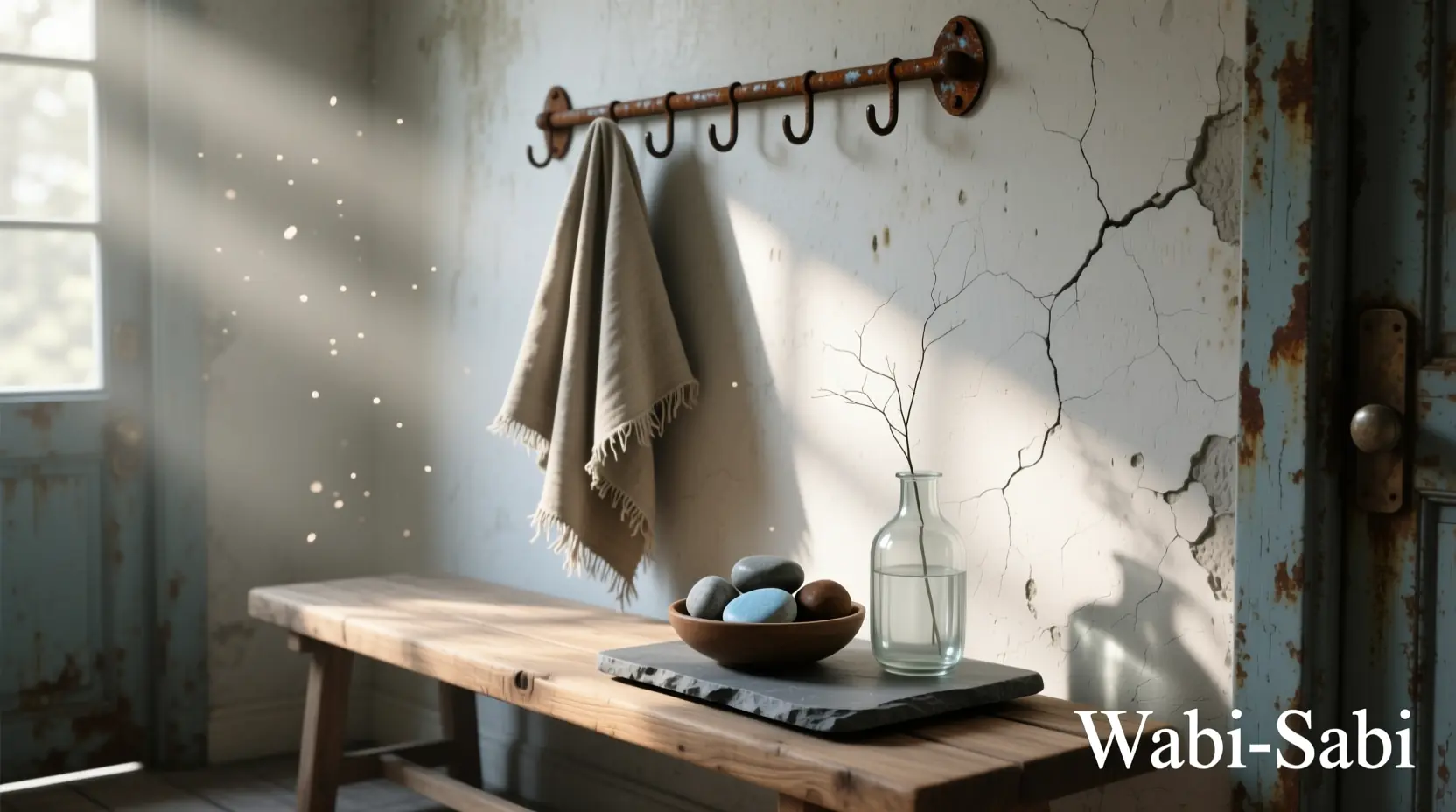
Reach for materials that remember. A bowl turned from a tree that knew storms. Its grain is a map of years of wind. Place it on a low table of slate, cool and solid as a mountain’s bone. Within it, let there be an offering. Not flowers, cut and striving, but perhaps a single, large feather found on a walk. Or three river stones, still damp. Their surfaces hold the memory of water.
A hook on the wall is not merely a hook. Forge it from iron that shows its age, a gentle rust like autumn leaves. Let it hold a cloak of raw, undyed linen. The cloth will smell of sunshine and wind, not of perfume. When a guest lays their coat upon it, they are not hanging a garment. They are leaving a layer of the outer world. The act becomes a ritual.
The Texture of Welcome
Underfoot, let there be truth.
Not a perfect, shrieking polish, but a texture that speaks to the soles of the feet. A mat of woven rush, its grassy scent rising with each step. A rug of faded wool, its colors softened like a twilight meadow. It says: You may walk here. You may bring in the earth. The floor should not be a stage, but a path.
On the wall, perhaps a mirror. But not a bright, shouting glass. Seek one with a silvered back, aging into a soft, smoky fog. It does not capture a sharp image, but a suggestion. A whisper of the one who stands before it, blurred at the edges with the patina of time. In its reflection, the guest does not see a flaw to fix. They see a human shape, momentarily still, part of the room’s quiet composition. It dignifies without demanding.
The Patina of Use
A bench. This is where the practice deepens.
It should be solid, its edges rounded by generations of hands resting, of sitting to remove a boot. Choose one that bears the gentle scars of use—a darkened spot where a plant once lived, a smooth depression from years of weight. This is not damage. This is a record of life. On this bench, place a folded blanket. Its weave should be loose, its color the grey of a dove or the brown of turned soil. It is there for warmth, yes, but also as a texture for the hand to touch upon entering.
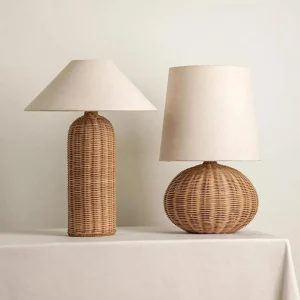
Beside it, a lamp. Its shade should be of handmade paper, thin as a moth’s wing. When lit from within at day’s end, it glows like a captured sunrise, warm and pulsing. It does not illuminate; it emanates. It says: The outside dark is there. Here, there is light. A small, patient light.
The Unseen Scent, The Unheard Sound
A true entry engages all senses, softly.
For scent, bypass the artifice of sprayed fragrance. Place a shallow dish of unfinished wood. In it, a handful of dry cedar shavings, a single drop of oil pressed from a citrus rind, a sprig of rosemary dried on its stem. This is a quiet, shifting scent. It is of the forest and the garden, not of a bottle.
For sound, allow for silence. But within that silence, perhaps a subtle resonance. A wind chime of hollow bamboo, not placed to constantly ring, but hung where only a determined draft from the opening door will stir it. Its sound is a single, wooden tok… tok… like water dripping in a cave. It marks the crossing of the threshold. It is the bell of a modest temple, struck once.
The Art of Holding and Releasing
Remember, this space is a transition. It must hold, but it must also release.
A simple shelf of sanded branch holds a few keys, a worn notebook. It holds the practicalities without fuss. But it also releases the visitor into the home. The view from the entry should not be a dead end, but a beckoning. A glimpse of a reading chair by a farther window. A sliver of a garden through another door. A suggestion of depth, of comfort waiting. The entry does not say, “Admire me.” It whispers, “Come in. There is more peace within.”
Imperfection as Completion
In this practice, release the desire for newness. Seek the beauty of the wabi-sabi—the crack in the bowl, the rust on the hinge, the uneven warp of the cloth. These are testaments to transience. They humble the space. They remind us that nothing is permanent, nor should it be. A crack allows the light to escape in new ways. A rusted hinge speaks of countless openings and closings, of arrivals and farewells.
Do not fill every corner. Leave a shadow its place. In the emptiness, the few chosen objects breathe. They converse with one another. The rough stone weighs down the feather-light linen. The hard slate is warmed by the soft wool. The aged wood is illuminated by the fresh, clear water. This is the harmony. Not sameness, but a deep, balanced conversation between contrasts.
The First and Last Impression
As you compose this quiet overture, sit on your bench at different hours. At dawn, when the light is thin and blue. At noon, when it is bold and direct. At evening, when it is long and golden. See how the room changes. The stone bowl becomes a deep well of shadow, then a vessel of fire. The texture of the wall is revealed, then hidden. The entryway is not a static picture. It is a living, breathing organism that exists in time.
When a guest arrives, they will likely not remark on any single thing. They may not even notice, with their conscious mind. But their shoulders will drop a fraction. Their breath will deepen. The chatter of the world will fall away, replaced by the tangible silence of stone, wood, and cloth. They will feel, in their bones, that they have crossed over. Not just into a house, but into an atmosphere. A cared-for peace.
This is the calm first impression. It is not made with money or trends. It is made with attention. With reverence for the soul of materials. It is the work of a humble craftsman, tending to the threshold. A Zen master raking the gravel, knowing the pattern is beautiful precisely because it will be gone with the next breeze. Your entryway is that pattern. A temporary, perfect composition of light, texture, and space. A silent hello. A held breath. A beginning.