The First Lesson is in the Leak
The rain has a way of finding the old clay tiles. Each drop, a soft tap. Over decades, a shallow bowl has formed. It does not hurry. It simply is. A perfect imperfection. This is the first lesson. The one the city, with its glass and glare, has forgotten. If you wish to bring this quiet truth into your home, begin where water is already sacred. Begin with the bathroom.
Not a room of chrome and steam, but a basin for the spirit. A place of morning ritual and evening release. To remodel it with wabi-sabi is not to install a trend. It is to cultivate a mood. To invite the forest and the riverbed inside.
Listening to the Silence of Materials
First, you must sit with the empty space. Breathe with it. Feel the light that comes, and the shadow that stays. The materials you choose are not mere surfaces. They are companions in this small, daily ceremony. They must have a voice. A whisper.
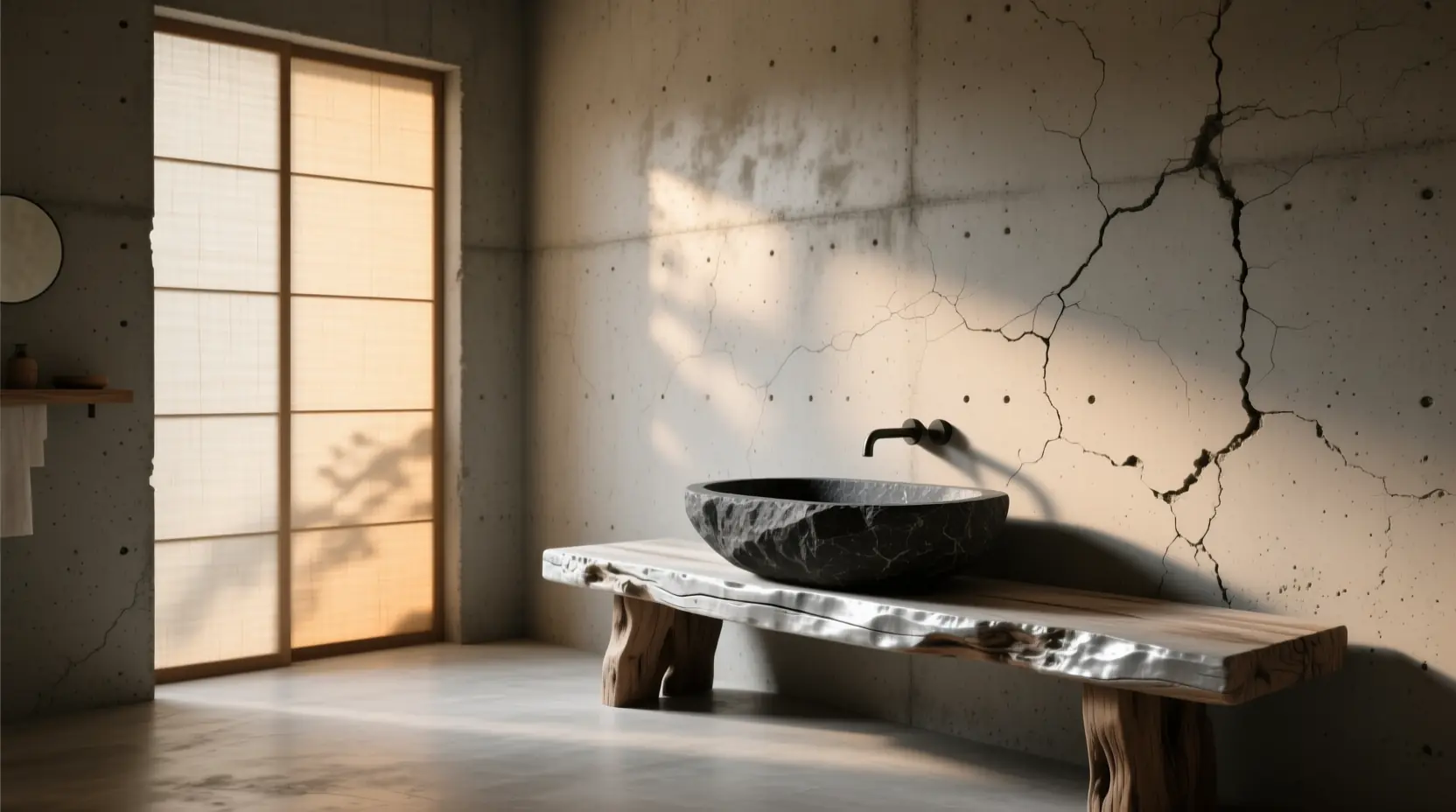
For the floor, the walls, the vessel that holds this space—consider microcement. It is not a shout. It is a murmured poem. It flows, seamless, from wall to floor, a quiet pond with no edges. Its beauty is in its subtlety. A softly mottled grey, like morning fog over a still lake. A warm, earthy ochre pulled from deep clay. It is cool to the touch, but not unfriendly. It holds the memory of stone, but is gentler underfoot. It accepts the passage of water and time without complaint. A fine crack here, a soft patch there—these are not flaws. They are the first lines of its story. Your story.
But a pond needs its stones.
The Riverbed’s Memory
Now, bring in the stone. Not a slab, polished to a blinding sheen. Seek the stone that the river has touched. Tumbled basalt, dark and pocked with ancient vesicles. Rough-split slate, layered like the pages of a forgotten book. A single, rugged piece of bluestone to serve as a shelf. Or a row of smooth, water-worn pebbles set into the microcement itself, a path for your bare feet.
Place it where the hand will rest. Where the eye will fall in a moment of stillness. A stone basin, hollowed by patient hands. Its weight is an anchor. Its coolness is a truth. It does not pretend to be anything other than what it is: a piece of the earth, older than all your worries. The water that falls upon it sounds different. Clearer. More present. The stone teaches gravity. Patience. Endurance.
Yet stone alone is a mountain. And a mountain needs its trees.
The Warmth of Weathered Grain
This is where the wood enters. Not bright, varnished lumber, singing a false song of newness. Seek wood that has already lived. Reclaimed oak, greyed by sun and wind, its grain raised and eloquent under your palm. Weathered teak, silvery and smooth, that has known salt air. Charred *shou sugi ban* cedar, a blackened crust protecting a heart of sweet-smelling resilience.
Let it be a bench, worn silken where one sits. A simple frame for a mirror. A sliver of a shelf. Its role is to offer warmth. To provide a contrast to the cool mineral embrace of stone and microcement. It is the organic counterpoint. In its knots and cracks, its subtle warp, you see time. You see life. The wood reminds you that everything softens. Everything yields, beautifully, to the years.
The combinations are not to be forced. They are to be felt.
Let the seamless, muted field of microcement be your sky. Let the stone be your earth, your foundation. Let the wood be the living tree that grows between them. Their meeting should not be a sharp, grouted line, but a conversation. The microcement might lap gently against a stone plinth, as water meets a shore. The wood might rest upon stone, a dry branch on a wet rock. Their textures must speak to one another. The rough of the stone, kissed by the smooth of the wood. The cool of the mineral, balanced by the grain’s remembered sun.
The Patina of Use, The Soul of Objects
A wabi-sabi space is not finished when the last tool is put away. It is born then. Its true beauty will emerge only with use. With living.
The microcement will darken slightly where water often falls, a deeper shadow of damp. The stone will gather a faint, luminous patina from soap and steam and the oil of a human hand—not a stain to be scrubbed, but a bloom to be admired. The wood will drink the humid air, its colour mellowing, its edges softening further.
This is the soul entering the object. The evidence of your life. A worn spot on the bench where you sit each morning. A tea stain on the stone counter, now a gentle, amber ghost. These are not accidents. They are the inscriptions of your days. In a world that screams for perpetual newness, this room will whisper of honest wear. It will become a map of your quiet moments.
So, you must care for it not with harsh chemicals that seek to erase time, but with gentle attentions. Wipe the surfaces with a soft, damp cloth. Let the materials breathe. Occasionally, you may rub a little oil into the wood, not to make it new, but to nourish its journey. Listen to what it needs. This care, too, is part of the ritual.
A Vessel for Ephemeral Light
Now, consider the light. It is the final, crucial brushstroke. Reject the sterile, white glare. Seek the light of a clearing in the woods. Of late afternoon through rice paper. Use warm, dimmable globes. Let them be filtered through a screen of handmade paper, or cast gentle shadows through a branch artfully placed.
The light will dance on the uneven surface of the stone. It will graze the textured microcement, revealing hills and valleys unseen in flat brightness. It will catch the deep grain of the wood, making each ridge a tiny golden canyon at a certain hour. Your room will change with the day. Bright and open at noon. A cave of tranquil shadow at night, with a single pool of light for washing. This play is the acknowledgment of transience. No moment here is the same. Each visit is unique, fleeting, perfect.
In the end, a bathroom remodelled this way is more than a room. It is a pause. A sanctuary carved not from luxury, but from essence. The microcement holds the silence. The stone holds the timeless. The wood holds the warmth of life. Together, under the shifting light, they tell you a story you already know in your bones but have been too busy to hear.
It is the story that the rain tells the old tile. The story the river tells the stone. That time is not an enemy to be defeated, but a gentle force that reveals true character. That beauty is not a glossy finish, but a deep, quiet resonance that comes from things being exactly, imperfectly, what they are.
Enter this space each day. Feel the cool floor. Rest your hand on the weathered wood. Listen to the water fall on stone. And remember. You, too, are a combination of seamless spirit, ancient resilience, and warm, growing life. You, too, are beautifully imperfect. You, too, are changing, softening, becoming more yourself with every passing, gentle day. The room is simply here to remind you.