The Pooling of Morning Light
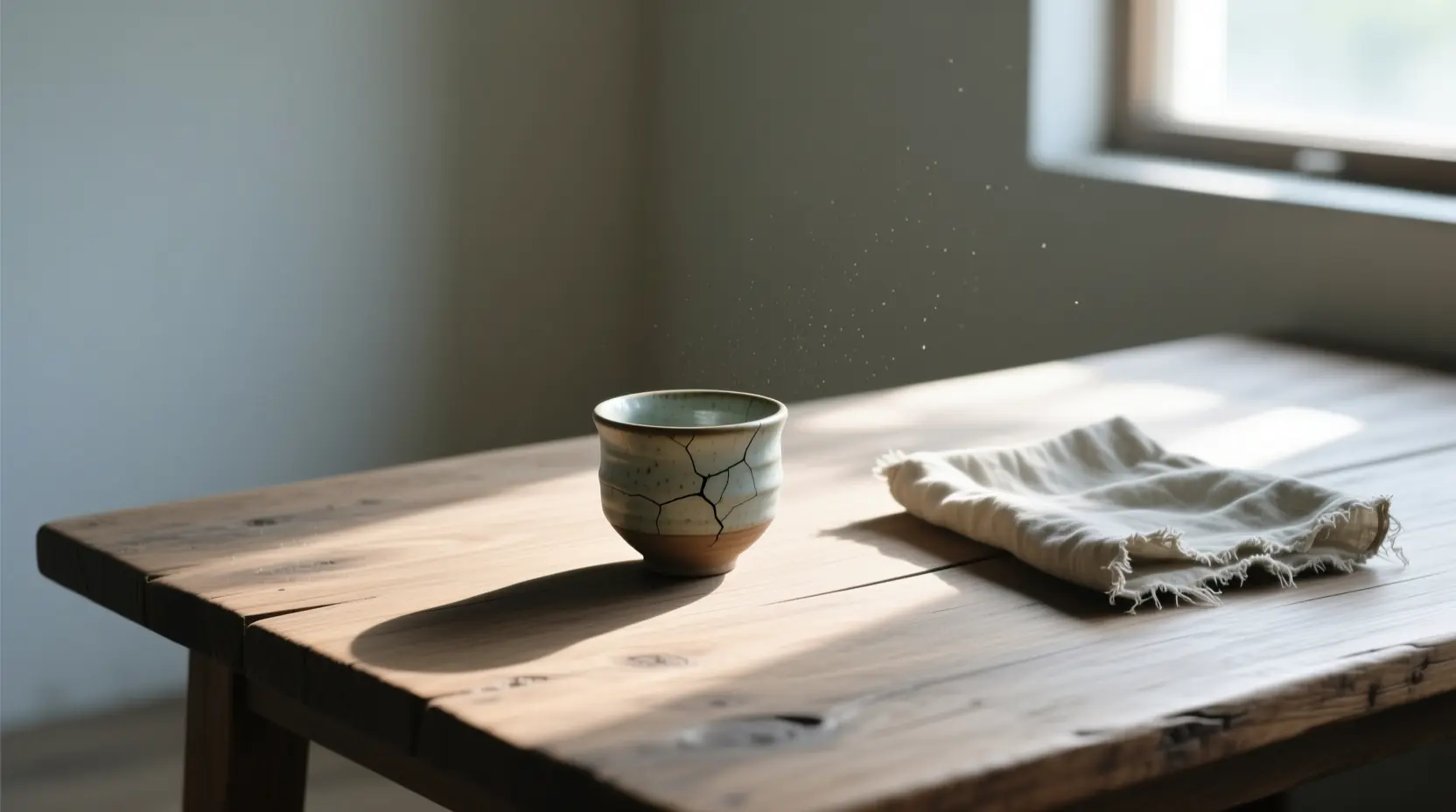
The sun arrives not as a flood, but as a visitor. It slips, hesitates. It finds the low table first—its grain a forgotten river delta, silted with memory. It lingers on the clay cup’s belly, warming the thumb-print imperfection pressed there by a hand long since withdrawn. In this quiet radiance, objects cease to be mere things. They become companions. They are vessels, holding the silent hours you have lived.
This is the space where luxury is quietly redefined.
Not by glitter, but by patina. Not by the new, but by the true.
This is the realm of wabi-sabi. And within its hushed borders, a different kind of investment awaits. One measured not in quarterly returns, but in the slow accrual of soul.
The Economy of Weathered Things
We have been taught to invest in what shines. In what shouts of permanence, repels time. A polished surface. A flawless edge. But there is a deeper, quieter economy. One transacted in serenity. In belonging. In the quiet, daily dialogue between a hand and a handle, a body and cloth, an eye and the grain of wood.
To invest in wabi-sabi is to place your trust in pieces that do not resist the flow of life, but join its current. They are willing to age with you. To become more themselves, not less. Their value compounds not in a bank, but in the corner of your living room, on your shelf, in your hands. With every touch, a deposit. With every year, a richer, deeper yield of peace.
Iron That Remembers the Steam of a Thousand Mornings
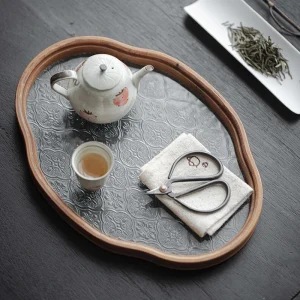
Consider the teapot.
Cast iron. Its surface is not a factory mirror. It is a landscape. A topography forged by use. The steam of daily brewing has softened its spirit, darkened its valleys. The oil of a careful palm has given it a sheen no machine can replicate—a glow born of attention.
This pot is an investment.
Not because its price was high, though a craftsman’s focused hours are a profound currency. It is an investment because it asks for ritual. It demands participation. It transforms the act of boiling water into a ceremony of heat and waiting. Each use is a deposit. A quiet contribution to its ongoing story. The return is a compounded interest of stillness. The luxury is not in the owning, but in the relationship it steadfastly holds. It teaches slowness. It teaches appreciation for the rising bubble, the unfurling leaf, the patience in the pour.
Linen That Holds the Shape of Rest
Now, feel the cloth.
Not the stiff, fearful textile that dreads a crease. But raw linen. Washed a hundred times by wind and water and human care. It has softened into a gentle memory. It holds the shape of your repose not as a demand, but as an acceptance.
It has faded.
But not toward dullness. Toward character. The sun, a silent painter through the window, has brushed it with subtle variations—here a pale gold, there a whisper of grey. A garment, a throw, bedding woven from such a narrative—this is a worthy splurge. It is an investment in your own stillness. It invites you to sit. To be wrapped in something that has already made its peace with imperfection. You are not wearing a label. You are wearing a testament to time’s gentle hand. The thread may thicken here, thin there. This is not a flaw. It is the fabric’s honest diary. A sentence that reads: I have been lived in. I am alive.
Wood and Its Whisper of the Forest
Look at the floorboard. The bowl. The beam overhead.
Is it perfectly uniform? A sterile echo of a tree’s idea? Or can you still hear the story? The knot, a sealed wound where a branch once reached for the sky. The gentle, undulating grain—the whisper of slow, concentric years spent growing toward light.
A table carved from a single slab. Its edge follows the tree’s own wild contour, not a ruler’s straight line. A stool turned from oak, its surface left bare to be found by hands, by oil, by the gentle abrasion of days. These are investments. They root a room. They bring the quiet, enduring strength of the forest into your daily orbit. You are not buying a product. You are becoming a custodian of a life that began long before your own.
As it ages, it darkens. It deepens. It becomes a testament to endurance. Every scratch, every pale ring from a cold glass is not a tragedy to be mourned. It is a chapter you helped write. The wood accepts it. It incorporates the mark into its ongoing story. It asks, silently: Can you do the same?
The Ceramic Vessel With Its Own Slight Wobble
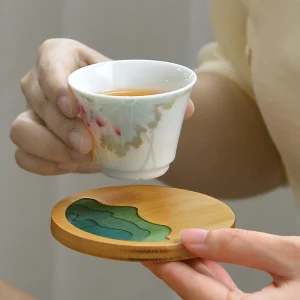
The cup.
It does not sit with arrogant stability. It wobbles, ever so slightly, on its base. A faint, circular dance on the tabletop. The glaze, perhaps, pooled thicker on one side during the kiln’s fierce prayer, creating a journey of color—deep where it gathers, faint where it stretches.
The potter did not discard it.
They saw its quiet soul. They signed its foot, and sent it, vulnerable and beautiful, into the world.
To choose such a cup is to splurge on poetry. It is to invest in a moment of mindfulness every time you raise it to your lips. Your hand must learn its unique balance. Your mouth meets its particular curve. It does not exist to be perfect. It exists to be used. And in its faithful use, it becomes perfect for you. This is the heart of the transaction: an object that elevates the mundane into the sacred through its humble, honest character. A room crowded with mass-produced perfection is a lonely room. A shelf holding one such cup is a conversation waiting to be had, sip by slow sip.
Stone, the Ally of Deep Time
A basin carved from granite. A mortar for grinding spices, fashioned from basalt.
Cold to the touch at first. Then warming slowly, reluctantly, as if sharing its ancient heat only under duress. Stone does not hurry. It wears down over epochs, not years. To bring a piece of it into your home is to form an alliance with a scale of time that humbles the human span.
It is a significant splurge. Its weight is both physical and metaphorical. A stone vessel asks for nothing but to be itself. It will outlast you. It will bear the marks of your grinding, your washing, your care, as the faintest of inscriptions on its enduring body. It teaches the futility of haste. It teaches resilience through sheer, immovable presence. To invest in stone is to invest in perspective. In the face of its calm permanence, daily worries shrink to their true, fleeting size. It is a luxury of groundedness. An anchor in the swift river of days.
The Courage of the Empty Space
And what of the space between?
The investment is not only in the thing, but in the room for it to breathe. To resonate. A single scroll, hung not to cover a wall, but to create a universe within it. A few brushstrokes suggesting a mountain ridge, the vast mist left to the imagination of the room’s air.
Here, the splurge is on restraint.
On the courage to leave emptiness empty. This is perhaps the most profound wabi-sabi investment: the purchase of calm itself. You are not buying a painting; you are buying the silence around it. You are investing in your own capacity to see, to feel, to simply be in the presence of one profound thing, without the clamor of clutter. The space becomes as much a material as the plaster, as vital as the object it frames.
A Portfolio of Patina: What is Truly Worth the Splurge?
The morning light has moved. The pool has shifted, now tracing the woven geometry of a tatami edge. The iron pot is cool. The cup is empty, holding only shadow.
The question, then, answers itself. The wabi-sabi investment piece is not defined by a price tag, but by a palpable presence. It is worth the splurge if it whispers these truths:
It is honest in its material. It does not pretend to be other than it is—clay, wood, linen, iron, stone. It speaks its origin.
It accepts and anticipates change. It is not a finished statue, but a living participant in time. It welcomes the patina, the fade, the soft wear.
It demands and rewards engagement. It is not for passive looking, but for active use, for ritual, for the conversation of touch.
It creates atmosphere, not just occupies space. It changes the quality of light, of air, of thought within a room.
It has a silence to it. It does not shout of status. It whispers of origin, of the hand that made it, of the elemental journey that shaped it.
To invest in such pieces is to rebel against a world of frantic, surface-deep consumption. It is to choose a different wealth altogether. You are building a portfolio of experiences, of tactile memories, of daily, hard-won serenity. These objects become the anchors of your life. They do not depreciate. They appreciate—in beauty, in meaning, in soul.
The greatest dividend is the person you become in their company. More patient. More observant. More accepting of the graceful, necessary cracks in your own being. You begin to see the luxury in the faded corner, the honor in the repaired seam, the profound beauty in the quiet, imperfect, enduring thing.
In the end, you are not merely furnishing a house. You are curating a life. One that finds its richness not in addition, but in essence. Not in the flawless, but in the resonant. You are learning, from a pot, from a plank of wood, from a length of cloth, how to live. How to age with grace. How to find the profound in the simple. How to be, at last, at home in the world.