The Path is Not Marked
You find it by the absence. The city’s hum fades, replaced by the crunch of gravel—a different language. Then, a curtain of ancient bamboo parts. There, the roof. A great, sloping shoulder, heavy with mossy thatch. It slumps. Gently. Like a beast at rest. The wood beneath is dark. Not with stain, but with centuries. Rain. Sun. Memory. This is a minka. A house of the people. It remembers when it was not a museum, but a heartbeat in the land.
A Threshold of Shadow and Grain
The step up is high. A deliberate act. To leave the earth. To enter a story. Your hand finds the wagoya—the great wooden lattice of the eaves. The touch is cool. Gritty. Each beam, a tree’s memory. You duck under the low lintel. The inside is not dark. It is a cave of soft, gold light. The air smells of aged cedar. Of sun-warmed tatami. Of an emptiness that is full.
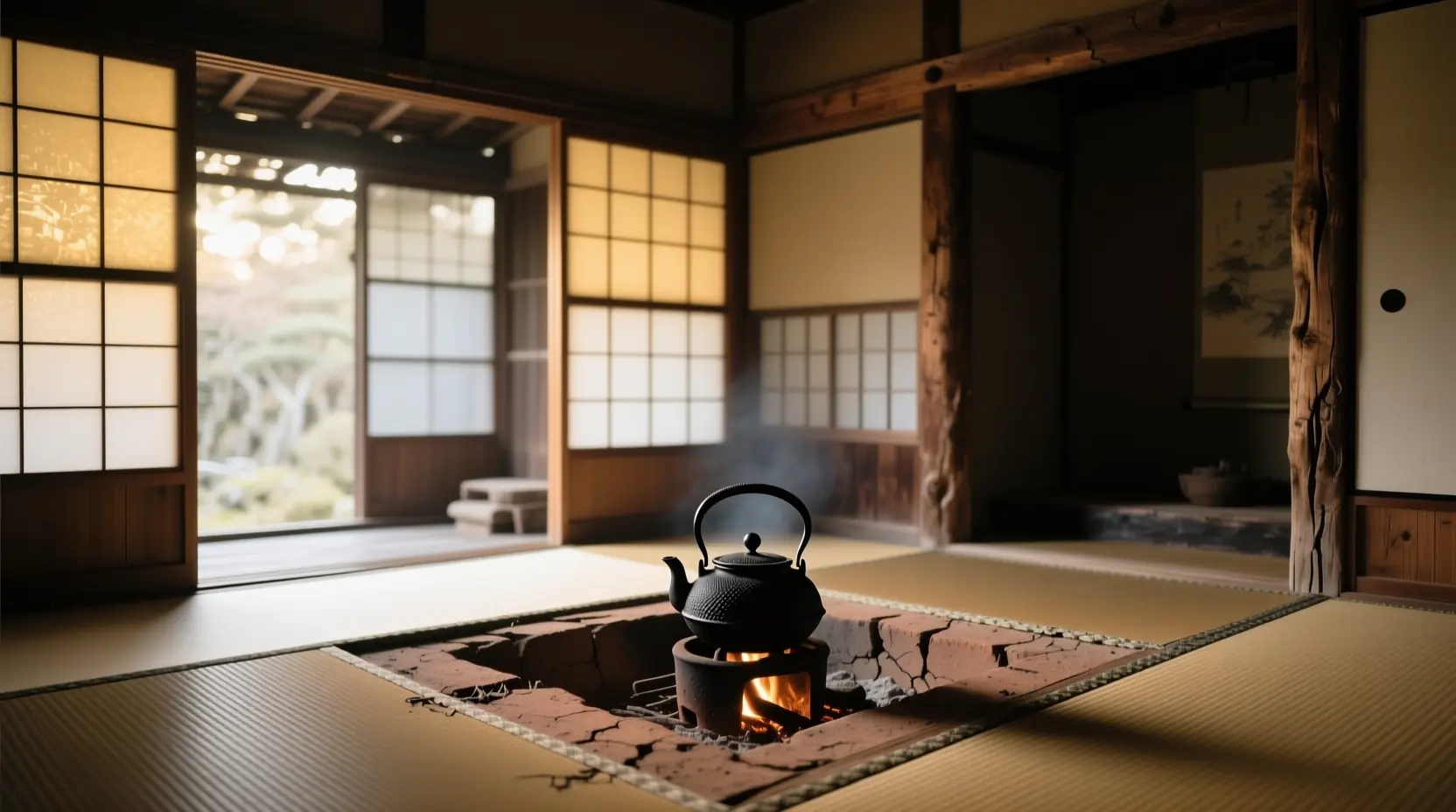
Here, the house breathes. You stand in the doma, the earthen floor. Your feet feel the packed soil. Hard. Cool as stone. This was the realm of work. Of fire. Of the tangible. An anchor. To one side, the kamado, the great clay hearth, sits cold. Soot blacks the rafters above. This smoke is the soul. It soaked into the wood. Medicine against insects. A slow patina of living. The hearth was not just for cooking. It was the sun. The family orbited. Its absence now is a silent song.
The Bones of a Forest
Look up. The true heart reveals itself. The roof frame is a forest. Massive sasu beams, rough-hewn, cross and climb. They are joined not by nails, but by wood locking into wood. Elegant joints. Silent prayers. Each holds the weight of years. Dust motes drift. Slow constellations in a wooden sky. The structure does not hide its strength. It sings it. This skeleton is a living creature. It settles. It sighs in the humidity. It talks to the wind.
Across the doma, the raised floor. Tatami, the color of dry grass. You remove your shoes. This simple act is the first ritual. The tatami breathes a sweet, dry scent. Firm, yet yielding. A mattress for the house itself. You kneel. The silence deepens. From here, the world outside is framed. A painting.
The World, Borrowed
The shōji are slid back. No glass. Just the delicate skin of paper, filtering the day. Beyond, the engawa veranda runs like a grey river. The in-between place. Neither inside nor out. Sit here. Feel the smooth, silvery wood. Worn by generations of sitting. Of watching.
The garden is not a separate thing. It is the room’s true wall. Moss swallows stone. A single maple holds a pocket of shadow. A stone lantern tilts, comfortable in its decay. The minka does not command this view. It merely offers a seat. The eaves are deep. Casting a shade that invites the eye outward. In summer, they block the high sun. In winter, they let the low light slide across the tatami. A pale, golden visitor.
This is shakkei—borrowed scenery. The distant mountain. The bamboo grove. The arc of the sky. They are all part of the house’s furnishings. The wall is not a barrier, but a frame. The house is humble enough to know it is a guest here, too.
The Soul in the Joints
Run your fingers along a beam. The adze marks are still there. The tool’s bite, left visible. Not sanded to a bland perfection. The craftsman’s hand is present. In the corner, a blackened kettle sits. Its iron thick, pitted from countless boils. Beside it, a mizusashi water jar. Its glaze crackled like a dry lakebed. These objects are not antiques. They are elders. Their beauty is in their endurance. Their quiet testimony to use.
In a recess, a scroll hangs. The paper is foxed with brown islands of age. A single brushstroke. A circle, perhaps. Enso. It is not perfect. The ink bleeds at the edges. It is complete in its incompleteness. This is wabi-sabi. The beauty of the imperfect. The impermanent. The humble. The minka is its purest expression. The warped post. The soot-darkened ceiling. The floorboard worn into a gentle valley by a thousand footsteps. They speak of a life lived. They are the house’s wrinkles. Earned. Honorable.
The Whisper of the Roji
Step outside. To the garden path—the roji. The dewy path. Stones set not in a line, but as your feet would naturally fall. Washed by rain. Freckled with moss. You must walk slowly here. No hurry. The path curves. You cannot see the end. It asks for presence. For attention.
This is the preparation. The shedding of the outer world’s haste. By the time you reach the minka’s door again, your breathing has slowed. Your eyes have softened. You are ready to listen.
The Silence That Remains
Back inside, as the light lengthens, you feel the house’s true function. It is not merely shelter. It is a vessel for silence. Thick walls of clay and straw swallow sound. The thatch overhead is a blanket of quiet. In this silence, small sounds become profound. The creak of a timber. The scratch of a bamboo leaf on the eave. The hum of a single bee at the shōji.
This silence is not empty. It is fertile. It is where you hear your own thoughts settle. Like dust on the doma. The minka does not fill you with information. It empties you of noise. In its spacious, austere rooms, you meet the simplicity of being. A bowl. A mat. A view. Enough.
Leaving, and Taking
When it is time to go, you rise with a different weight. You step down. Onto the cool earth of the doma. Finally, onto the gravel path. You look back. The minka sits under its heavy thatched roof. Patient. It does not say goodbye. It simply continues its long conversation with the weather. With the slow turning of the seasons.
You carry with you the memory of textures. The grit of the post. The silk of worn wood. The dry whisper of tatami. And a quiet understanding: this house was never meant to defy time, but to companion it. To age with grace. To show that beauty is not a surface, but a depth. It is in the soot. The warp. The weathered grain.
In our world of straight lines and sealed windows, the minka is a testament to breath. To porosity. To living with, not against. A humble, profound teacher. Its lesson is written not in words, but in the scent of old wood. In the cool touch of clay. In the generous, sheltering dark of its quiet heart. It asks only that we notice. That we sit. That we listen. To the world, and to ourselves. From a seat on the engawa. In the slowly fading light.