The Quiet Vessel: A Philosophy Held in Clay
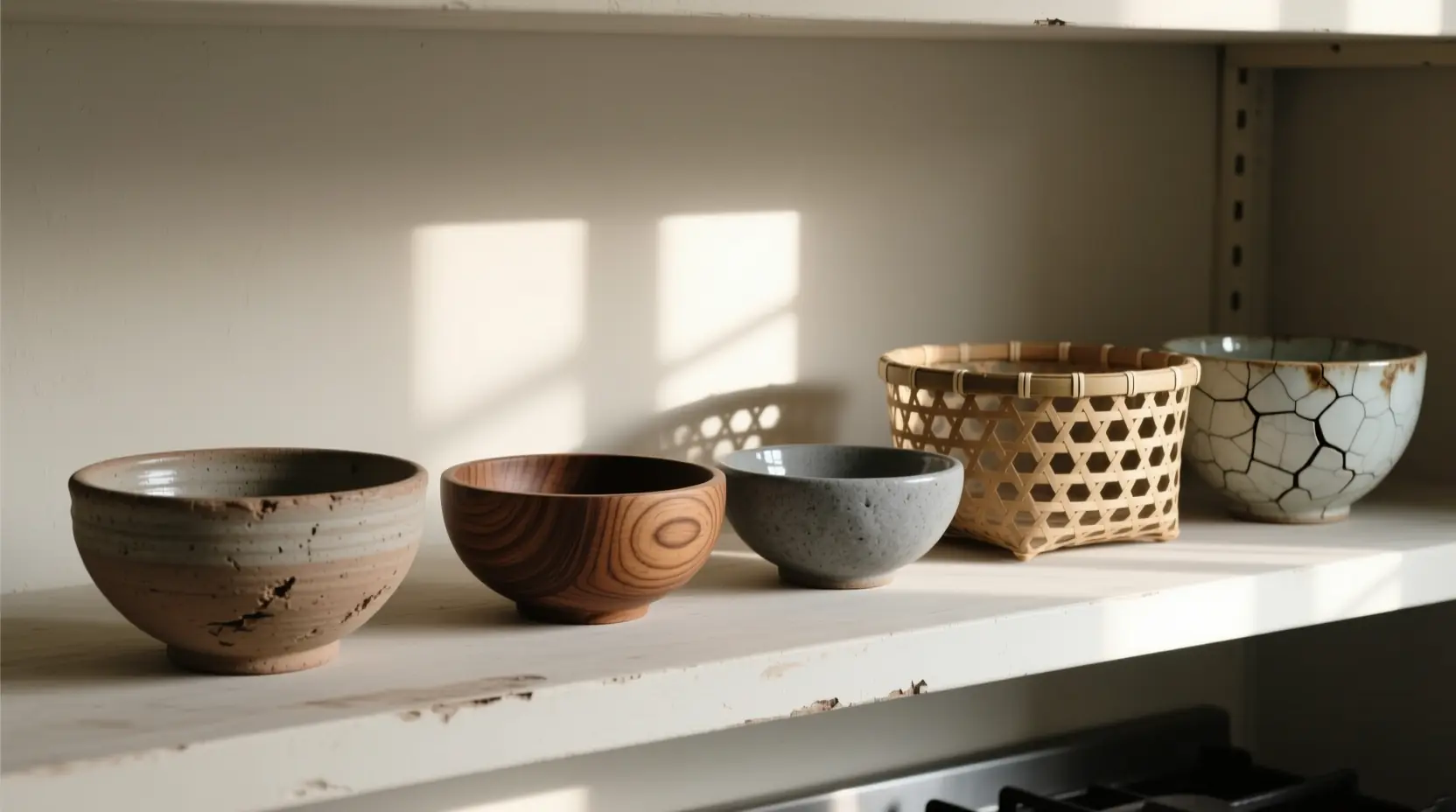
The kitchen is not a place of haste. It is a sanctuary of quiet transformation. Where wheat becomes bread. Leaf becomes tea. The raw becomes ripe. In such a space, the vessels we choose are not mere containers. They are silent companions to our rituals. They hold not just food, but intention. To craft a mindful kitchen, begin with the bowl. The first and most humble altar. Here are five, not bought, but chosen. Not new, but awaiting a patina of your own days.
A Vessel of Earth and Ember
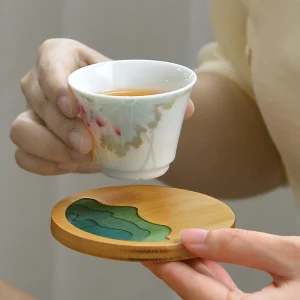
First, find a bowl born of fire and clay. Not from a perfect, whirring machine, but from hands that know the memory of earth. Look for the marks of the potter’s fingers on the base. A slight wobble in the rim that speaks of a turning wheel and a human breath. This is a chawan, a tea bowl spirit, but let it live a wider life.
Glaze it in the quiet colours of the landscape outside your window. The grey of a morning mist over stone. The mossy green of a sun-dappled forest floor. The deep, fathomless blue of twilight just before the stars appear.
Feel its weight. Substantial, grounding. When you lift it, you must be present. It asks for two hands, a small bow of the spine. In it, place a simple morning broth. Steam will curl against the raw, unglazed rim, a conversation between the hot and the eternal cool of the clay. As you drink, your thumb will find a slight indentation, a secret landscape only you will come to know. Over years, a fine network of cracks—kintsugi in waiting—may web the glaze. This is not damage. It is a record. A map of its life with you.
The Grain’s Unfinished Story
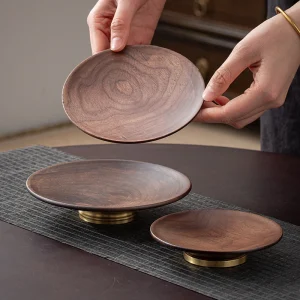
Next, seek wood. Not a polished, sealed thing that fears a drop of water, but a piece carved from a single burl or a thick slice of a trunk. Olive wood, dark and oil-rich. Maple, with its gentle, flowing lines. Oak, steadfast and strong.
This bowl is alive. It remembers the tree. You can see it in the whorls of the grain, the tiny knots that were once buds, the soft edge of the sapwood giving way to the heart’s deep crimson. Leave it unfinished. Or rubbed only with a little beeswax and oil.
It will darken with time. With the touch of nuts, the oil of avocados, the steam of rice. It will drink in the colours of your cooking and give them back, muted and softened. It is perfect for a silent, solitary meal. A handful of almonds. A sun-warmed peach. The quiet crunch of autumn leaves translated to grain. When you wash it, do not scour. Simply wipe. Feel the texture change under your palm, smoother in the places you touch most. A story told in whispers.
The Stone That Holds Stillness
Now, find a bowl that carries the cold patience of the mountain. A bowl of stone. Soapstone, cool and dense to the touch. Granite, flecked with the minerals of ancient fire. Or a rough-hewn marble, bearing the sculptor’s chisel marks like whispers along its flank.
Its nature is coolness. It does not hurry. It rests. Use it for what is already calm. A summer salad of cucumbers and mint. A chilled hwachae of fruits and petals floating like blossoms on a pond. A mound of glistening cherries.
Its weight is profound. It anchors the table. When all else is movement—the boil of the kettle, the chop of the knife—this bowl is a centre. A still point. Eating from it becomes a meditation on solidity. It teaches you about being unmoved by the small heat of the day. And in its veins of colour, you see a timescale that humbles your own. A piece of the earth’s crust, now holding your lunch.
The Woven Vessel of Air and Light
For contrast, invite in the spirit of the reed and the grass. A bowl woven from rattan or bamboo. Not a tight, perfect basket, but one with gaps. With spaces where light can fall through.
This is a vessel for transience. For things that are here for a moment, then gone. A stack of fresh green figs, their skins ready to split. A cluster of just-washed grapes, water droplets glittering in the woven gaps. A few slices of dark bread, the crumbs drifting through like dust motes in a sunbeam.
It is barely a container at all. It is more a suggestion of one. A breath of air given form. Using it is an act of trust. It holds only what is willing to be held lightly. It reminds you that not everything must be clutched, sealed, preserved. Some things are best enjoyed in their fleeting moment, cradled by almost nothing. The play of shadow and light through its lattice is part of the meal.
The Well-Loved, The Second-Handed
Finally, the bowl that finds you. It waits on a dusty shelf in a second-hand shop. Or in the back of a grandmother’s cupboard. A simple, thick porcelain bowl. Its glaze is milky, clouded. Perhaps a hairline crack runs from rim to base. The pattern, if there is one, is faded: a blue willow scene worn soft.
This bowl has a soul. It has held stories before yours. Birthday noodles. Soothing porridge for a fever. The last scoop of stew on a cold night. It carries the gentle ache of use. It is not precious, but deeply valued.
To bring this bowl into your kitchen is to continue a story. To add your chapter to its quiet biography. In it, every meal feels like a continuation. You are not the first to find solace in its curve. You will not be the last. It dissolves the illusion of newness and speaks of cycles, of return. A simple bowl of rice in this vessel tastes of gratitude. It tastes of all the meals that came before.
Gathering Sediment: The Slow Philosophy of Use
A mindful kitchen is not built in a day. It gathers, slowly, like sediment. These five bowls are not a checklist, but a philosophy. They speak of the elements: earth, fire, water, wood, air. They speak of time: the ancient patience of stone, the growing rings of wood, the fading memory on old glaze, the immediate gift of the woven reed, the enduring cycle of the well-loved.
Arrange them on your shelf. Let them be quiet. Do not seek to fill them all at once. Let the morning find the clay. Let the afternoon seek the cool stone. Let the evening be comforted by the worn porcelain. Notice how your hand, without thought, reaches for the one it needs.
In this way, the act of choosing a bowl becomes the first act of the meal. A moment of pause. A consideration of what you are about to receive, and in what vessel it will be honoured. The food becomes not just fuel, but an offering to your own awareness. The bowl is the quiet priest of this sacrament.
And as the years pass, you will see your own life begin to settle into these forms. A small stain inside the wooden bowl from a particularly vibrant stew. A smoother spot on the stone where your thumb rests. The clay bowl, now cradling the warmth of a thousand teas. They will no longer be objects in your kitchen. They will become the calm, tactile witnesses to your days. Held in your hands, they return you to your own hands. To the simplicity of holding. To the profound act of being fed.