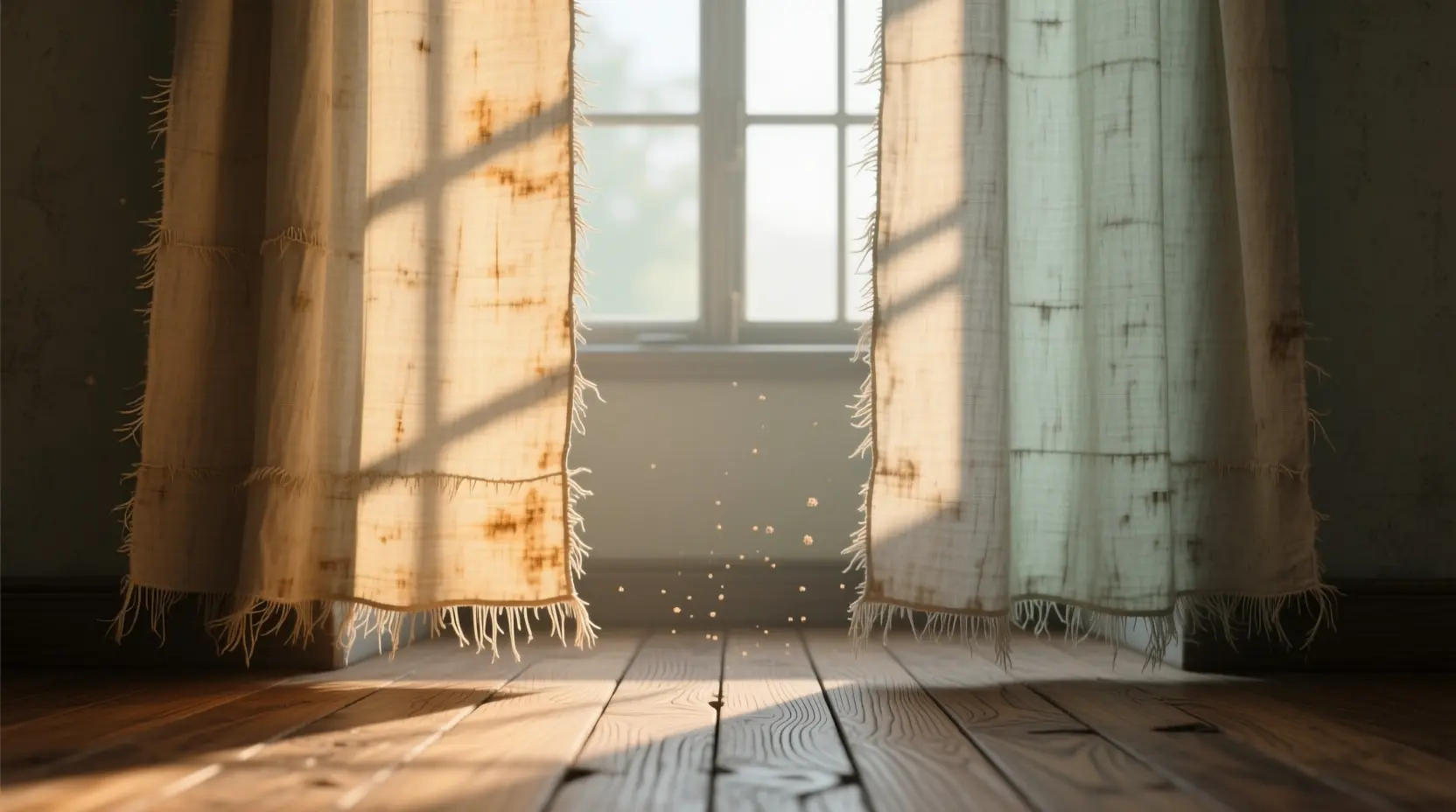
A Bowl of Light, a Vessel for Sky
The window is not an empty space to be filled. It is a bowl. A vessel offered up to the day, catching the slow pour of morning, the thin soup of afternoon, the deep wine of dusk. To choose a curtain for such an opening is not decoration. It is a gesture of profound etiquette. A way of framing the endless conversation between the room’s quiet breath and the sky’s vast sigh. For the soul that seeks less, this gesture must be as honest as a stone left in sun. As quiet as a shadow pooling at noon.
First, you must listen. The window will tell you. Stand before it in the naked dawn. Feel its particular thirst.
The Weight and Texture of Light
Morning arrives. It is a slow, insistent guest. It touches the sill. It climbs the wall, a pale, creeping vine. See how it moves. Is it sharp? A blade of sun cutting a hard line across the floorboards? Or is it soft? A diffused and gentle haze, a mist of photons sifted through distant clouds?
Your curtain is your first reply to this daily inquiry.
A blade needs to be softened. Not blocked, not defeated. Tempered. Think of rice paper, its fibrous skin. Think of a single layer of raw, undyed linen hanging like a held breath. These are not barriers. They are translators. Alchemists. They take the shout of the sun and turn it into a whisper. They allow the shape of the world outside to remain—the black skeleton of a winter branch, the slow drift of a cumulus ship—but they soften its edges. As memory softens the edges of a thought, leaving only the essence, the feeling.
If the light is already gentle, your duty is simpler. A sacred, passive one. To honor it. To not get in its way. Here, you might choose no curtain at all. A clean, open palate. Or perhaps only the whisper of one, a linen sentinel waiting patiently at the edge, folded upon itself, a promise for evening.
Seeking the Soul in the Cloth
We go to the markets of the world. We see fabrics that shout. Prints that dance a frantic jig, colors that sing a brash, synthetic song. For the window that seeks peace, these are mere noise. A static in the air. We seek instead the cloth that hums. The cloth that, when touched, vibrates with a memory of its own making. We seek the soul in the weave.
Feel for it. With your hands. Close your eyes.
Linen. It is born from the earth. It is flax, stalk and fiber. It carries in its very cells the memory of wind in a field, of rain on blue flowers. It is cool in summer’s grasp, warm in winter’s clutch. It wrinkles. Not as a flaw, but as a record. A topography of living. A record of sitting in a sunbeam, of being folded at dusk, of breathing with the room. Each crease is a line in its diary. Over years, it softens. It becomes a confidant to the light, holding it not with a glare, but with a gentle, textured glow, like skin.
Cotton. Simpler. More humble. A plain, unbleached cotton canvas. It is honest. It makes no pretensions. It hangs with a quiet, workmanlike dignity. A clean slate, a page of foolscap, for the light to write its daily poem upon.
Wool. A winter thought. A heavy, felted wool, thick as a cloud. It does not shimmer. It absorbs. Sound falls into it. Warmth is held within its dense embrace. It is the curtain of deep snow and long nights, a solemn, protective arm around the shoulder of the window.
Avoid the sheen of the artificial. Polyester knows no seasons. It has no memory. It does not age; it merely wears out, becomes tired and thin. The soul we seek is one that changes. That mellows. That accepts the patina of sun and time not as a wound, but as a gift. A deepening.
The Color of Silence
In a room of few things, color is a powerful word. A shout in a chapel. So we must speak softly. In hushed tones.
White is not one color. It is a family of whispers. The white of bleached bone, warm and ancient. The white of a cloud just before it consents to rain. The white of new snow in the first minute of dawn, holding a hint of blue. Each is different. A bone-white linen curtain will bring a warmth, a yellow undertone like aged parchment, a friend to wood and worn leather. A snow-white cotton will feel crisp, clean, of the immediate moment. Choose the white your room already murmurs in its corners.
Grey is the color of peace. The grey of a smooth river stone, wet from the water’s kiss. The grey of a dove’s wing in shadow. The grey of weathered cedar, silvered by decades of sun and storm. It does not compete. It recedes. It creates a space of calm neutrality, allowing the green of a solitary plant, the rich brown of a single wooden bowl, the fleeting blue of the sky beyond to become the poets, the soloists, of the space.
Natural. The truest color. The color of the cloth itself, unbleached, undyed. The pale gold of the flax. The soft beige of raw silk, the color of cream. This is the most honest voice of all. It speaks only of its origin, a quiet testament to its own making. It becomes a warm, neutral membrane, a living scrim between your inner world and the outer.
The Posture of the Cloth: A Poetry of Hanging
How a curtain hangs is its posture. Its way of being in the world. Its character.
The rod is its spine. Let it be simple. Unadorned. A slender iron bar, blackened by forge and time. A smooth oak dowel, shaped by hand, still smelling of forest. Nothing ornate. Nothing that calls attention to itself, shouting “Look at me!” It is merely a line drawn in space. A horizon line. A rule.
Now, how does the cloth meet this line? This is the joint, the articulation.
Rings of black iron, small and precise, like punctuation. The cloth gathers in their grasp, forming soft, regular folds—the consistent ripples of sand left by a retreating tide. It is orderly, but soft. A measured breath.
Or a sleeve. A tunnel of fabric at the top, through which the rod slips silently, unseen. This creates a cleaner line, a more monolithic fall. The folds are deeper, more solemn.
For a gesture of absolute fluidity, use clips. Simple wooden pegs, like old-fashioned clothes pins. They allow the top of the curtain to fall flat, a straight shoulder, while the body cascades freely from those few points of contact. This is a waterfall of cloth. A single, unbroken descent, a sigh given form.
And then, let it pool. This is essential. Let the cloth kiss the floor. Not hover anxiously an inch above it, a transaction unfinished. But rest upon it with a gentle excess, a generosity of material. This is a gesture of giving. It roots the curtain. It gives it weight, substance, a sense of belonging. As it pools, it learns the shape of the floor. It settles into the room’s geography. It is no longer a visitor, but a resident.
The Ritual: The Craft of Emptiness
To install your curtain is not a task. It is a ritual. Do not rush. Move with the slowness of sap in a tree.
First, wash the cloth. Even if it is new. Let the water and the gentle agitation humble it. Remove the stiffness of the untouched, the pride of the new. Let it find its true drape, its final, gracious character. Hang it while it is still damp, heavy with water, so it can dry into its new role, stretched long and true by gravity, learning its length in the very air of your room.
When you finally hang it on its rod, do not just look. Feel. The space has changed. The chemistry of the air is different. The light is no longer a visitor, but a collaborator. It moves across the textured weave of the linen, painting slow-moving landscapes of bright and shade upon the floor throughout the day. The outside world is now a living painting, framed but alive, breathing through the cloth. The window’s conversation has found its rhythm.
At night, the function shifts. The curtain now turns inward. It becomes the room’s eyelid, softly closing. It creates a smaller, more intimate world, holding the lamplight close, containing the warmth. When drawn, it should feel not like a barricade, but like an embrace. A soft, woolen arm around the room.
The Patina of Years: Aging with Grace
A year passes. Then two. Five.
You will see the change. The sun, that gentle, persistent guest, will leave its signature. The linen will fade where the light touches it most persistently—a slow, solar bleaching. It will become softer, more pliable, like a well-loved shirt, a garment that knows the shape of your life. This is not decay. This is the curtain earning its place. It is recording the passage of days, the arc of the sun through seasons, the very history of your dwelling in that room. The color that was once a flat, uniform tone is now a gradient of memory. A map of time.
Do not fight this. Do not lament it. Celebrate it. This is the very heart of wabi-sabi—the serene acceptance of transience, the finding of beauty in the imperfect, the impermanent, the incomplete. The curtain is no longer a new purchase, a commodity. It is now a document. It has shared ten thousand mornings with you. It has held back the howl of winter storms. It has filtered the lazy, golden light of countless autumn afternoons. It holds those moments in its very fibers.
The Final, Quiet Simplicity
And so, you see. To select the right curtain is not about filling a space. It is about honoring a threshold. The minimalist window is not naked. It is content. It knows itself. Your role is merely to provide the slightest articulation, the softest punctuation, to its ongoing, silent sentence with the world.
Choose the cloth that feels true in your hand, that speaks of earth and element. Choose the color that already lives in the silence between your walls. Hang it with intention, then release it. Let it fall with its own natural grace. Then, let it be. Let the light work upon it. Let time work upon it. Let the dust of days settle upon it, sometimes.
In the end, the perfect curtain for a minimalist window is one you no longer notice. It has ceased to be a “curtain.” It has become, simply, how the light arrives. It is the breath of the room given a texture. A quiet companion to the view, aging with you, softening with you, a testament to the profound, often overlooked beauty of enough.
It does not shout of style or trend. It whispers of home. It is not a thing you own, but a part of the atmosphere you inhabit. A careful, tender edit in the story of your space. A single, held note in the quiet, enduring song of your dwelling.