First, We Must Learn to See as the Light Sees
The high, bright glare of summer is gone. Now, the sun travels a lower road. It enters the room not head-on, but sideways. It grazes surfaces. It reveals what was hidden. The smooth curve of a teacup becomes a landscape of soft highlights and long, trailing shadows. The grain in the pine table, once pale and quiet, rises like a relief map. Each knot, each whorl, tells its story of years. This light does not shout. It whispers. It asks us to trace the story with a fingertip. To notice the dust motes dancing not as intruders, but as galaxies, swirling in the amber air. This is the first lesson: to let the autumn light be your guide. It will show you where the texture lives.
A Gathering of Stones
Go outside. Not with purpose, but with empty hands. Walk slowly. The path is not merely a way from here to there. It is a library of touch. Feel the crunch of gravel underfoot. The damp, yielding sponge of moss on stone. Stop. Bend. Let your eyes fall to the ground. See not dirt, but a palette. A fragment of granite, cool and speckled. A piece of sandstone, worn smooth as an old bone by the river’s patience. A twist of bark, its ridges like a forgotten language. Pick them up. Not to collect, but to know their weight. Their chill. Their silent history. Hold a rough stone in your palm. Its solidity is an anchor. It says: *I have been here for ages. Your hurry is not my own.* Bring a few inside. Not many. One or two. Place them where the slanting light will find them. On a windowsill. Beside a book. Their presence needs no explanation. They are simply there. A piece of the mountain’s steadfastness in your home.
The Whisper of Wood
Wood, in autumn, remembers its life. The cedar stool by the fire, its surface darkened by smoke and time, is not worn. It is seasoned. Run your hand along its edge. Feel the tiny ridges where the plane passed, the craftsman’s breath still held within the shavings. This is not a perfect, polished thing from a bright box. This is a companion. It has held the weight of a tired body, borne the heat of a bowl, absorbed the stories told in its presence. Look for wood that shows its age. A chopping board, deeply scored by a thousand meals, is a map of nourishment. A shelf that bows slightly in the middle speaks of burdens faithfully carried. Do not hide these marks. Honor them. They are the texture of a life lived. In the corner, a bundle of kindling, tied with rough twine, is not merely fuel. It is a sculpture of lines. A promise of crackling conversation. Let the wood be bare. Let it feel the dry autumn air and sigh its subtle, resin-scented sigh.
The Cloth of the Earth
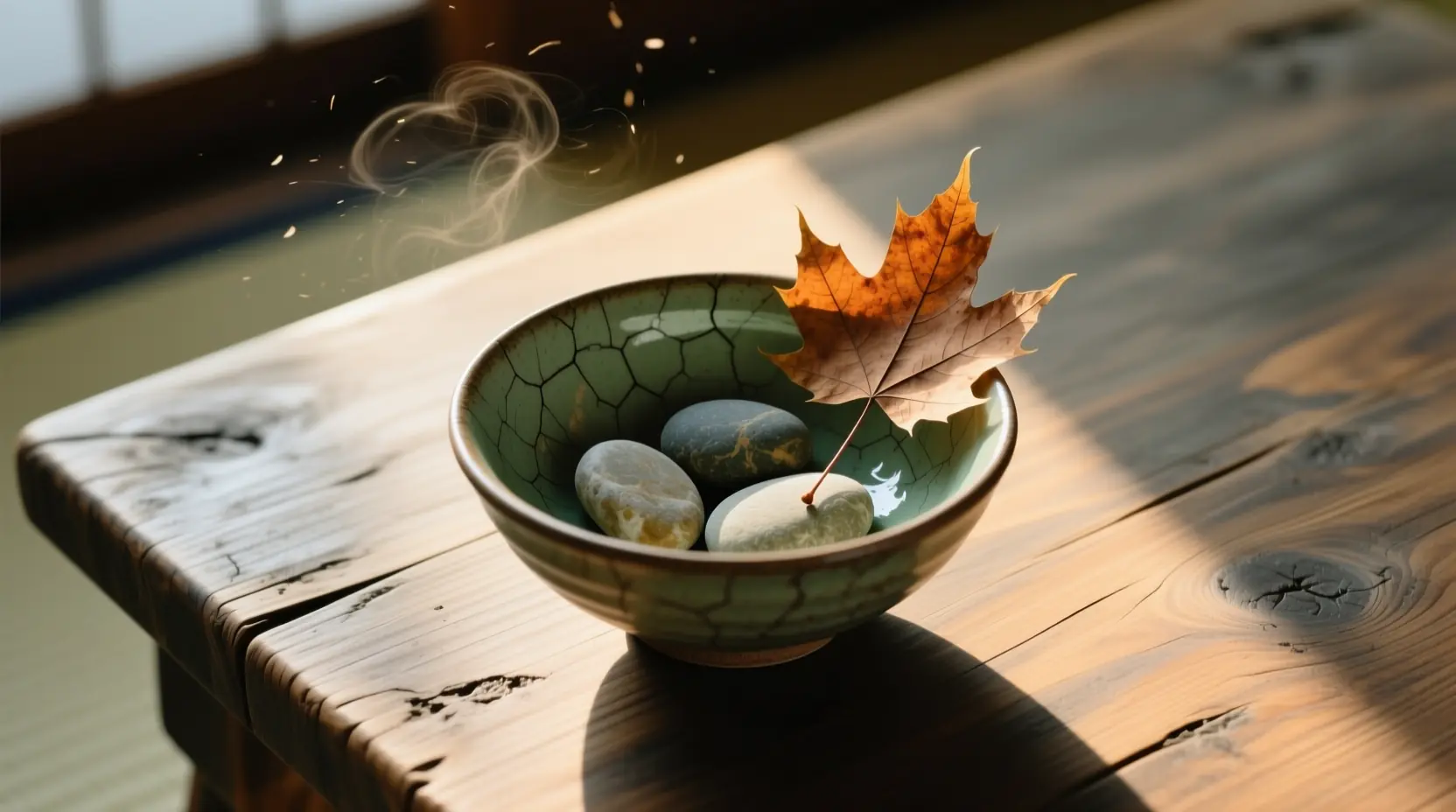
Now, we must clothe our space as the earth clothes itself. Think of the linen, washed a hundred times. It is softer now. It holds the memory of sun and wind in its loose weave. Drape it over a chair. Let it fall in gentle folds. Its texture is not loud. It is a quiet breath against the skin. The wool blanket, woven thick and hearty, smells of sheep and meadow. It is for the evening, when the chill seeps in at the cracks. Wrap yourself in it. Feel its humble warmth. It asks nothing but to serve. And then, the leaves themselves. Not as decoration, but as fleeting guests. A single, perfect maple leaf, its veins a crimson network, placed on the dark wood of a table. It will curl and dry. It will become a brittle, translucent ghost of itself. Watch this happen. Do not rush to replace it. This is the heart of the lesson: to live with transience. To find beauty not in permanence, but in the exquisite, fading moment.
Vessels of Stillness
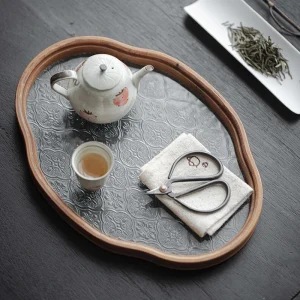
What holds these things? The containers must be worthy. The clay bowl, thrown on a wheel guided by unsteady, human hands. Its walls are uneven. The glaze pools in a deeper blue in the valleys of its curve. It does not sit perfectly flat. It rocks, ever so slightly, on the table. This is good. It reminds us that perfection is a stillborn idea. Life is in the wobble. Fill it with fallen pine cones. With the smooth, oval eggs of river stones. With nothing at all. Its purpose is simply to be a vessel. A still point. The iron teapot, dark and heavy, its surface etched with the patina of a thousand pours. To lift it is to feel the gravity of ceremony. It promises heat. It promises a pause. These objects are not furniture. They are partners in contemplation. They hold the space for silence.
The Symphony of Quiet
And so, the room changes. It is no longer just a room. It is a composition. A symphony played in the key of texture. The rough against the smooth. The cool stone beside the warm wood. The soft linen shadowed by the brittle leaf. The eye does not rest on one thing, but moves slowly, feeling its way from surface to surface. The ear, too, learns new sounds. The rustle of a dried leaf as you pass. The soft thud of a log settling in the hearth. The faint, papery whisper of linen against skin. This is not a décor. It is an atmosphere. It is the outdoors, invited in, given a place by the fire. It asks you to slow down. To match your breath to the long, slow exhalation of the season.
The Soul of the Transient
Why do this? Because we forget. We live in a world of flat screens and smooth plastic, of surfaces that deny their own age. They have no memory. They have no soul. To bring autumn inside is to remember that we, too, are textured beings. Our hands are lined like the bark of a tree. Our faces hold the maps of our laughter and our sorrows. We are not meant to be forever new, forever bright. We are meant to season. To gain character. To tell a story without words. The fading leaf on the table is not a *memento mori*, a warning of death. It is a *memento vivere*: a reminder to live fully within the beautiful, inevitable cycle. It says: *See how brilliantly I can burn before I let go.*
The Quiet Practice
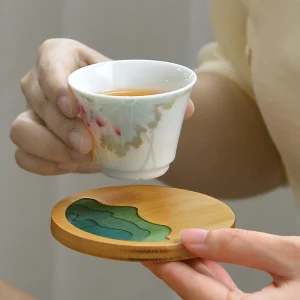
This bringing-in is not a single act. It is a quiet practice. A way of moving through the world with open eyes and gentle hands. Tomorrow, it might be a feather caught on a thorn. Next week, a branch sculpted by the wind into a shape that pleases your heart. There is no list. No rules. Only attention. The practice is to sit, in the slanting light of an autumn afternoon, with a cup of tea that warms your palms. To look at the gathering of simple things around you—the stone, the wood, the cloth, the leaf—and feel no separation. You are part of the same current. The same turning. The same beautiful, textured, transient world. The kettle has gone quiet now. The only sound is the faint, ticking whisper of the cooling stove. And that, too, is a texture. The sound of warmth lingering in the grain of the wood, holding on, just for a little while longer.