The Morning Sun, a Slow Honey
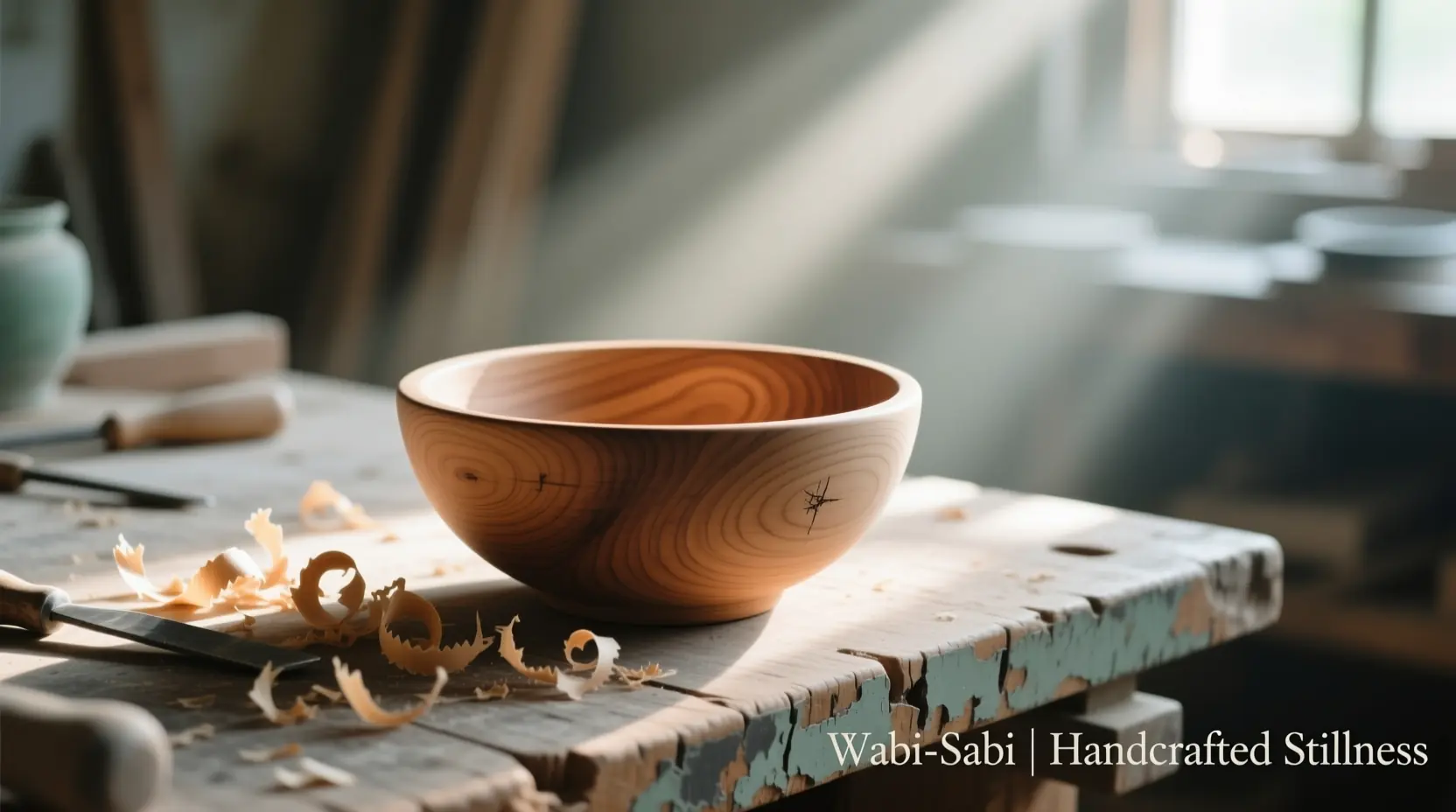
The light does not arrive. It arrives. It finds the gaps in the timber, the dust on the pane. It spills. A slow honey across the bench. It touches the planes first, their cold steel warming to a memory of the forge. Then the chisels, resting edge-up, dreaming of the cut. The silent saws, teeth like frozen prayers. It lights the dust motes. They swirl in a breath I did not know I held. They are not frantic. They drift. They settle. They find their place on the rough-sawn pine.
My palm along its edge. It speaks. A language of wind and rock. Of patient years. The grain is not a line. It is a story. It curves around a knot—a memory of a lost branch, a season of struggle. It tells of reaching. This wood knows nothing of fast. It remembers only growth, and rest, and the long sigh of the forest.
We have forgotten how to listen to such things. We have tuned our ears to the shriek of the machine, the ping of the notification. The hum of hurry.
The Sap Runs Unhurried
There is a rhythm older than clocks. It is the rhythm of sap in the maple. A slow ascent, a patient descent. Of roots in the dark, silent earth. They do not grab. They inquire. They feel their way. It is the rhythm of the potter’s wheel, turning only as fast as the clay allows, its centering a gentle negotiation.
We have stepped outside this rhythm. We drum our fingers on the wheel that does not move fast enough. We measure our worth in tasks completed. In miles traveled. In hours saved.
But what have we saved them for?
To fill with more rushing?
Slow living is not a list. It is not a ten-step plan bought with a credit card. It is a returning. A remembering. That you, too, are made of the same stuff as this pine. Your grain. Your knots. Your story of resistance and reach. To live slowly is to trace that grain with a reverent finger. To honor its direction. To follow it, even into the wild, tangled places.
Watch the heron. In the grey reed bed. One leg tucked. Utterly still. It is not waiting. It is being. Its stillness is not passive. It is a deep, attentive presence. A full-bodied listening. From that stillness, the strike is swift. True. Our own strikes are seldom true. They are frantic, harried, born of a mind already racing to the next thing. We miss the fish. We only stir the mud.
The True Shape Emerges
A block of cherry in my hands. It has a shape within it. My task is not to impose one. But to find it. To remove what is not the bowl.
The gouge moves. A slow arc. A curl of wood, the color of pale honey, springs free. It falls to the floor with a sound like a leaf settling. Another follows. And another.
This is the work. Not the finished bowl on the shelf. The work is the slow revelation. The partnership. The wood tells me. Here, it whispers, the grain runs wild. Go gently. Here, it is soft. Here, a hidden knot—a surprise, not a flaw. I must listen. If I force it, if I rush, the wood will splinter. It will rebel. It will teach me, through a sharp crack, the necessity of patience.
So it is with a life.
We try to force our days into shapes they do not want to hold. We cram them. We sand down our own rough, interesting edges to fit a polished, uniform idea. We become brittle. We splinter under the pressure.
What is the shape waiting within your day? Within this single, quiet hour? It is not a to-do list. It is a quality of light. A feeling in the chest. The simple, profound act of noticing the steam rising from a cup. Seeing it. Really seeing it. The way it twists, a ghost-dance, and vanishes into nothing. A small, beautiful death in the morning air.
The Patina of Moments
The old oak mallet handle. Dark. Not with stain. With the oil of a thousand palms. My own. My teacher’s. The hands of a friend who once tried dovetails here, his brow furrowed in concentration. The wood is imbued. It holds the memory of every strike. Every careful adjustment. This shine cannot be bought. It cannot be faked. It is earned. By touch. By repeated, faithful attention.
This is the soul of an object. Its story written in texture.
Our lives, too, develop a patina. Not of hurry and worry. That is only a scratchy, unpleasant wear. A friction burn on the spirit. True patina is the gentle weathering of love. The slight softening of a routine performed with care. The deep color of a shared silence with someone known for years. It is the lines around your eyes from squinting into the sun, not from staring at a screen.
We are afraid of this weathering. We call it aging and sand it away. We seek the bright, the new, the unblemished. But the unblemished has no story. It has not lived.
To live slowly is to welcome the patina. To see the beauty in the frayed edge of a well-loved book. In the crack in the teacup that you mend with gold, understanding that the break, too, is part of its history. Kintsugi. “Golden joinery.” The embrace of flaw and repair. The acknowledgment that brokenness, attended to with love, can become the most luminous part.
The Craft of a Single Breath
People ask, “How do I begin?”
Begin with your breath. It is the first rhythm you ever knew. Sit. Not to meditate in some grand, ambitious way. Sit to feel the breath enter. And leave. Follow it. The short, quick breaths of a busy mind. Then, the longer, slower tide as the body remembers its own pace. You are not controlling the ocean. You are letting it lift your boat. This is the foundation. One breath, fully felt. Then another.
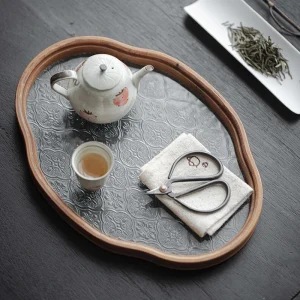
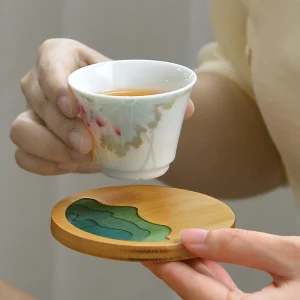
Then, take the tea. Not in a travel mug. In a cup you like the weight of. Heat the water. Watch it boil. Listen to it sing—a low rumble building to a white roar. Pour it over the leaves. Watch them swirl, a miniature storm, then sink. Wait. Smell the steam—grass, earth, rain. Feel the warmth through the porcelain. Sip. Do nothing else. The tea is your only task. For these three minutes, you are a priest of tea. It is a sacrament of slowness.
Walk. But do not walk for exercise. Walk for seeing. Go no place in particular. Let your feet find their own path. Notice the crack in the pavement where the moss grows, soft and emerald. The way the late afternoon sun catches the spiderweb, turning it into a net of light. Stop. Crouch down. Look at the world from the height of a mouse. There are whole kingdoms there, living at their own eternal, patient pace.
The Seasoning of the Heart
Wood, when first cut, is called “green.” It is full of sap, unstable. It will warp. It will twist as it dries. It must be seasoned. Stacked. Allowed to rest. For a year. Sometimes two. The air moves through it. The moisture leaves, slowly, slowly. It finds equilibrium with the world around it. Then, and only then, is it ready for the craft. It is stable. It is true.
We are all green wood.
We are cut from the tree of our ambitions, our anxieties, our constant doing. We try to build with green wood. And we wonder why our lives warp. Why the joints we make do not hold. Why the door sticks in the frame.
Slow living is the seasoning. It is the stacking of your days with space between them. It is allowing the winds of quiet and the sun of simple pleasure to move through you. To let the frantic sap of hurry evaporate. It takes time. There is no shortcut. A season. A year. A lifetime. It is not a project to finish. It is a way of being to inhabit. A patient waiting for your own truth to settle, to become stable, to become workable.
The Bowl Held in Two Hands
The cherry bowl is finished. It is not perfect. My thumb finds a small dip near the rim, a place where the gouge lingered a moment too long, lost in the flow of the grain. I leave it. It is a signature of that moment of thought, of surrender. I rub the oil in. The grain, once hidden, emerges singing. A map of the tree’s life. Dark lines of summer’s abundance. Pale bands of winter’s rest. It is all there. A biography in rings.
I hold it in two hands. It is warm from the friction. It has weight. It has presence. This is the end of the making. But it is the beginning of its life. It will hold autumn apples. It will sit empty on a table, a vessel for shadows and afternoon light. It will be passed, filled with soup, to waiting hands on a cold evening. It will acquire its own marks—a tiny stain from a berry, a fine scratch from a spoon. Its own patina. It will become.
This is the invitation. Not to make your life a museum piece, untouched and static. But to make it a vessel. A vessel seasoned by time, shaped by attention, meant to hold what is real. The bitter and the sweet. The empty and the full. The quiet and the joy.
Let your hands be the ones that shape it. Let them move slowly, listening for the true grain. Do not fear the knots. They give it character. Do not sand away the evidence of your own touch—the slight unevenness, the human rhythm.
The world will rush on outside the shop window. The clouds will hurry across the sky. The wind will shake the branches in a frantic dance. But here, at the bench, with the scent of oil and wood sweet in the air, there is a different time. It is as deep and as patient as the heartwood of an old tree. It is the time it takes for a leaf to turn from green to gold to brown. It is the time it takes for a truth to settle into your bones, to become part of your structure.
This time is here. Now. In the space between one breath and the next. In the warmth of the sun on your closed eyelids. In the quiet acceptance of the bowl, with its gentle imperfection, resting in your hands. A finished thing. A beginning thing.
Begin there.