The Quiet Pool of Light on an Unfinished Floor
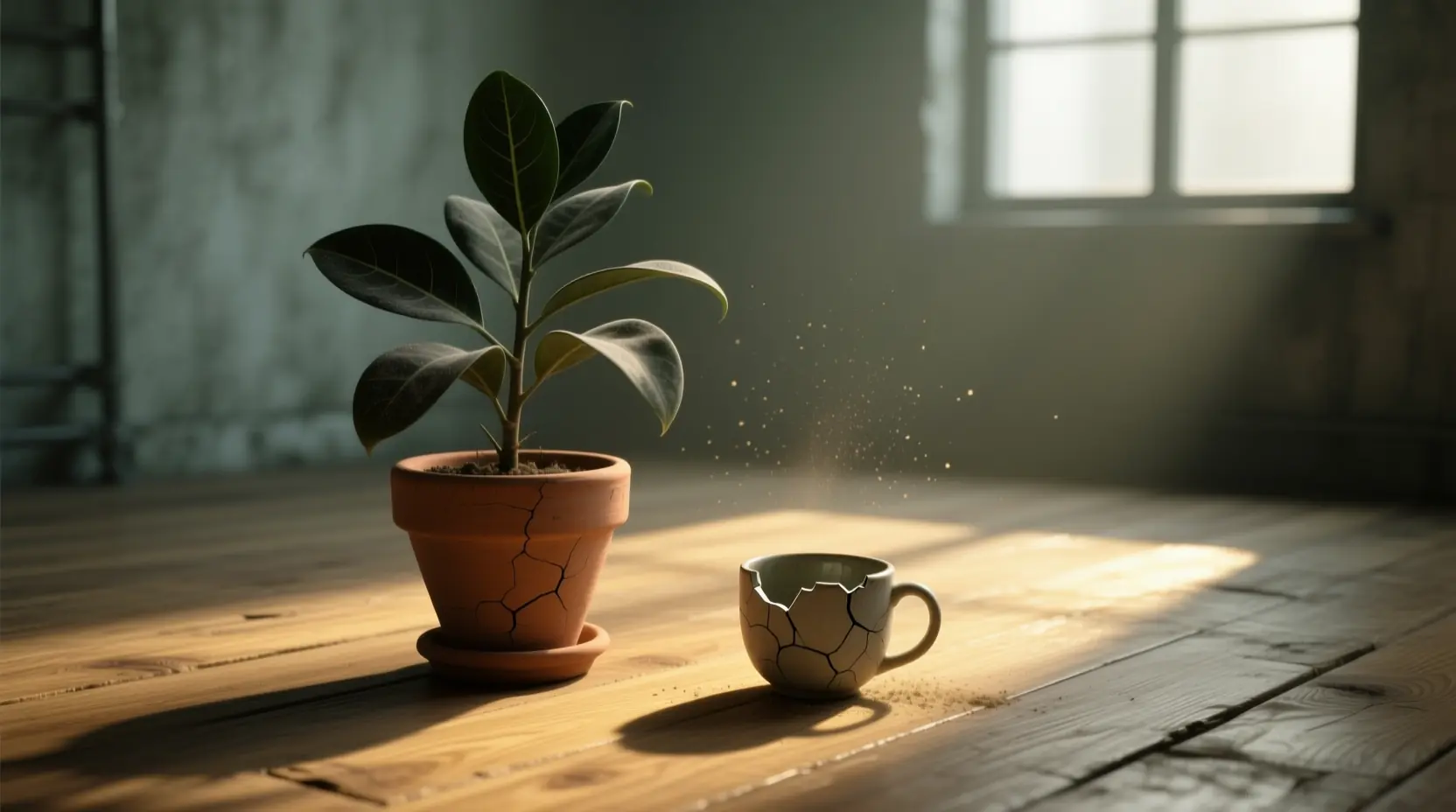
The air is still here. It holds the memory of woodsmoke and damp earth, a patient exhalation. Sunlight, softened by the paper screen, falls in a quiet pool upon the floorboards, each one wearing its history of grain and knothole. It finds the edge of a clay pot, not round, but leaning into its own asymmetry. A gentle collapse. Inside, a single leaf has browned at the tip, a dry parchment border. It is perfect. This is not decoration. This is an agreement.
Wabi-sabi is not a style. It is a feeling. A deep, quiet acknowledgment of the way things are: imperfect, incomplete, ephemeral. It is the moss on the stone, the crack in the cup, the silvered driftwood. And in this world, plants are not ornaments. They are living companions in this gentle acceptance. They are the most honest teachers of transience, of growth that is also a slow surrender.
To bring a plant into such a space is to invite a slow conversation. It is not about bright, boastful blooms that shout for attention. It is about the quiet dignity of a leaf unfurling at dawn. The patient, almost imperceptible turn of a stem toward the light. The graceful arc of an old frond as it yellows, thins, and finally lets go. The plant is not there to be perfect. It is there to *be*. And in its simple being, it shows us how to live.
Listening to the Light That Already Lives Here
Begin with the intention, not the list. Look not at the plant, but at the light that already lives in your room. Watch it for a day. See where it lingers, pale and diffuse, in the late afternoon. That is the light of wabi-sabi. It does not blaze; it reveals. It sculpts with shadow. In these soft corners, the plants that thrive are those that speak in hushed tones.
Consider the Zamioculcas zamiifolia, the ZZ plant. It is a creature of deep, geologic patience. Its leaves are forged from a dark, waxy green, each one a testament to resilience. They rise from a tuber buried in the earth—a secret storehouse, a hidden heart. It asks for little water. It accepts the low light without complaint. It does not rush. A layer of dust may settle on its polished surface, and in the slanting light, that dust will look not like neglect, but like a soft patina, a veil of time. It is a plant that has mastered the art of stillness.
Then, there is the Sansevieria, the snake plant. See it with older eyes. See its upright, sword-like leaves, some banded in shades of silver and deep forest green. They are like ancient standing stones, vertical lines in a horizontal world. They grow slowly, deliberately. A crack may appear on a leaf’s edge from its own fierce pushing upward. Do not fret. Bind it gently with a strip of natural jute. Honour the flaw. It becomes part of its story, a scar that speaks of growth.
The Vessel That Remembers the Earth
The container is as important as the life it holds. A wabi-sabi pot is never loud. It does not try to mimic lacquer or porcelain. It remembers its origins in the earth. Seek out raw terracotta, its surface rough to the touch, the colour of dried clay after a passing summer rain. It breathes. It will show watermarks, a tidal line of minerals that rise and fade with each watering—a quiet journal of care written in salt and time.
Or perhaps a pot thrown by a local craftsman, where the gentle wobble of the wheel is preserved in its form, not corrected. It leans. It is unique. The thumbprint of the maker is still visible in the clay, a frozen moment of human touch. A moss might, in time, begin to grow on the pot’s damp shoulder. Welcome it. It is a second, softer life embracing the first. Set the pot on a slab of unvarnished wood, on a woven reed mat, or directly on the cool floor. Let it feel grounded, of this place.
The Graceful Anatomy of Age
Some plants teach us the beauty of decline more eloquently than others. The Ficus lyrata, the fiddle-leaf fig, is often prized for its perfect, glossy violin-shaped leaves. But in wabi-sabi, we see it differently. Watch as the lower leaves, in their own time, dry and fall. They leave behind a delicate, ladder-like scar upon the trunk, a map of past selves. The plant grows tall, sometimes a little sparse in its lower parts, its trunk twisting slightly as it seeks the light. It becomes a sculpture of its own history. Do not be quick to prune it into a shape you desire. Let it find its own shape. A single, bare branch etched against a white wall can be more poetic than a bushy, contrived crown.
And for true, embracing asymmetry, there is the Peperomia ‘Hope’. Its trailing stems, dotted with small, rounded leaves like droplets of jade, spill over the edge of a shelf like a gentle, green waterfall. It never grows uniformly. One stem will venture out, an explorer of empty space, while another curls back upon itself in a quiet contemplation. It is modest, unassuming, a verdant whisper tumbling over the edge of a worn book or a smooth river stone.
Textures That Speak to the Hand
Wabi-sabi is a philosophy felt through the skin. It craves texture. Here, plants with perfectly glossy, plastic-like leaves can feel out of place. We seek the tactile, the honest.
The Pilea peperomioides, the Chinese money plant, with its flat, coin-like leaves on delicate, reddish stems, has a friendly, almost humble presence. But touch the leaf. It is not glossy. It is a soft, sueded green, like worn linen or the inside of a well-loved pocket. It propagates freely, offering its offspring on tiny, umbilical stems—a quiet lesson in generosity and continuity. To give away a plant born from your own is a deeply wabi-sabi gesture.
Then, there is the Staghorn fern. Mount it on a piece of reclaimed wood, bark still clinging, or hang it in a simple, blackened wire frame. It is both ancient and alien. Its shield fronds are a dry, brown parchment, curling at the edges, cradling the softer, antler-like green fronds. It ages magnificently, the brown fronds layering upon themselves like the pages of a forgotten manuscript left in the damp. It asks only for an occasional soaking, a deep drink like forest rain, and a place of humid shade. It is not a potted plant; it is a piece of the forest wall, brought inside to breathe with you.
The Ritual, Not the Chore
How you tend to these plants is the heart of the practice. This is not a task on a list. It is a meditation. Use a simple, unglazed ceramic watering can. Feel its weight in your hand, the coolness of the clay. Water not on a schedule, but when the soil feels dry an inch below the surface—a fingertip’s communion with the earth. Pour slowly, watching the water disappear into the soil, a silent absorption. This is the tree drinking the rain. Nothing more.
When a leaf yellows, do not see it as failure. Sit with it for a moment. It is the plant’s offering, a return of its borrowed energy to the cycle. Gently pluck it, thank it silently, and place it in the compost, where it will crumble and become the earth again. This cycle—growth, decline, decay, rebirth—is the very pulse of wabi-sabi. Your plant is living this truth before you, in slow motion.
Dust the leaves not with a chemical spray, but with a soft, damp cloth. You are not polishing it to a showroom shine. You are clearing a path for light, as one might gently wipe the morning dew from a mossy stone to better see its intricate green world.
An Arrangement That Breathes
There is no final, perfect arrangement. As the light shifts with the seasons, so might your plants. A peace lily that raised a white flag of bloom in the summer humility, now faded to a gentle green, may be moved to a shadier spot to rest. A trailing pothos, its leaves variegated with streaks of cream and grey-green like weathered sea glass, may have grown long and adventurous. Let it travel along a mantelpiece, a green river over stone. Do not contain it strictly.
Sometimes, the most profound beauty is in solitude. A single stem of lucky bamboo in a clear vessel of water and smooth, grey stones. Or one perfect, deep-green leaf of a ZZ plant in a dark corner, a pool of shadow in the day, a shape of stillness at night.
The goal is not a dense, consuming jungle. It is a sanctuary. A few chosen companions. Each with its own character, its own silent story. They will grow. They will change. A leaf will scar from a glancing touch. A stem will bend under its own weight. The terracotta pot will stain with mineral tears. This is not something to fix. This is the art happening in real time, the collaboration between life, matter, and light.
In the end, you are not cultivating plants. You are cultivating attention. A gentle, daily observance of life as it is—beautiful precisely because it is fleeting, imperfect, and incomplete. The plants breathe with you in the quiet room. They grow slowly. You learn patience. They accept their flaws. You learn acceptance. They turn, always, toward the light. You are reminded to do the same.
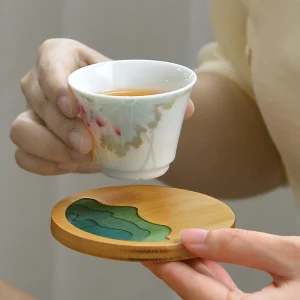
And one day, you will look up from your teacup, the steam rising in a thin, vanishing line. Your eye will catch the silhouette of that leaning snake plant against the fading twilight, blue seeping into the room. And you will feel, not a pride of ownership, but a deep, quiet gratitude for its enduring, silent presence. It is perfect. Not because it is without flaw.
But because it is here.
And so are you.