The Workbench at Dusk: An Invitation to Listen
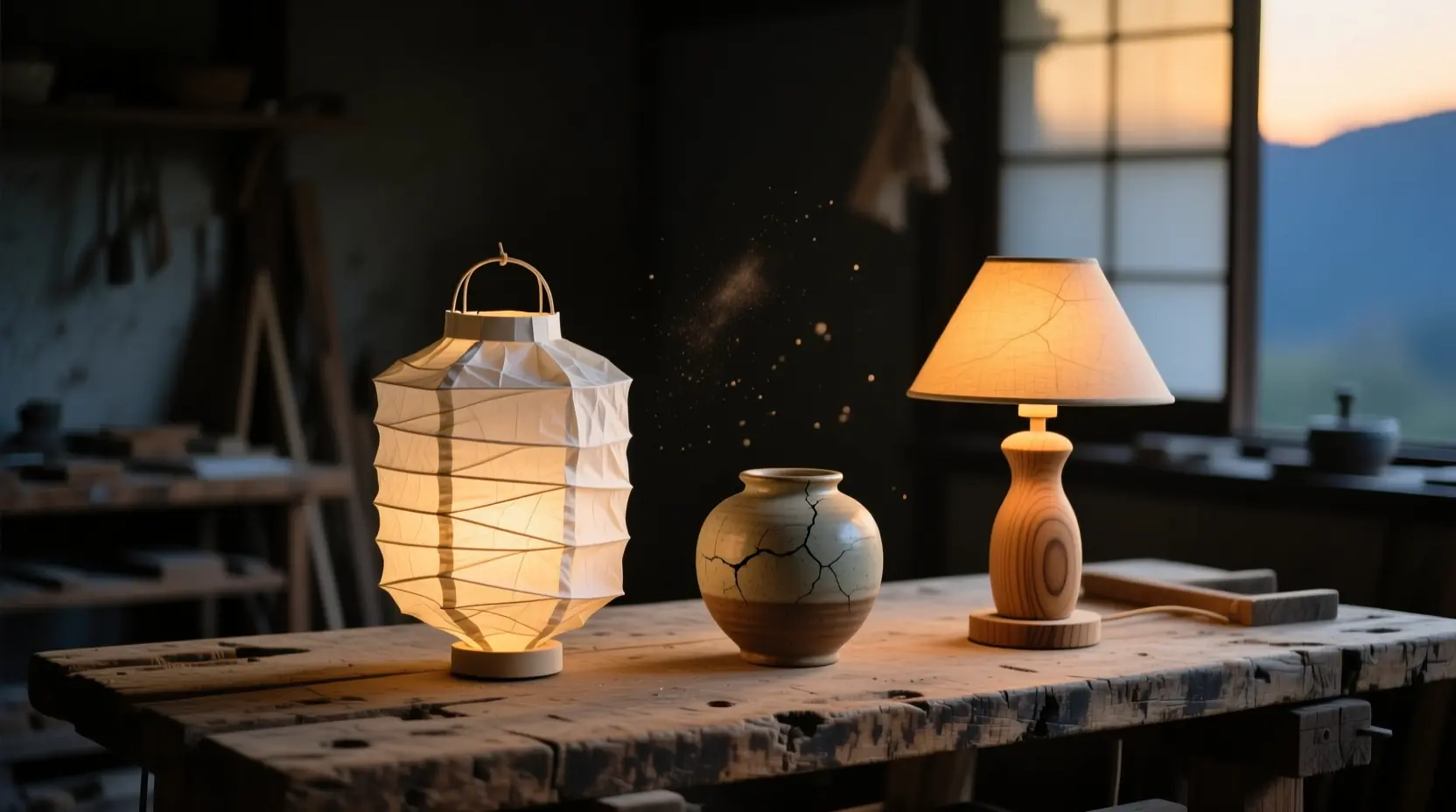
The air is still. Gold dust, unsettled by the day’s passing, floats in the last slant of sun. It drifts, settles. On the worn bench, three companions rest. A paper shade, a ceramic vessel, a wooden column. Each holds the same promise: light. Yet each contains a different quality of darkness. To choose is not a simple matter of utility. It is to select a guest for your solitude. To invite a particular silence into your room.
Let us sit with them. Let us listen to the stories whispered in grain, in glaze, in fibre.
The Paper Lantern: A Captured Breath
Touch it first. Your fingers meet a gentle resistance, a soft sigh. A paper lamp is not a solid thing. It is a held breath. Its light is the most forgiving. It does not command. It suggests.
When you wake it, the light does not leap. It blooms. It fills the skin from within—a soft, radiant pulse that pushes back the dark without ever startling it. The hard edges of the world soften. The sharp corner of a table, the stark line of a wall, relents. Shadows become pools of gentle grey, not abysses. This is the light of a shoji screen at dusk. The light of a path guided, not a path blinded.
Paper teaches transience. It ages. Crisp white mellows to the colour of cream, of sun-bleached linen. A faint stain may appear, a memory of a spilled moment. Some call this fragility. I call it honesty. It reminds us that light, too, is fleeting. That the most beautiful illumination is temporary, held in a vessel that knows its own delicate nature. A paper lamp holds no pretence of eternity. It offers a quiet, beautiful now.
And in its making—look. There is often a seam. A place where the paper meets itself. Do not hide this. Honour it. It is the mark of the hand. The careful fold, the precise glue. This lamp was not born from a mould. It was coaxed. Its strength lies in its tension, its balance. It is light, caged in pure potential.
The Ceramic Vessel: Light Anchored in Earth
Let your fingers travel now. Trace the cool curve. Feel the solid heft, the weight of the kiln’s memory. This is light, anchored. If paper is a whisper, ceramic is a soft, deep bell. Its light pools. It draws a circle of illumination on the surface beneath—a spotlight on a silent, private stage.
The soul of this lamp lives in its glaze. Or in its absence. Rough, unglazed terracotta drinks the light slightly, exhaling a warm, earthy glow from its openings. It feels ancient. Primordial. A glazed piece, however, holds a dance of reflection. Light catches on the surface, lingers, then spills from a cut aperture. It is deliberate light. Composed light.
Ceramic ages in stories, not in fading. It acquires a patina. A fine web of cracks, crazing, may map its surface like tiny rivers. A spot touched often shines smoother. It does not wear out. It wears in. It becomes more itself with time, each microscopic flaw a testament to years of silent vigil—holding light steady through a thousand evenings.
There is a profound stillness here. Its weight gives it presence. Unmoved by breezes, a steadfast companion in the room’s shifting light. It speaks of alchemy—of soft clay transformed by fierce fire. When dark, it is a sculpture of earth. When lit, it is a contained hearth. A vessel that does not merely hold light, but seems to generate it from its very core, from the memory of the flame that birthed it.
The Wooden Column: Light That Remembers Being a Tree
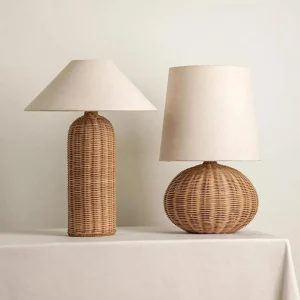
Finally, the wood. Lift it. Feel the grain move beneath your thumb. This lamp was once a tree. It remembers. Its light is the light of a forest clearing—dappled, warm. The most organic companion. It changes not only with time, but with the very air of the room.
Wood speaks through texture. A turned piece of oak or maple offers a rhythmic grain, lines flowing around the form like contours on a map. Reclaimed timber, with its saw marks and knots and fissures, tells a louder tale. It speaks of weather. Of old barns and long seasons. Here, light does not just shine from within. It converses with the story on the surface. It deepens the valleys of the grain, gilds the ridges. The wood itself becomes luminescent.
And wood lives. It expands. Contracts. Breathes with the humidity. A soft creak in the night may be your lamp, whispering to itself. This is not a flaw. It is a conversation. Over years, the wood will darken. Rich cherry deepens to burgundy. Pale pine golds like honey. Oil from a caring hand sinks in, bringing out a soft, inner sheen even in daylight.
A wooden lamp feels less like an object placed in a space, and more like an extension of it. It connects table to floor, to shelf, to the world outside the window. It offers a vertical line—a trunk. Its light is warmer, filtered through its own substance, casting patterns like leaf-shadow. It is patient. Unhurried. It knows about growth, which is always slow, and always worth the wait.
Not Which Is Best, But Which Darkness You Wish to Soften
The question, then, is not of superiority. It is of affinity. What kind of darkness are you tending?
Do you seek a forgiving, encompassing glow that humbles the entire room? A light that asks nothing and soothes every edge? The paper lantern awaits. It is the monk’s cell, the poet’s attic. It is for pure rest, for gentle reading, for conversations where faces are softened into kindness.
Do you need an anchor? A still point in a turning world? A light to define a task, to circle a book, to draw two chairs into intimacy? The ceramic vessel calls. It is the scholar’s desk lamp, the quiet hearth light. It is for focus. For contemplation. For when your thoughts need a firm place to land.
Or does your soul crave connection? The warmth of the living world, brought indoors? A light that ages with you, that changes as you change, that tells a story with every knot? The wood will welcome you. It is for the long evening. For the chair you return to, night after night. For a light that feels less like a tool, more like a friend sharing the deepening dusk.
The Patina of Time: The Final Lesson
In the end, we are not merely illuminating rooms. We are cultivating atmosphere. We are choosing the quality of our solitude, the texture of our togetherness.
The paper teaches release. The ceramic teaches resilience. The wood teaches growth.
All will age. All will gather dust. The paper may tear, one day. The ceramic could chip. The wood will weather. This is not tragedy. It is the final, gentle lesson. These objects, in their quiet decay, show us how to hold light—and how, gracefully, to let it go. They remind us that the most beautiful light is the one that acknowledges the shadow. That true warmth is not about brilliance, but about steadfast, quiet presence.
The sun is gone now. The workshop is dark. But on the bench, three possibilities remain. Not only to shine. To speak. Listen closely. Then bring one home. And let the long conversation with the evening light begin.