The Path That Was Never Drawn, Only Discovered
A line in the earth. A suggestion made by feet, by rain, by the persistent turn of seasons against stone. It does not argue with the root. It bends for the ancient, moss-backed rock. To walk it is to submit. To understand that the way is not forward, but into. Into the grain, into the silence between the pines, into a pace set not by the mind, but by the blood. In my workshop, the cedar dust hangs in slanted light. The objects here… they do not begin with a sketch. They begin with a noticing. The curve a branch makes against the sky. The way a worn stone fits the palm. They are not made to be sold. They are shaped until they feel true. And then, they wait. For the hand that will recognize its own absence in their form.
The Jar That Holds the Empty
Clay, once riverbed. Fired to the colour of a closing day. Its shoulder slopes, a gentle declivity. A thumbprint, fossilized in the glaze, rests near the base. It is not an error. It is a signature of a moment of pressure, of attention. When a person lifts it, their fingers find this hollow. A communion.
It is often bought to hold nothing. To sit on a sill and catch the slow change of light. To be a vessel for the intangible. The quiet of a room. The weight of a thought. Customers write, sometimes. They speak of it as one speaks of a window, or a deep breath. It holds space. In its palpable stillness, the frantic world outside seems to soften, to blur. Its value is not in its capacity, but in its invitation. To be still. To be incomplete. To be enough.
Fabric That Remembers the Sun
Linen, born of flax and patience. At first, it speaks in crisp, respectful whispers. Then, worn. Washed in cool water. Laid over a line to dry in the sun-warmed air.
A transformation occurs. Not a degradation, but a revelation. The fibres relax into memory. They take the shape of a shoulder, the bend of an elbow. The colour fades—not toward grey, but toward essence. The blue becomes a remembered sky. The grey, the soft shade of a dove’s wing. This shirt is not worn; it is companioned. It carries the scent of thyme from the garden, the faint, clean salt of a walk by the shore. It becomes a testament. A folio of days. To choose it is to enter a pact with time. You agree to let it tell a story, and it agrees to tell yours. A bestseller? No. A biography written in fibre and light.
The Table That Anchors the Floating Mind
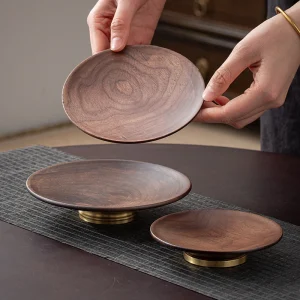
A slab of walnut. A lifetime of growth captured in its grain—a topography of drought and abundance. It is heavy with purpose. It does not ask for attention; it commands a kind of gravitational pull.
To place a hand upon it is to feel a deep, resonant coolness. A stability older than any thought that will cross its surface. People call it an altar. A hearth for the intellect. Its edges are worn smooth by sleeves, by the passing of papers, by the idle tracing of ideas. It bears the faint, pale ring of a teacup like a medal of honour. In its presence, the flickering, nervous energy of the digital world is humbled. It offers a plane of constancy. The wood has finished its becoming; now it holds space for yours. It sells not because it is beautiful, but because it is reliable. A plateau of calm in a churning sea.
The Cup That Demands Two Hands
Stoneware, thick and grounded. Speckled with the iron of the earth from which it came. It is not delicate. It is substantial.
You must receive it with both hands. A ceremony of readiness. The heat of the liquid within permeates slowly, a deep, radiating warmth that speaks of hearth, not microwave. The glaze pools in the foot, a darker, lustrous pool where the flame lingered. This cup is not for haste. It is for the slow dawn, the measured evening. People say the tea tastes different here. Perhaps because the vessel asks you to pause. To be present for the drinking. It connects the lip to the ground, the drink to the soil. It is a tether. In a world of paper cups and hurried sips, it is an act of gentle rebellion. A daily, tactile reminder of connection. It is not bought. It is adopted.
The Book That Welcomes the Storm
Leather, weathered by a life under open skies before it ever met a human hand. It smells of pastures and rain.
Then, it smells of you. Of your pocket, your bag, the oil of your skin. This journal fears nothing—not a downpour, not a drop onto granite, not the gritty sand at the bottom of a pack. Its pages are a forgiving, hungry surface. They accept the frantic scrawl, the perfect, fleeting line of verse, the smudged sketch, the dried blade of grass pressed between pages. It is a companion to the unfinished self. Customers return, year after year, with another filled volume, seeking the next. They line up on a shelf, a quiet chronology of a soul. The leather darkens, softens, shines in places where the thumb rests to open it. It is not a precious object. It is a witness. Its bestseller status is a paradox: it is beloved for its durability in guarding our most fragile, ephemeral thoughts.
Why the Whisper Endures When the Shout Fades
One might wonder. In a marketplace deafening with neon claims and promises of newness, why do these quiet things resonate so deeply?
They do not declare. They abide.
They are not about the future. They are about the enduring present. Each carries within it the silent rhythm of its making—the turning wheel, the rhythmic loom, the careful plane, the patient stitch. The maker’s breath is in them. The slight asymmetry, the tool mark, the soft variation—these are not flaws to be hidden. They are the very texture of life, proof of a hand, not a machine. They are made from materials with memory: wood that once breathed, clay that once settled in stillness, fibre that grew toward the sun. They age. They change. They participate in time.
To cherish them is to make peace with transience. To see beauty not in frozen perfection, but in the graceful arc of wear. The softening. The fading. The deepening. It is a quiet pact with reality. These so-called bestsellers are, in truth, simply well-met. They are found by those whose senses are weary of the synthetic, whose hands crave truth.
A stone in a stream does not try to be a bestseller. It is worn smooth by the constant, gentle passage of water. It becomes, over centuries, the most comfortable, the most natural thing in the current. These objects are like that stone. They exist in their essence. They are found. The transaction is not a purchase, but a recognition. A whisper passed from one soul, through the medium of wood and clay and cloth, to another.
In the end, they are not sold from inventory. They are invited from a shelf. They are not consumed. They are companioned. And there is a universe of soul in that difference.