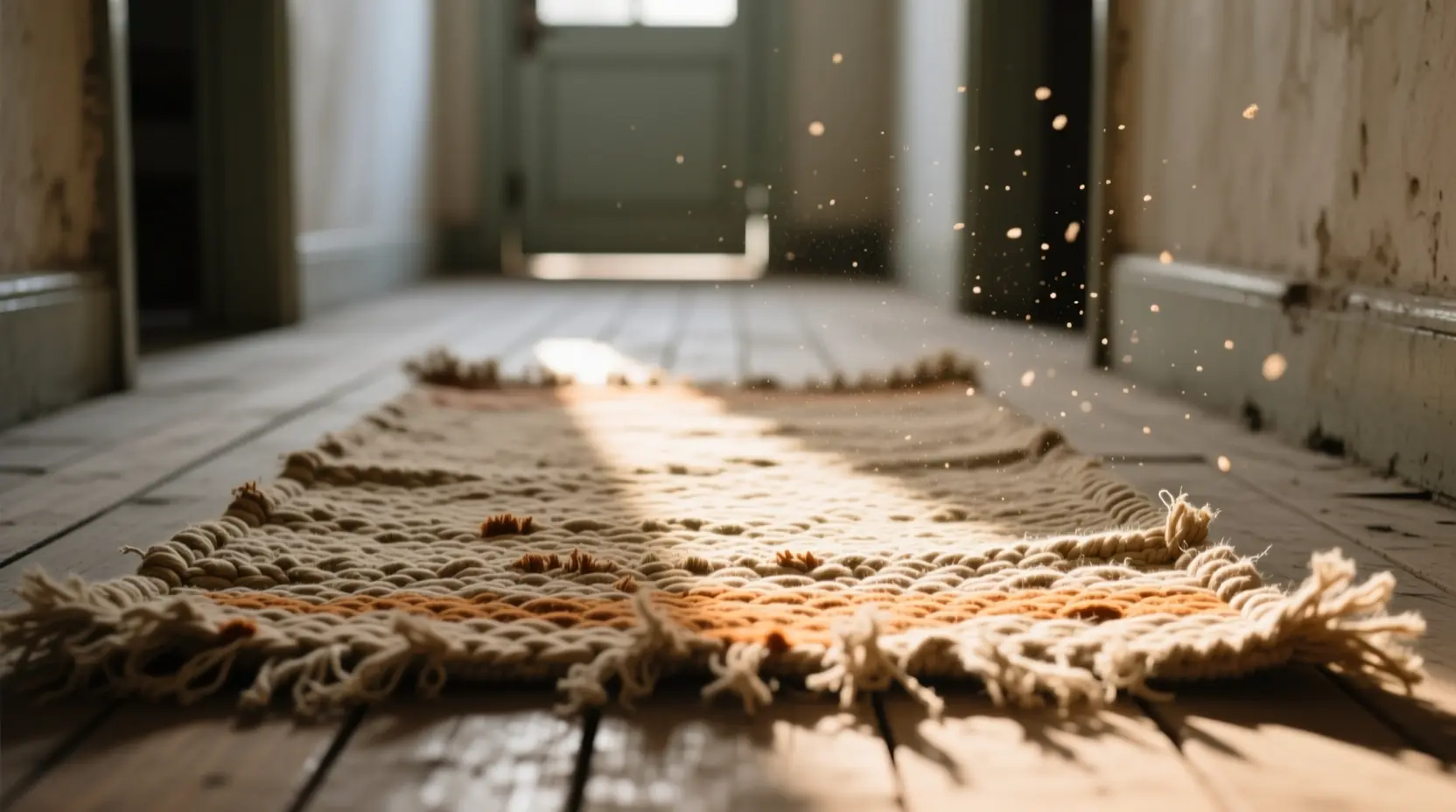
The Threshold, Worn Smooth
A path is not worn by a single journey. It is shaped by ten thousand returns. The threshold of a home. The space between rooms. These are the places where life flows most freely. They bear the quiet archaeology of our passage—a slight dip in the floorboard, a softened edge. Here, a rug is not a decoration. It is the ground upon which daily life unfolds. To choose one for such a place asks for a different eye. An eye that values the stone not for its polish, but for the way water has patiently whispered its shape over centuries.
Not a Style, But a Feeling
This is the way of wabi-sabi. A quiet acknowledgment. Impermanence. Imperfection. Incompleteness. It finds beauty in the crack that tells of the winter freeze. The silver patina on old wood. The way linen softens with every wash. In a high-traffic area, a rug does not merely endure wear. It converses with it. It begins a story your living will continue to write. Footstep by footstep. Season by season.
The Soul Must Be Sturdy, Drawn From the Earth
First, we consider the foundation. The soul of the rug. In busy places, the soul must be sturdy.
Wool: The Fiber That Remembers
Wool, shorn from sheep that know the mountain wind. It is resilient. It remembers its shape. When pressed by a chair leg, it breathes. Slowly, it rises again. Its fibers resist the soiling of the world. With time, its luster deepens. Colors settle. Like leaves into the forest floor. They become richer. As if absorbing the light and life of the room.
Jute & Sisal: The Humble Grass
Do not dismiss the humble beauty of jute or sisal. Grasses of the field, woven with an honest hand. Their texture is of the earth itself—a pleasant, grounding roughness. They speak of simplicity. Strength. They do not fear the track of garden soil. They accept it. A spill becomes a shadow. A stain, a memory. They age with quiet dignity. Fading like sun-bleached driftwood.
Cotton: The Worn Work Shirt
Then, cotton. The worn work shirt of fibers. Flat-woven, like the simple *khadi* of India or the sturdy weaves of Japan. Like well-loved linen. They lie flat and true. They welcome footprints. They can be washed clean, emerging softer each time. Their beauty is in their humility. Their service without complaint.
Patterns That Whisper
In a space of constant movement, the mind seeks rest. A loud pattern fights the flow. It shouts. A wabi-sabi pattern whispers. It offers a place for the eye to land, then wander softly away.
Echoes of Nature
Look for the echoes. The irregular stripes of a weathered board. The subtle gradations of a river stone. The shadow of bamboo leaves on sand. Seek *kasuri*—Japanese ikat where patterns have soft, blurred edges. As if seen through morning mist.
The Beauty of the Unfinished
Consider the beauty of the asymmetric. A border that varies in width. A motif that clusters in one corner and dissipates like fallen seeds. This is not a mistake. It is an invitation. The room completes it. A sofa. A bookshelf. A trail of sunlight. They become part of its composition.
Texture as the Truest Pattern
The most profound pattern is often texture itself. A looped pile that holds light like a ploughed field at dawn. A hand-knotted rug with slight variations in pile height. It tells the story of the weaver’s rhythm. Focused days. Tired evenings. This texture catches the light. It creates landscapes of shadow that change with the hour.
Colors That Have Lived a Long Life
The palette should feel discovered. Not chosen. Colors that have already lived.
The grey of a river stone. Warm and silent. The soft brown of unbaked clay, waiting by the wheel. The muted green of moss on the north side of an ancient tree. The faded indigo of a farmer’s tunic, washed by many seasons. The off-white of raw, unbleached linen. The color of humility.
These colors do not fear time. They welcome it. A sun-faded ochre grows more gentle. A deep charcoal, trodden for years, softens at the edges. Blending with the floor beneath. They are backgrounds for life. They hold the scuff of a shoe, the track of light from a window. Not as a flaw. As a layer of the story.
The Beauty That Arrives With Time
This is the heart. You are not selecting a rug that will look its best on the day it arrives. You are choosing a companion. One that will grow more beautiful with your shared journey.
A high-traffic area is the perfect stage. Release the fear of marks. A slight crushing of the pile in a walking path is not damage. It is a record. A love map of your home. The valley formed by the faithful river.
Over years, colors will soften. Merge. The sharpest contrasts will mellow, as memories do. The rug will settle. Becoming less an object placed upon the floor and more the floor itself. A warm, textured skin.
The Golden Join
A small repair, done with care—a few stitches of complementary thread—is not something to hide. It is *kintsugi* for the floor. A golden join. It honors the rug’s service. Extends its life. It adds a chapter.
Simple Offerings for Your Path
So, where might one find such a companion? Look not for perfection. Look for character.
The Hand-Knotted Wool of Morocco
Seek the Beni Ourain. The Boucherouite made from recycled cloth. Their natural, undyed wools. Simple, imperfect lines. They feel ancient. Grounding. Thick and forgiving. Absorbing sound and step with gentle resilience.
The Flat-Woven Dhurrie of India
A cotton or wool dhurrie. Its stripes and checks are often irregular. The vegetable dyes, subtly uneven. It is thin. Tough. Meant for life. It will develop a patina of use. Deeply beautiful.
The Japanese Rush Mat
A *goza* or *tatami*-style matting of igusa grass. Its clean, grassy scent. Crisp texture. The essence of simplicity. It welcomes bare feet. Quiet sitting. It will fade. Wear at the edges. A quiet calendar of days.
The European Rag Rug
Woven from remnants on an old loom. Every strip of cloth holds a previous life. A faded dress. A worn shirt. A tapestry of memory and thrift. Durable. Full of soul.
Laying the Path
When you bring it home, do not be anxious. Unroll it. Let it breathe. Feel its texture. Notice its imperfections. The slight skew in a line. The knot in the yarn. The variation in color. These are its signatures. What make it unique. Alive.
Place it where life happens. And then, live.
Walk on it with muddy boots and bare feet. Let the sun fall across it for years. Let a cup of tea spill. Do not rush to scour it. Blot it. Let a faint shadow remain. A gentle ghost of a peaceful afternoon.
Sweep it regularly. The dust of our lives. The sand from the garden. Let them settle briefly, then be gathered. This is not just cleaning. It is a ritual of care. Like raking the gravel in a Zen garden. It reveals the pattern anew each day.
In time, you will not see a rug. You will see a landscape. A testament to the journey of a family. It will hold, in its fibers, the memory of children playing. Of quiet mornings. Of countless comings and goings. It will be worn in the places of greatest love. Of most frequent passage.
And you will understand.
You did not buy a rug to cover a floor. You planted a seed. A seed of texture. Of natural fiber. Of quiet color. And you watered it with your daily life. You gave it sun and footfalls and time. And it grew. Not into something else. But more deeply into itself. A perfect, imperfect, beautiful record of a life lived. Warmly underfoot.
That is the best rug for a high-traffic area. The one that is not afraid to live.