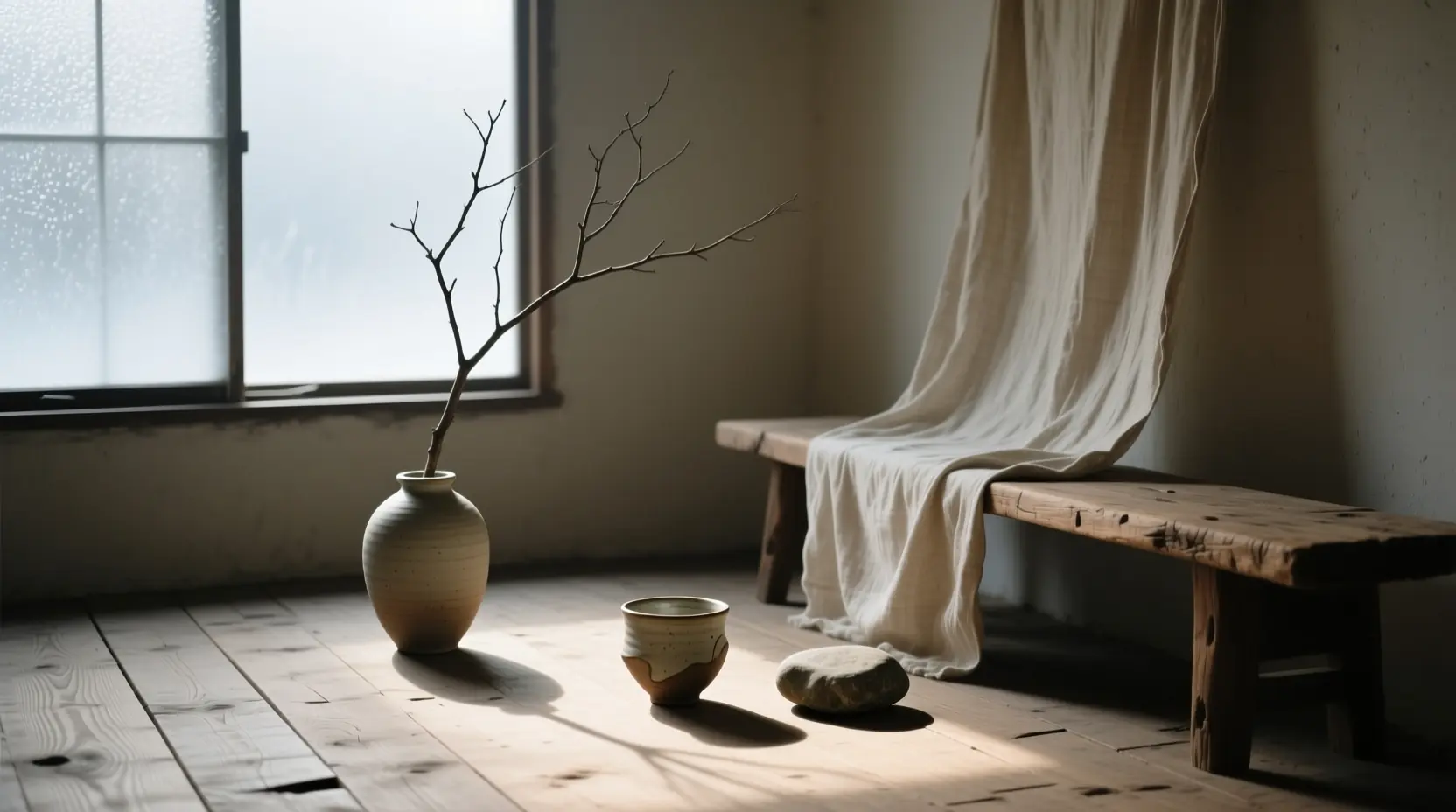
The Room Breathes
Sunlight, softened. It rests upon the grain of a floorboard like a cat upon a favorite cushion. The air carries the faint, clean scent of hinoki wood and dried rye grass. This is not mere decoration. This is a space that has learned to listen. To the silence between things. They call it Japandi. A blending. To the hurried eye, it might seem sparse. Costly. But come, sit with me on this worn tatami mat. Let me tell you a secret. This look is not about wealth. It is about sight. It is about choosing to see the soul in the humble, the imperfect, the already-there.
True beauty is not purchased. It is uncovered.
The Path Begins with Emptying
Before you add a single thing, you must learn to subtract. This is the first, and most profound, principle. It costs nothing but your attention. Walk through your room. Not as its owner, but as a guest. A quiet, curious guest. See the clutter not as your life, but as dust upon the surface of a still pond. You cannot see the reflection of the sky if the water is troubled.
Remove what shouts. Remove what serves no purpose of use or of the heart. A crowded shelf, a frantic pattern, a gadget that hums with uselessness—these are stones in your pocket as you try to swim. Let them go. Feel the space open. The walls sigh in gratitude. The floor expands. Now, you have your first and most precious element: emptiness. Ma, they call it in Japan. The nourishing void. The pause between musical notes that makes the melody. You have just created it, without spending a single coin.
The Wood Seeks Its Own Level
Now, look to your bones. Your floors, your largest surfaces. Do not think of staining dark or bleaching light in frantic chase of a trend. Think of honesty. If your floor is old oak, let it be old oak. Welcome its scars as the rings of a tree. If it is laminate, see its plainness not as a flaw, but as a blank page. A simple, natural-fiber rug—jute, sisal, undyed wool—can be found without great expense. It does not demand attention. It simply rests beneath your feet, a touch of the field indoors.
Furniture need not be a temple. It must be a companion. Seek lines that are low, quiet, grounded. The Scandinavians understand the virtue of a humble, well-made pine. The Japanese revere the joinery that holds without boast. Visit a thrift store with new eyes. See not a “used coffee table,” but a solid piece of wood waiting for its story to continue. A sanding, perhaps. Just enough to smooth the splinters, not to erase its history. A wash of pale, muted paint or a simple oil to feed the grain. Let its legs be short. Let it bring the eye down, to the earth, to a place of rest.
The Poetry of Light and Shadow
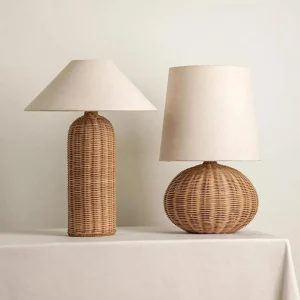
Light is the brush that paints the room each day. Harsh, electric glare is the enemy of contemplation. Seek the diffused, the gentle, the kind. Drape a simple, unbleached muslin over a sharp lamp shade. It will glow like a paper lantern at dusk. Gather fallen branches on a walk—this costs nothing but your notice. Place them in a clear vase, not as decoration, but as a record of the wind’ should be shape. The sun will cast their slender shadows on the wall, a moving painting of filigree.
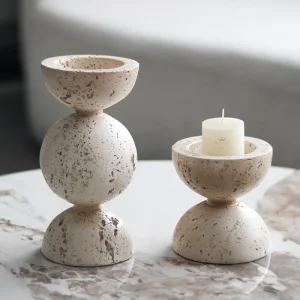
Candles are not for grand occasions. A single, plain pillar in a small ceramic dish is a humble sun. It honours the evening. It teaches you about the passage of time as it melts, a quiet lesson in impermanence. Place it where its light can dance across a textured wall or pool in the hollow of a stone. Light, and the shadows it creates, are the most affordable art. They ask only for you to witness.
The Soul Lives in Texture
This is where the heart of the work lies. Japandi is not a visual style; it is a tactile experience. It is the invitation to touch. Smooth, worn wood under your palm. The nubby, forgiving embrace of raw linen. The cool, silent steadfastness of stone. The fragile, whispering rustle of rice paper. These are the conversations a room has with your skin.
Find a piece of raw, undyed fabric. Linen, cotton, hemp. Let it be your canvas. A curtain, a throw, a simple cushion cover. Its wrinkles are not flaws. They are the memory of rest. Dye it with tea, if you wish—a soft, ephemeral beige that will fade with each wash, gracefully, like a leaf returning to soil. Knit a blanket from undyed, oatmeal-colored wool. The process is a meditation. The result is a hug from the sheep that offered its coat.
Gather objects that feel true. A river stone, smoothed by centuries of water. A piece of driftwood, sculpted by the sea and salted by the wind. A handmade bowl, thrown on a wheel where the fingerprints of the potter are still visible in the clay. These are not ornaments. They are anchors. They remind the room of the world outside. They cost little. Sometimes, only the bend of your back to pick them up.
The Art of the Single Branch
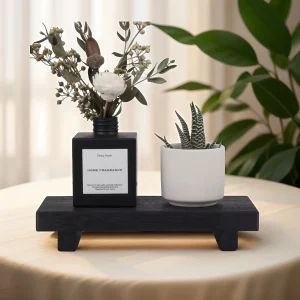
You do not need a forest in a vase. One branch is a universe. In spring, a single flowering quince. In autumn, a maple branch with two remaining leaves. In winter, the stark, elegant calligraphy of a bare birch twig. Place it in a simple vessel. A clear bottle. A matte black pot. The vessel does not compete. It holds. It serves. This is ikebana, the way of flowers, stripped to its essence. It is not about abundance. It is about essence. It teaches you to see the curve, the balance, the life force in one solitary thing.
The same is true for all displays. One book, its cover soft and faded, placed beside a stone. A single ceramic cup, its glaze running like a frozen waterfall. A folded textile, revealing the beauty of its crease. Groupings are odd in number—one, three, five. They feel natural, like stones in a stream bed. They ask for a moment of pause, not a glance of consumption.
The Beauty of Patina and Repair
In the West, we hide wear. We see it as decay. In the world of wabi-sabi, we see it as a deepening. The scratch on the table is where a family shared meals. The fray on the rug’s edge is the path of countless quiet footsteps. The faded cushion is where the sun loved it most dearly. Do not discard these stories. Honour them.
Learn the art of kintsugi, but in spirit, not always in gold. Mend the cracked cup with a visible glue line. Let the repair be a part of its history, a scar that speaks of care. Darn the linen with a contrasting thread. Let the mend be a mark of your hand, a commitment to longevity over novelty. This philosophy turns thrift store finds into treasures. A chipped enamel pot becomes a vessel for utensils. A bench with peeling paint becomes a shrine to time itself. You are not buying old things. You are adopting elders.
The Final Ingredient Is Slow Living
You can assemble all these elements and still miss the point if your mind is frantic. The final, priceless element is a way of being. To sit on the floor and feel the firm support of the earth. To drink tea from that mended cup, noticing its weight, its warmth. To read in the pool of light from that muslin-draped lamp, and to look up, to watch the shadows shift. To open the window and let the air, cool and fresh, move through the space, carrying away the stagnant.
This look is not achieved. It is nurtured. It grows, like moss on stone, slowly and with deep quiet. It asks you to be present. To choose the handmade over the mass-produced, even if the handmade is your own rough stitching. To choose natural materials that will age with you, not plastic that will mock you with its false youth. To find deep comfort in simplicity, in the knowledge that you have enough.
The room breathes. It is quiet, but not empty. It holds the whisper of wood, the song of linen, the silence of stone. You made it not from a catalogue, but from perception. You listened to the spaces between. You honoured the cracks. You welcomed the soft, fading light. You learned that the most affordable decor of all is a shift in gaze—to see the world, and your place within it, with the eyes of a humble craftsman, tending patiently to the soul of things. Now, sit. The sun is moving across the floor. Watch it. That is the heart of it all.