The Threshold Where Air Remembers
To cross into a kitchen. To leave the clamor outside. The air here is different. It holds things. The memory of steam. The sweet, earthy ghost of a roasted root. It breathes. In. And out. A slow, patient rhythm. This is not a room of stainless steel and shouted orders. This is a vessel. For living. To craft such a space, one must listen. Not with ears. With the soul. Listen to the grain of the wood. To the angle of the light as it falls, late and low. To the quiet hum of use—the soft click of a ceramic lid, the whisper of a cloth on oiled oak. This is the way. It is not a style one buys. It is an understanding one cultivates. Season by season. Gesture by gesture.
Two Old Souls Meeting in the Silence
From the East, a whisper. *Shibui*. The austere beauty. The quiet elegance found not in brilliance, but in the subdued. In the slightly worn edge. In the color of twilight. From the North, a warmth. *Hygge*. The profound comfort of the simple. The democratic object. The light of a single candle against the long dark. They meet. Not with a handshake, but with a slow, knowing nod. Both understand the weight of silence. Both revere the honesty of material—what it is, not what we might force it to be. Together, they speak of a kitchen that is a sanctuary. Of functional grace. Where every object has a soul, and every soul has its place.
The Bones Beneath Our Feet
We begin with what grounds us. The foundation. Stone. Or wood worn smooth by generations. The floor is not a stage. It is earth. It must feel solid. Eternal. A slate tile, cool and grey as a morning riverbed. Its surface accepts the dust, the slant of light, the soft pad of bare feet. Or wide-plank oak. Each board a chapter. Its knots like watchful eyes. Its grain a map of years—tight, earnest lines of summer’s growth; wide, languid bands of winter’s rest. This surface does not shout. It anchors. It reminds us where we stand. On the bones of the world.
The Sky of This Small World
The walls follow. They are the sky here. Often, a soft white. Not the white of institution. The white of sun-bleached linen. Of sea-washed bone. A white that holds light. Glows from within as the day deepens. Sometimes, the color of clay. Of a rain-dampened path. A humble color. A color that remembers its origin in the earth. There is no gloss. Only a gentle, matte embrace. These walls are a canvas. For shadows. For the dance of leaf-light from a window. They hold space. They do not demand it.
The Soul That Breathes: Wood
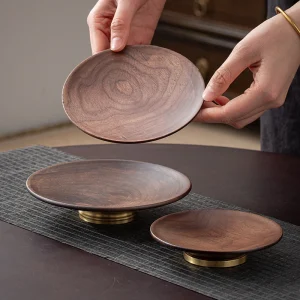
Then, the wood. This is the heart. Wood is not inert. It lives. It breathes still, slowly, in tune with the house. In this space, wood is allowed to be itself. It is not hidden under a glossy veneer of pretense. We see its grain—the story of its life. To sand it into bland, featureless perfection is to silence its voice. We honor its texture. The silken slide of a hand-planed ash counter, worn smooth by the touch of bowls, the wipe of cloths. The gentle resistance of a cerused oak door, the porous grain holding a whisper of white pigment, like frost on a morning field.
This is *wabi-sabi*. The beauty of transience. The dignity in aging. A small knot is not a flaw to be hidden. It is a mark of character. A subtle darkening over time is not decay. It is a patina of memory. This wood has known. The dry heat of summer. The damp chill of winter within these walls. It has listened to the kettle’s song. It has absorbed the aroma of citrus, of thyme, of simmering broth. It becomes richer. Not newer. It bears witness.
The Quiet Order of a Forest Floor
Function is a form of reverence. A cluttered space is a cluttered mind. A frantic search for a tool breaks the peace of the ritual. So, storage is contemplative. Cabinets are flat-fronted. Simple. Their handles, if they exist at all, are long, slender grooves for the fingers to find. Or small, rounded scoops of forged iron. Dark and cool to the touch. They do not adorn. They simply await.
Inside, there is order. Not the rigid order of a barracks. The thoughtful order of a forest floor. Everything has a home. Earthenware bowls nestle together, their curves in conversation. Wooden spoons rest in a slender ceramic jar, their handles rising like reeds from a still pond. No crowded racks. No shouting colors. The objects are chosen. Not accumulated. Each one is allowed its space. Its dignity. A single, beautiful knife on a magnetic strip of oiled wood. A well-used cast iron pot, its bottom a constellation of tiny black stars from a thousand fires. This is *kanso*—simplicity. It is not emptiness. It is clarity. A breath held, then released.
The Touch of Cloth, The Breath of Light
Against the solidity of wood and stone, we place the softness of cloth. This is the *hygge*. The tactile warmth. A window is not dressed in heavy velour. It might wear a panel of raw, undyed linen. It filters the light, softening it to a milkiness. It moves with the faintest sigh of air. A simple cotton rag, worn soft from use, hangs neatly. Its purpose is clear. Its softness is earned.
Light Is the Most Important Material
Light is the other guest. The most important one. By day, we invite it in. Large windows, clean and clear, frame the world outside like a living scroll painting. The light changes. And the room changes with it. Morning is sharp and hopeful. Afternoon is golden and slow. Evening is a deep, blue embrace. We do not fight it. We follow it.
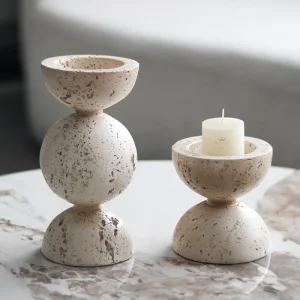
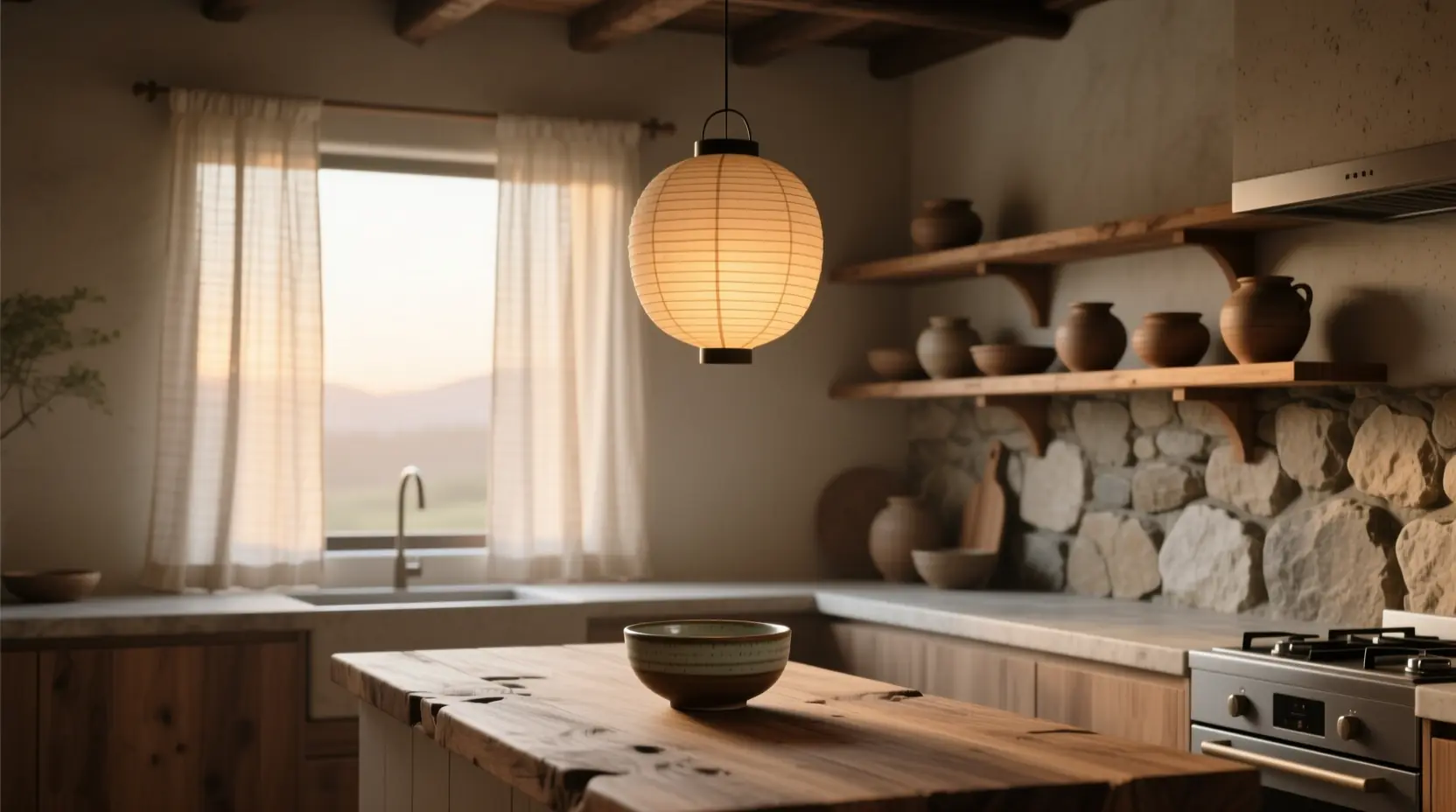
As dusk falls, we do not flood the room with a single, glaring sun. We light small fires. A single pendant lamp over the counter, its shade of rice paper glowing like a low moon. Perhaps a few small candles. Their light flickering against the curve of a ceramic cup. Light pools. It gathers in corners. Illuminates a single vase on a shelf. Leaves other areas in respectful shadow. This is conscious darkness. It is as important as the light. It allows the room to rest. To breathe.
A Vessel for the Rituals of the Hand
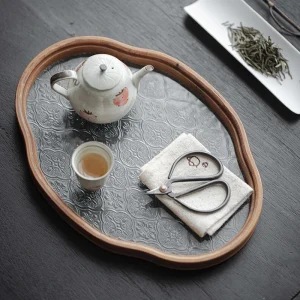
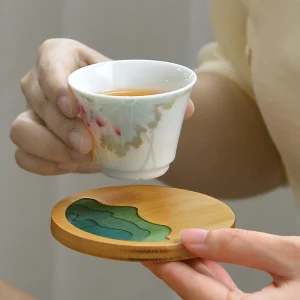
In the end, this kitchen is not about the making of meals. It is about the making of moments. The ritual of the morning tea. The slow chopping of vegetables—the knife a steady, rhythmic *thock* on the wood. The steam rising from a pot, carrying the scent of broth into the waiting air. It is a room that encourages presence. Demands it, gently.
To stand at such a counter is to feel the smooth wood under your palms. To hear the quiet click of a lid settling on its pot. To see the delicate crackle of the glaze, like ice on a first winter puddle. It asks you to slow down. To notice. To care for your tools. To wipe them dry. To put them away with a wordless gratitude. This care is a meditation. It feeds the soul as surely as the food feeds the body.
The Fingerprints of Life
This kitchen does not seek to impress a visitor. It seeks to nurture the one who works within it. It is humble. Grounded. Deeply warm. It understands that beauty is not in the new and the shiny. But in the used and the loved. The worn spot on the floor where you always stand. The slight darkening of the wood around the sink. The chip on the edge of your favorite bowl. These are not damages. They are the fingerprints of life. They are what make the space a home. They are the quiet, unspoken story.
The philosophy is gentle. But its truth is as hard as stone. Create space. Choose well. Let materials speak. Honor use. Embrace time. In doing so, you build more than a kitchen. You build a quiet center. A sanctuary. A place where functional minimalism meets organic warmth. And in that meeting, finds a kind of peace. A peace felt in the bones. As solid as the earth. And as comforting as the first light of dawn, falling across a worn wooden table, etching everything in gold.