The Clay Remembers
It is cool. Damp. A substance older than language. In the quiet of the studio, it yields beneath my thumb. It holds the memory of rain on a hillside. The patience of roots seeking purchase. The warmth of sun on a riverbank.
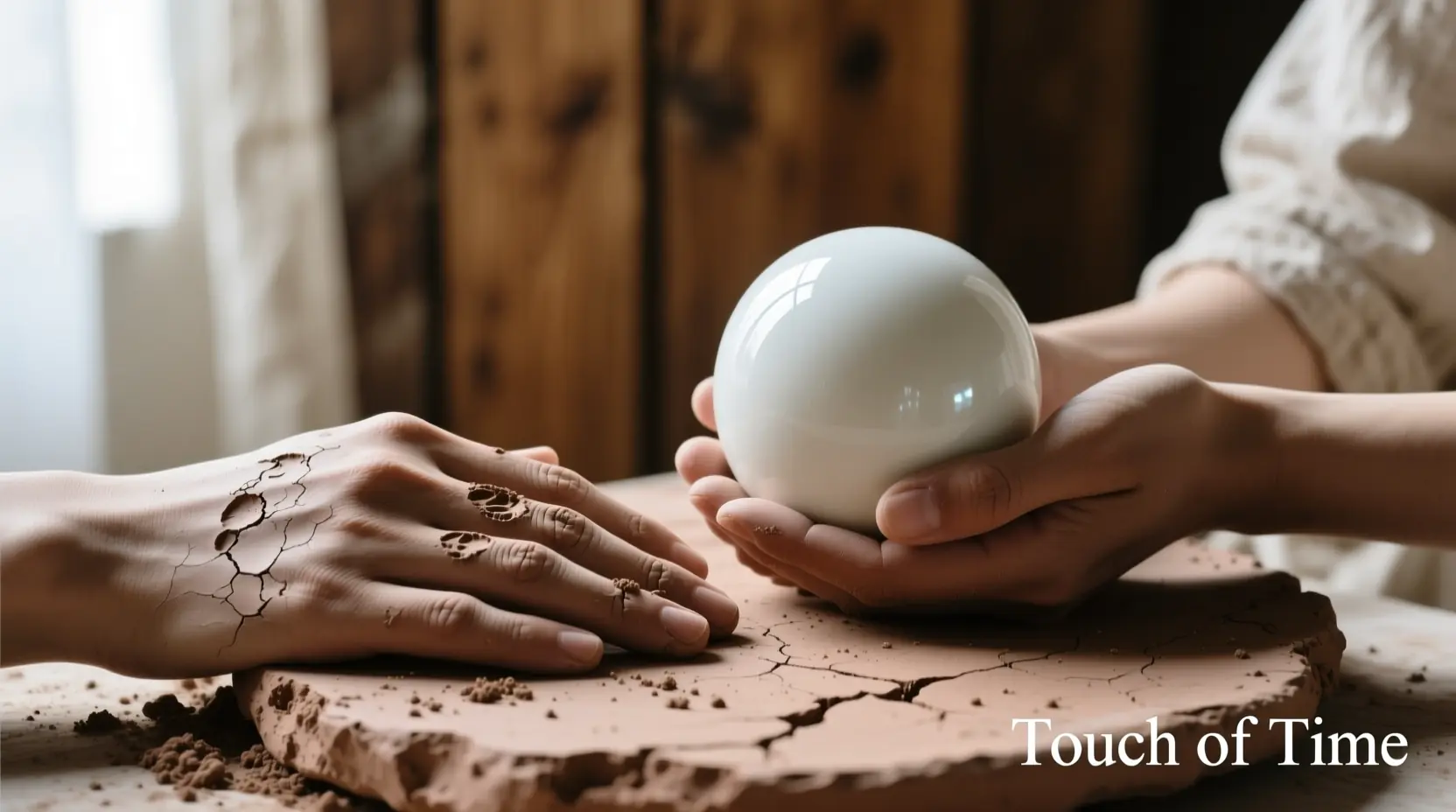
From this single, elemental beginning, two paths unfold.
One curves downward. Towards the deep, embracing earth. The other reaches upward. Towards a distant, luminous moon.
Earthenware and porcelain.
You ask which one you should choose. This is not a question of selection. It is one of recognition. Which one calls to the part of you that remembers, too?
The Warmth of the Earth Underfoot
Earthenware is the clay of the hearth. Of the first bowl. Shaped by hands that knew the soil.
It is porous. Breathing. It does not seek to transcend its nature. Its color is the land itself. Terracotta’s fiery rust. The soft grey of slate after a shower. The muted ochre of a late autumn field.
It is the unglazed flowerpot, sweating coolness in the sun. The rough texture of a garden path beneath bare feet.
When you lift an earthenware cup, it has a gentle weight. A sincerity. It does not pretend. Fired at a lower heat, it retains a softness. A willingness to converse with the elements.
It will age. It must.
Over years, the unglazed rim of a bowl will darken. A polished record of every meal. A fine crazing in the glaze will gather—like the first lines around the eyes of someone who has smiled often. It does not fear this. It welcomes it. This is its soul, emerging.
The beauty is in the warp. A signature of the fire’s dance. The speck of iron that burns into a fleeting star.
This is wabi-sabi. The profound beauty of the imperfect. The impermanent. The incomplete. It speaks of a life lived. Not a life displayed.
The Substance of Clouds and Moonlight
Then, there is porcelain.
It begins with a different clay. Kaolin. The word itself sounds like a cold, clear mountain. Its aspiration is not of the earth, but of the sky. It seeks translucence.
A hotter, purer flame. A trial that vitrifies it. Makes it non-porous. Ringing like a distant bell when struck.
To hold a fine porcelain piece is to hold captured light. Thin. Almost weightless. The white is not merely a color. It is a ground for purity. A canvas for the most delicate of visions. A single cobalt brushstroke. The blush of a peach. The deep serenity of celadon.
Its glazed surface is like still water. Polished river stone.
It represents a reaching. An ideal. The aesthetic of stillness. Of clarity. Of unsullied space. It is the empty monastery courtyard, swept clean. The single bloom in a simple vase. A breath held in quiet contemplation.
Yet, even porcelain ages. Not with a softening. But with a dignified evidence.
A hairline crack. A gilt edge worn to a whisper. These are not injuries. They are the soft footfalls of years passing. They become the most precious part. For in its pursuit of perfection, the slightest evidence of life becomes its most profound poetry.
The Voice of Your Own Hand
So. You must listen.
To your own hands. To the life you live.
Does your soul lean towards the rustic kitchen shelf? Where morning light pools in the curves of a hand-thrown mug? Do you find comfort in the substantial? The grounded? The piece that asks to be used, without ceremony?
This is the path of earthenware.
It is for soups that steam generously. For bread shared straight from the oven. For gardens where the pot becomes one with the soil. Its aesthetic is one of gathering. Of nurturing. Of unadorned warmth. The humble craftsman’s wisdom.
Or.
Does your spirit seek the quiet moment of the tea ceremony? Where every movement is considered? Where the vessel is a partner in mindfulness? Do you crave the clarity of an empty space? Holding just one thing of breathtaking simplicity?
This is the way of porcelain.
It is for the clear, cold water that tastes of the mountain. For the sip of sake that holds the evening in its surface. For the solitary flower that demands your entire attention. Its aesthetic is one of distillation. Of essence. Of serene focus. The aging Zen master’s silence.
A Stream Does Not Choose Its Stones
But remember this.
A stream does not choose. Between the rough, mossy stone and the smooth, pale pebble. It flows over both. It embraces both. The water’s song is made by their difference.
Perhaps your home is not a monastery. Nor a rustic farmhouse.
But a living stream. A place where these two spirits can converse.
Imagine it.
The deep, grounded presence of an earthenware vase. Its surface the texture of weathered bark. Holding a single, graceful branch of cherry blossoms. The fragile beauty of the flowers, amplified tenfold by the enduring, earthy solidity of the vessel.
See.
On a worn wooden table, a slab of slate. Upon it, a porcelain cup. White as the first snow. Its surface holding only the shadow of the pine branch outside the window. Next to it, a heavy earthenware jug. Glazed in the deep green of forest pools.
One holds your silence. The other holds your water.
This is the true aesthetic. Not a rigid choosing. But a harmonious allowing.
Let the porous, accepting nature of earthenware teach you. To absorb the days. To wear your experiences with grace.
Let the aspirational clarity of porcelain remind you. To seek moments of pure, uncluttered stillness.
In the end, the clay is the same. It is only the intention of the maker, and the fire, that diverges.
Your hand, reaching for a vessel, is the same hand.
Does it seek the reassuring warmth of the earth on a cold evening?
Or the cool, clarifying touch of the moon on a fevered brow?
Listen to the clay. It will tell you. Not in words. But in weight. In texture. In the way it feels like a memory you have always carried. Finally returned to you.
The choice is not about trend. Or decoration.
It is about coming home.
To the earth.
Or to the sky within yourself.