The Silence Before the Story
Sit. Here, where the afternoon light stretches thin. The air smells of dust, of stone after rain, of patience. We do not speak of making. We listen. To a dialogue older than our hands. Between brass and iron. And the third voice—time—which speaks only in the language of patina.
The Earth’s Bone and Captured Sun
Iron is the quiet one. The earth’s deep breath held in form. Cool to the touch. Dense with shadow. It does not shine. It awaits. A humble vessel. It accepts the damp, the print of a thumb, the memory of flame. It begins in slumber.
Brass is memory. Sunlight held in amber alloy. It sings when new. A bright, clear note. But it is soft. Yearning for the world’s touch. Eager to tarnish. To remember.
Two raw voices. One a whisper from below. One a chime from above. To stop here is to close the book on the first page.
The Teachers: Touch, Air, and Long Patience
Now. Introduce the great teacher. Time. Which cannot be hurried.
Iron Awakening
Place the iron where the air moves. Let the moisture find it. Do not fear the first bloom of rust. That orange whisper. It is not decay. It is awakening. A breath after long sleep.
With a cloth, with a gentle hand, you guide this breath. You let rust settle in the hammer’s valley. You lift it from the peak. What remains is a landscape. The deep black of wet soil. The faint red of distant clay. A surface that drinks light. A still pool. It becomes shadow given texture.
Brass Remembering
The brass begins its slow return. The oils of skin. The salt in the air. A quiet alchemy. The bright shout softens. Gold deepens to honey. Then, with seasons, it mellows further. To the green of moss on north stone. The blue-grey of a winter twilight. Verdigris. Not a stain. A wisdom.
This does not happen in a day. A true patina is a season. It is the work of many turnings of the earth. You must be as patient as the root seeking water.
The Moment of Meeting: A Harmony of Opposites
Here. The heart of it. The conversation.
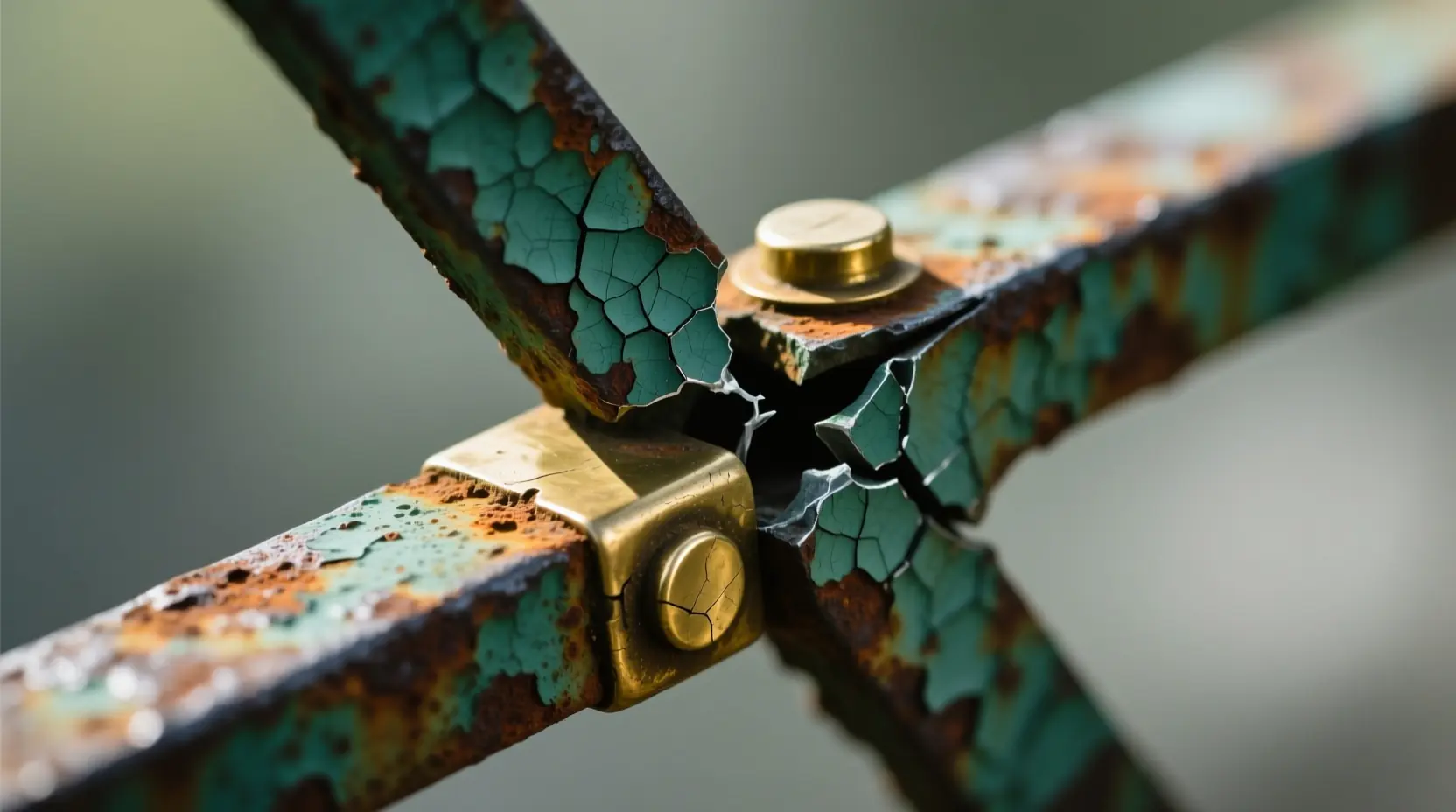
A drawer pull. Forged iron, dark as a river stone at midnight. Set within its grasp, a rivet. Patinated brass. A single eye of aged gold gazing from the gloom. The iron grows quieter. The brass grows wiser.
A door hinge. The strap is iron. Broad. Solemn. Wearing a cloak of graphite. Upon it, a tracery of brass. Thin as a vein on an autumn leaf. Now softened to celadon green.
They do not fight. They complete. The iron gives the brass gravity. A place to rest. The brass gives the iron a memory of light. A gentle phosphorescence in the dark.
It is the mountain and the lichen. The deep pond and the lily. One defines the other. Seek not loud contrast. Seek quiet harmony. The iron’s roughness makes the brass’s smoothness a discovery for the thumb. The iron’s cool reticence makes the brass’s warmth feel like a welcome.
A story of balance. Told in metal and time.
The Soul That Wears Its History
A machine-perfect thing is silent. It has no story until you scar it.
But a thing that wears time… it speaks in whispers. “I have been here,” it says. “I have felt the air grow damp and dry. I have been held. Used. Cherished. I am alive.”
This is wabi-sabi. The beauty of the impermanent. The imperfect. The incomplete. Patina is a record. The brass near the latch wears darker. From the constant press of a living thumb. The iron on the foot wears a different texture. From the quiet micro-climate of the floor.
These are not flaws. They are a map. A life lived.
When you bring patinated brass and iron into a space, you bring not decor. You bring a quiet energy. A settled soul. They do not shout for attention. They ask for a moment. A slower look. They teach contentment with change.
A Practice in Seeing, Not Buying
How to begin? Not with a catalog. With a posture. Learn to see.
Go outside. Find a piece of weathered cedar. See how the silver grain rises. The soft wood wears away. That is patina. Find an old stream stone. Edges rounded. Color deeper where water runs. That is contrast.
Then. Take a simple nail of black iron. Hold it against a leaf the color of old brass. You will feel the harmony. It is already there. In the world. You are only learning to listen.
When you choose pieces, think not of filling a room. Think of placing a few, meaningful words in a long, quiet poem. An iron candle holder. Cradling a disk of green-touched brass to hold the flame’s reflection. A cabinet. A frame of somber iron. Panels inlaid with tiles of softly variegated brass. A bookshelf. Brackets of dark metal. Supporting shelves of weathered oak.
The metal becomes the punctuation. The dark pause. The gentle highlight.
The Final Lesson: Letting Go
This is the most important part. You must release control.
You can guide. A vinegar steam for the brass. A salted mist for the iron. Linseed oil to deepen the hunger of the metal. But then. You must let it go into the world.
The air in your home is unique. The way your family lives is unique. The metals will continue their conversation with that environment. They will change. A new spot may appear. A high-touch area will shine softly. A quiet recess will grow more profound.
This is good. This is the object breathing with the life of your house.
Do not fret over consistency. Seek character. A uniform, forced ‘antique’ finish is a mask. A true, living patina is a face. Lined with experience. Gentle with time.
An Offering of Quiet in a Shouting World
In a world that shouts with polish and sterile perfection, the quiet voice of patinated brass and iron is an offering. A reminder. Beauty is not a state to be achieved. It is a process to be honored. The acceptance of change. The celebration of contrast not as conflict, but as essential dialogue.
The dark iron is the silence between the notes. The aged brass is the note itself. Mellow. Rich from years of being played.
Together, in their slow partnership, they create a harmony that does not excite the eye. It rests it.
They ask us to slow. To see the feathering of rust as one sees the veins of a leaf. To value the subtle green on brass as one values the first moss on a north stone. They ground us. In material. In time. In the deep, comforting truth that nothing is static. And there is profound beauty in that gentle decay. That graceful aging.
So place them with a quiet heart. A hinge. A hook. A simple vessel. Then let them be.
Watch, over the years, as their dialogue deepens. As they settle into their shared history. In the corner of your room. By the window where the light grows old each afternoon.
They are not just objects. They are a lesson. Held in metal and time. A lesson in the beauty of a quiet, contrasting, perfectly imperfect world.