A Pane of Glass, an Inheld Breath, a Fall of Cloth
There is a quiet place where the light alights. Not crashes. Not shouts. It settles. A slow descent. A leaf on still water. This place is your window. And what you hang there is not decoration. It is a filter for the soul. A mediator. Between the world’s clamor and the inner silence. Many come. Hands full of samples. Minds full of numbers. Blackout. Thermal ratings. Motors. I listen. I nod. And then I ask them to be still. To watch the dawn. To see how the light is not one thing, but ten thousand. It is here, in the watching, that we find linen. Not its facts. Its truth.
The Humility of the Flax
Linen does not pretend. It remembers its birth. The tall, nodding flax. The patience of the field. Soaked. Broken. Scutched. Spun. To hold raw linen is to hold a landscape. A humble strength. A slight unevenness in the weave. A nub here. A slub there. These are not flaws. They are its chronicle. Its memory of wind and stem. They are what will catch the light. Not reflect it, whole and harsh. But break it. Fragment it into something softer. Kinder. A quiet translation.
A polyester curtain tries to be a wall. Linen seeks only to be a sigh.
The Weave as a Net for Sunbeams
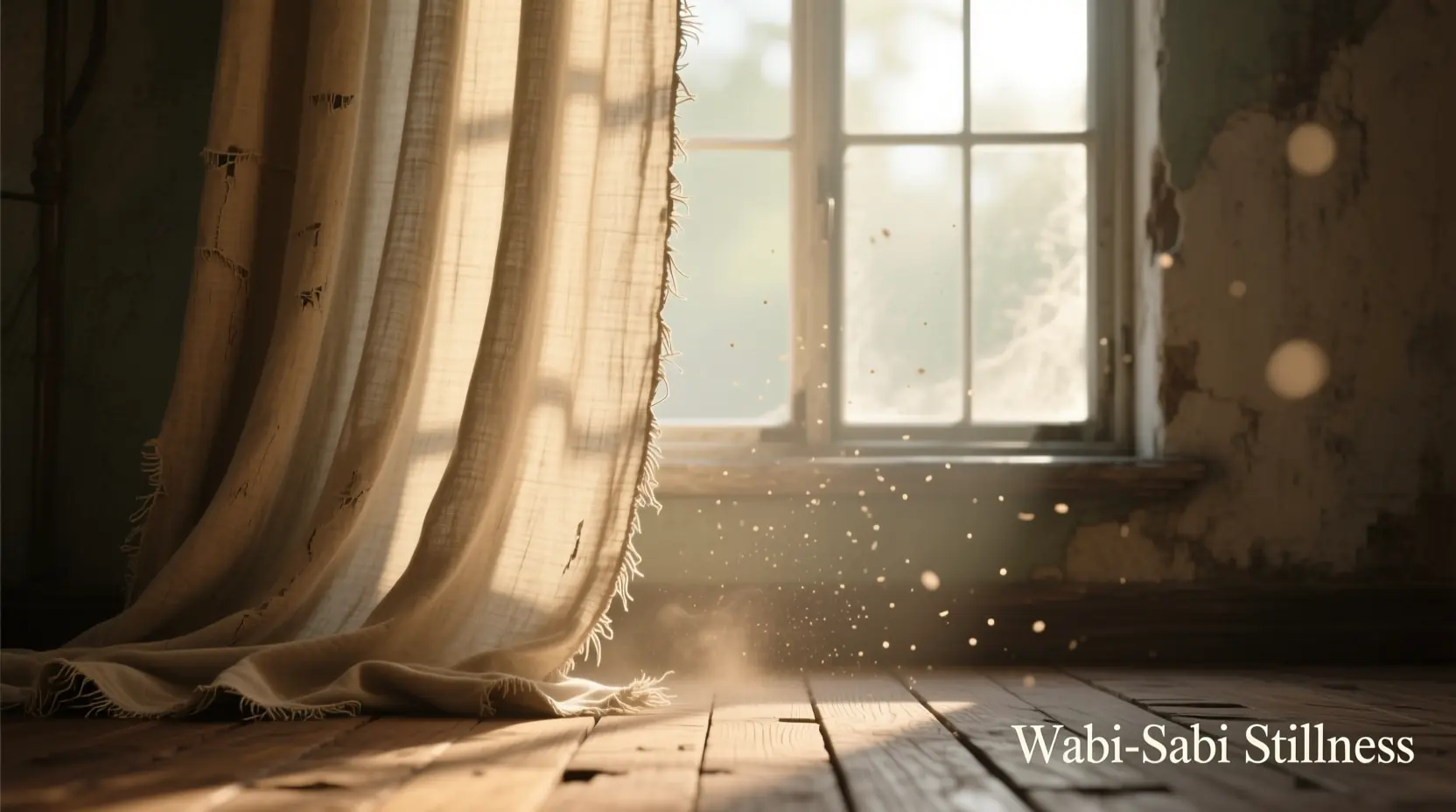
Consider the weave. Open. Like the space between pine needles on a forest floor. Like the gaps in a well-used basket. This openness is its first grace. The blunt spear of noon cannot pass through such a weave unaltered. It must be parsed. Divided. It arrives in your room not as a blade, but as a diffusion. A luminous haze. Sharp shadows grow soft, feathered at the edges. The room is not lit. It is steeped. In this light, dust motes become slow constellations. The grain in the floorboards rises and falls like a breathing ribcage. This is the alchemy. The transformation of mere illumination into atmosphere.
The Colour of Stone and Memory
They will offer you charts. Swatches with names. Linen knows nothing of these. Linen knows the grey of a river stone, worn smooth by centuries of flow. The white of sun-bleached bone or seashell. The ecru of unbleached flax—the faint, held memory of stalk and earth. The soft brown of well-trodden path.
Choose a colour not from a chip, but from a memory. The pale sand at the very edge of dawn. The weathered silver of an old garden gate. The quiet green of moss on the north side of an oak. Let your linen be of that family. It will not fight your room. It will join it. It will age with it. And as it ages, the magic deepens.
The Patina: A Collaboration with Time
Here lies the second heart. Linen is not a static thing. It is a living cloth. It expects the sun. It welcomes the gentle abrasion of the air. Over seasons, it softens. Not weakens. It softens. It fades, but not as a dye fails. It fades as a memory fades—the sharp edges blur, the essence remains, grows richer, more intimate. The white becomes cream, like old paper. The grey becomes the soft hue of a dove’s wing. It develops a drape, a personal fold, unique to your window, your light, the particular sigh of your air.
It accepts the imprint of days. And in this acceptance, becomes timeless.
A new linen curtain is a promise. An old linen curtain is a companion.
Hanging the Sky: A Ceremony of Drape
The hanging is a ceremony. It should not be taut, a sail straining against the wind. Nor should it pool in ostentatious excess. It should hang with the gentle gravity of a waterfall. A quiet cascade. Let it kiss the floor. Or break just above it, like a shallow wave on a shore. When the breeze finds its way in, the linen will stir. It will breathe. A billow, a soft pulse, then subsidence. In that movement, the room breathes with it. The light on your wall shifts. Dances. A silent, slow ballet performed for an audience of one.
The Soul of the Room at Dusk
Now. Watch the day turn. This is where linen sings its most tender song. As the sun falls, the light reverses. The fierce outward gaze softens to an inward gathering. The linen, backlit by the fading glow, seems to hold the light within its very fibers. It becomes a lantern. The room is wrapped in a golden, translucent twilight. The world outside softens to silhouette, while the warmth stays inside, held close by the cloth. The boundary between inner and outer grows gentle. Permeable.
This is the perfect filter. Not one that blocks. But one that translates. It translates the day’s vigor into morning calm. The noon’s intensity into afternoon clarity. The evening’s farewell into a lingering, amber peace.
A Practice, Not a Purchase
To choose linen for your window is not to complete a task. It is to begin a practice. The practice of observing light. You will learn the angle of the sun in February, so different from June. You will see the blue light of a snow-filled sky. The green light that gathers before a storm. Your linen will teach you this. It will reveal the distinct character of each hour.
Dust will settle on it. And you may come to see it not as dirt, but as part of the process—the room’s own quiet patina. You may wash it. Hang it damp. Watch it dry in the sun, its wrinkles becoming a topography of hills and valleys, each one a catcher of soft, long shadows.
So come to this choice not as a decorator, but as a cultivator. You are not installing a treatment. You are tending a portal. You are placing at the threshold of your sanctuary a material that knows both the wild field and the quiet loom. A material strong enough to last generations, yet humble enough to fade with grace.
Take the sample. Hold it to your window. Watch the light pass through. Does it quiet your mind? Does it make the air in the room seem stiller, deeper, more capable of holding silence? That is your only answer.
In the end, the perfect filter does not shout of its features. It whispers. It breathes. It remembers it was once a plant, reaching for the sun. And in your home, it becomes that again—a gentle, enduring reach. Softening the light’s passage. Honoring its cycle. Gifting you the sublime, weathered peace of a room held in a soft, linen embrace.